Cochlear implants give nurse her life back
How the cochlear implant allows Jennie Kremer to thrive at work and enjoy her social life, despite severe hearing loss.
Jennie Kremer, RN, noticed her hearing deteriorating over seven years before she decided to have it checked.
At the time, she was a nurse in the cardiovascular intensive care unit (ICU) at The Ohio State University Heart and Vascular Center, and her hearing was no longer good enough to hear the beeps from her patients’ IV pumps. “I couldn’t hear the beeping unless I was in the patient’s room, and the other nurses would have to tell me,” she says.
Soon after, when patients and staff started wearing masks during the pandemic, Kremer realized just how much she’d been reading lips. “That’s when I knew my hearing was getting a lot worse,” she says.
Waking up with sudden hearing loss
Kremer was in her third year of nursing school in 2013 when she suddenly woke up with muffled hearing in her left ear. “It felt like I had water in it or something, so at first, I just blew it off,” she says.
She made an appointment with her primary care provider the next day. He diagnosed an ear infection and prescribed antibiotics. The sensation resolved, but Kremer’s hearing didn’t return. She figured the ear infection had damaged it permanently, and she tried to adapt. “I knew I should get my hearing tested, but hearing aids are expensive, and I was a broke college student,” she says.
Besides, Kremer was only 20 and didn’t want anyone to see her with a hearing aid. From then on, she positioned herself in social situations with her good ear facing out. “People had no idea I even had a problem,” she says.
Social isolation from hearing loss
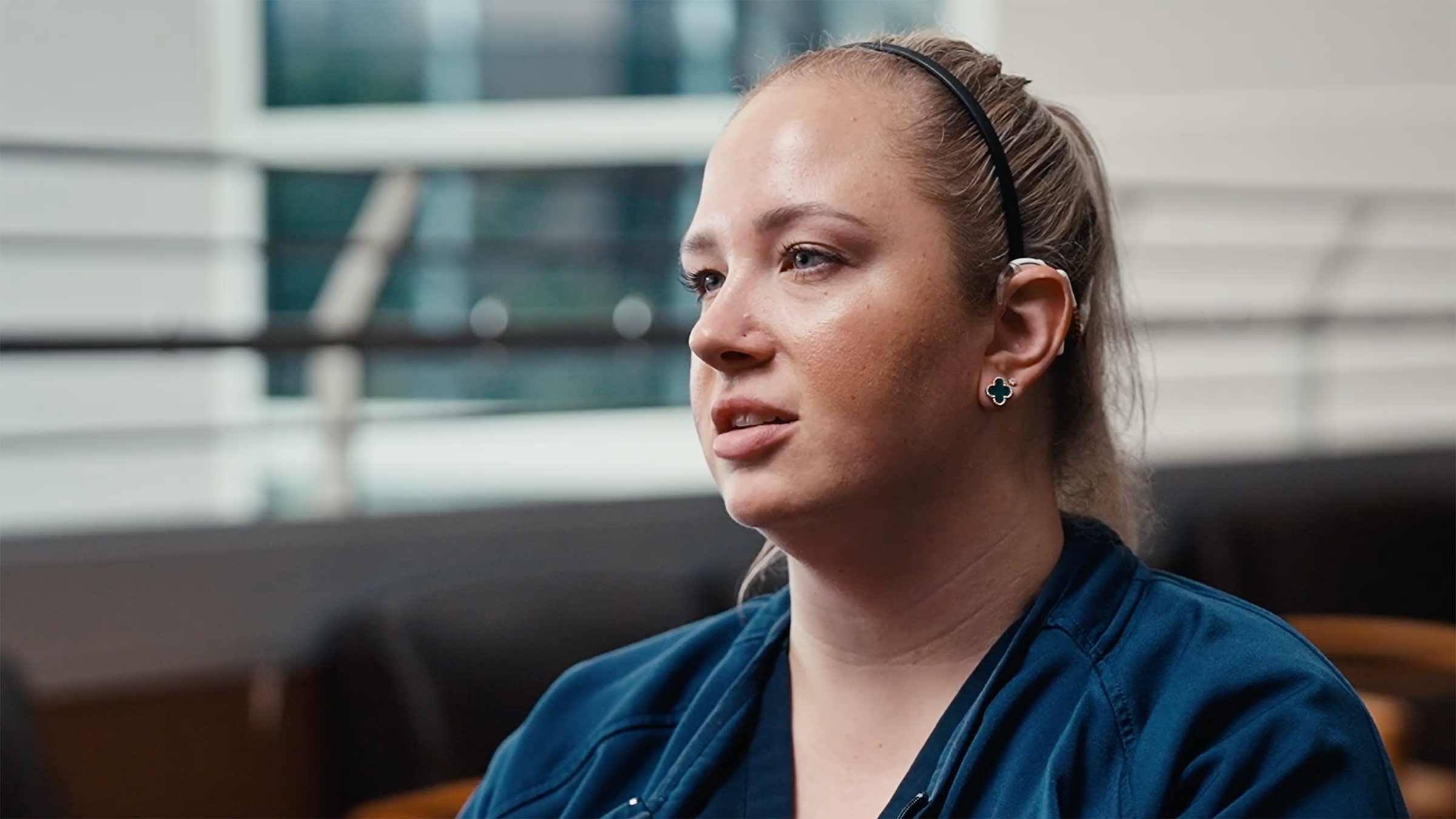
Despite her workarounds, hearing loss affected Kremer in other ways. “Before, I was so extroverted, and looking back, it’s crazy to see how I slowly drew myself back from social situations and isolated myself,” Kremer says.
Social withdrawal is common among those with hearing loss, says Robert Macielak, MD, a neurotologist at The Ohio State University Wexner Medical Center. “As people try to compensate for untreated hearing loss, it’s common to start avoiding situations where we struggle to hear, like busy, crowded environments,” he says. “This manifests as fewer events or instances where you get to socialize.”
Over time, Kremer and others began noticing her hearing was deteriorating. She increasingly asked people to repeat themselves, and eventually the problem became harder to conceal.
“You just keep adapting, and you don’t realize you’re in denial until you can’t fake it anymore,” Kremer says.
Finally, she had no choice but to get her hearing checked in 2021.
From hearing aids to severe hearing loss
Kremer’s story is typical of those with gradual hearing loss. “Hearing loss isn’t an obvious deficit, and people inherently try to compensate, like turning the TV volume up. Plus, there remains a stigma in our society about hearing loss, which further leads to hesitation,” Dr. Macielak says.When Kremer finally saw an ENT and audiologist at Ohio State, she learned that she could only understand 56% of words in her left ear. Her right ear had high-pitched loss, which is why she struggled to hear IV pump beeps. She got bilateral hearing aids, which helped for about a year.
Over the next few years, Kremer needed to gradually increase the hearing aids’ volume. By fall 2024, she struggled even with one-on-one conversations.
Repeat testing showed her that left ear had dropped to 4% word recognition, and her right ear to 60%. She was officially diagnosed with progressive hearing loss, with the expectation that her communication ability would continue to worsen without intervention.
You don’t need to be deaf to qualify for cochlear implants
Kremer learned she was a candidate for cochlear implants at the same time she realized she would eventually lose all her hearing. “I was very upset and so shocked. I didn’t think I qualified for anything like that,” she says.
Many people, like Kremer, assume they need to be completely deaf to get a cochlear implant. Candidacy is actually based on limited speech understanding with appropriately fitted hearing aids, not just the degree of hearing loss.
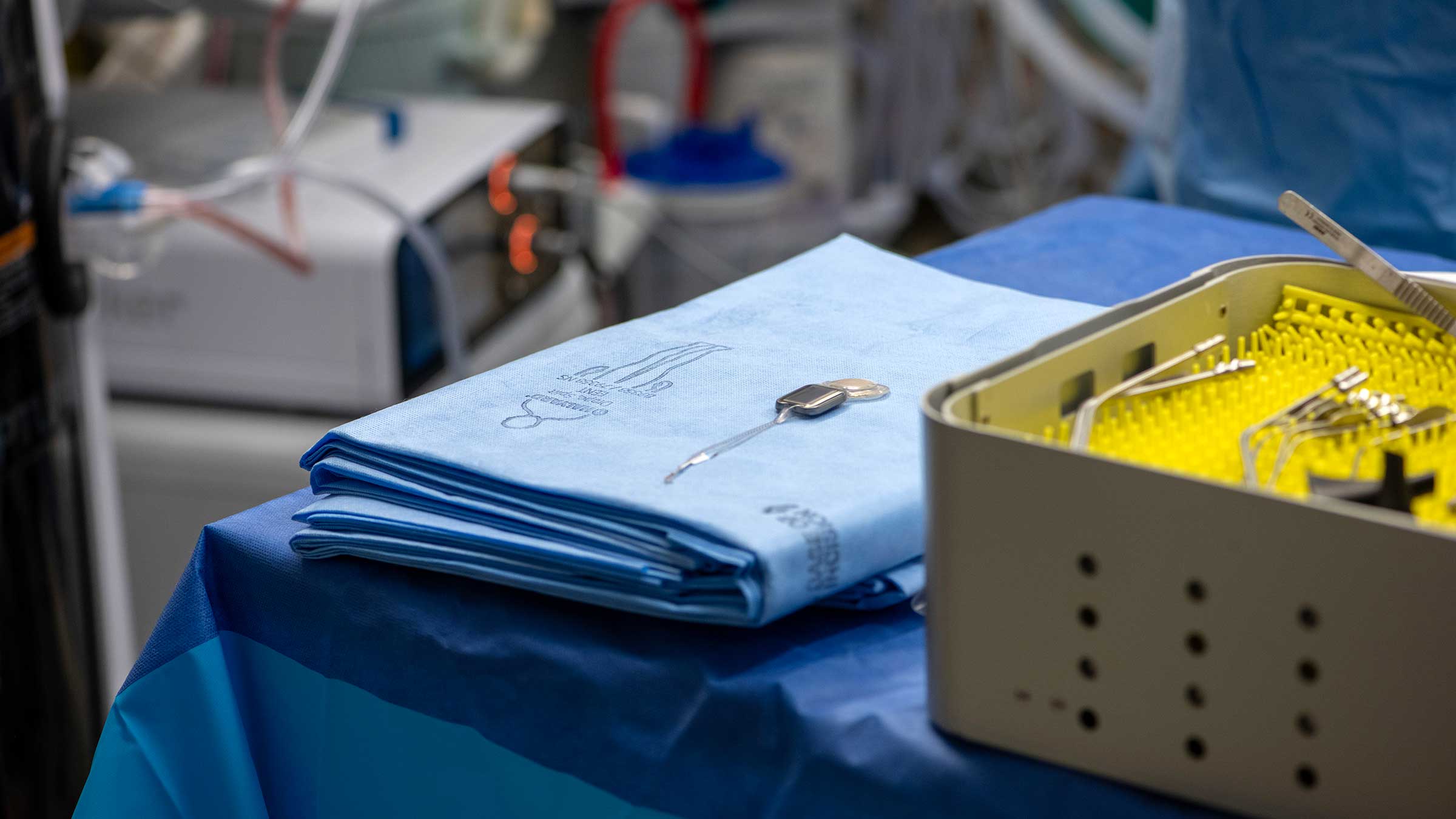
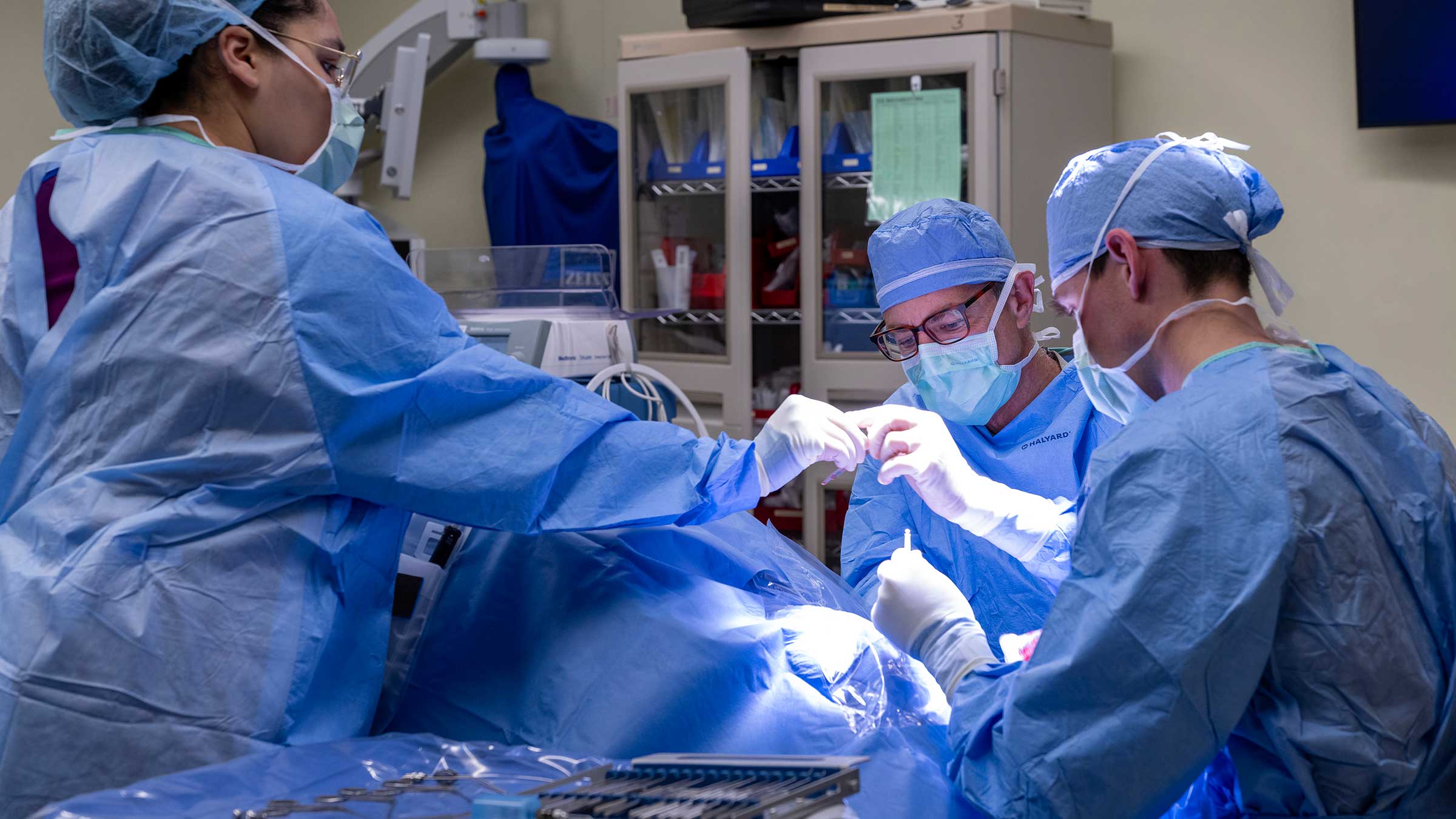
Getting the device before becoming completely deaf actually leads to better outcomes, says Dr. Macielak.
“Your brain has less time deprived of natural sound, which helps your brain compensate more easily for the new signal and helps you get a good outcome,” Dr. Macielak says.
This happens because some neurosensory cells can weaken over time when they aren’t being used. When that occurs, a cochlear implant has fewer healthy structures to work with. The brain’s mechanisms for processing the signal also become less active.
Still, it’s common for those with hearing loss to want to retain their residual hearing before getting cochlear implants. Placing the device electrode into the sensitive hearing portion of the inner ear (the cochlea) typically eliminates residual hearing.
However, Dr. Macielak and other researchers at Ohio State are working on methods to preserve hearing remnants. Modern surgical techniques increasingly aim to preserve existing hearing, particularly in the low hearing frequencies. “As a field, we are researching how to make the surgery gentler on the inner ear through insertion devices and technologies that give us real-time feedback. In the future, people are also working on different electrode materials that can further preserve hearing in the long term,” he says.
How cochlear implants work
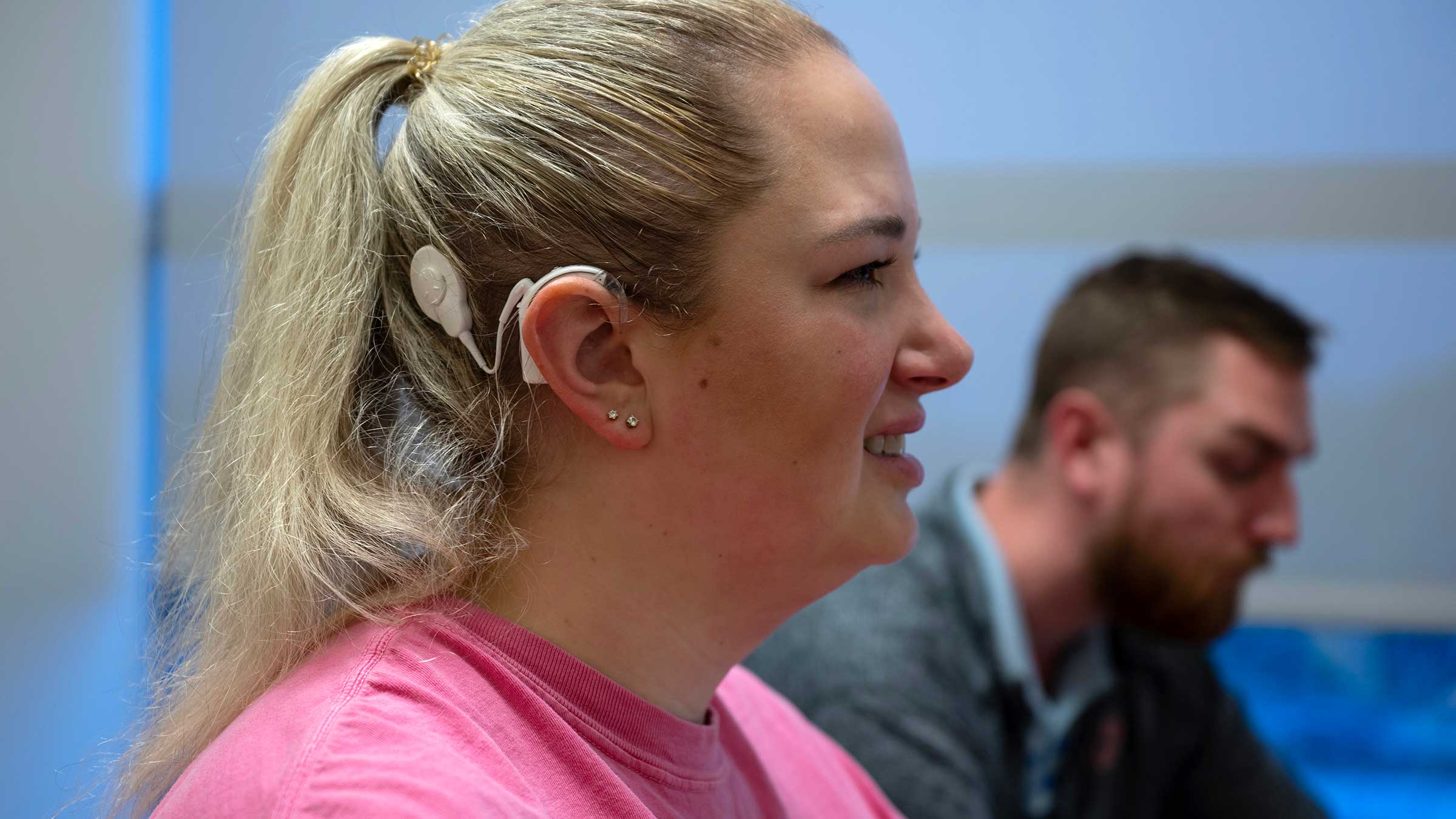
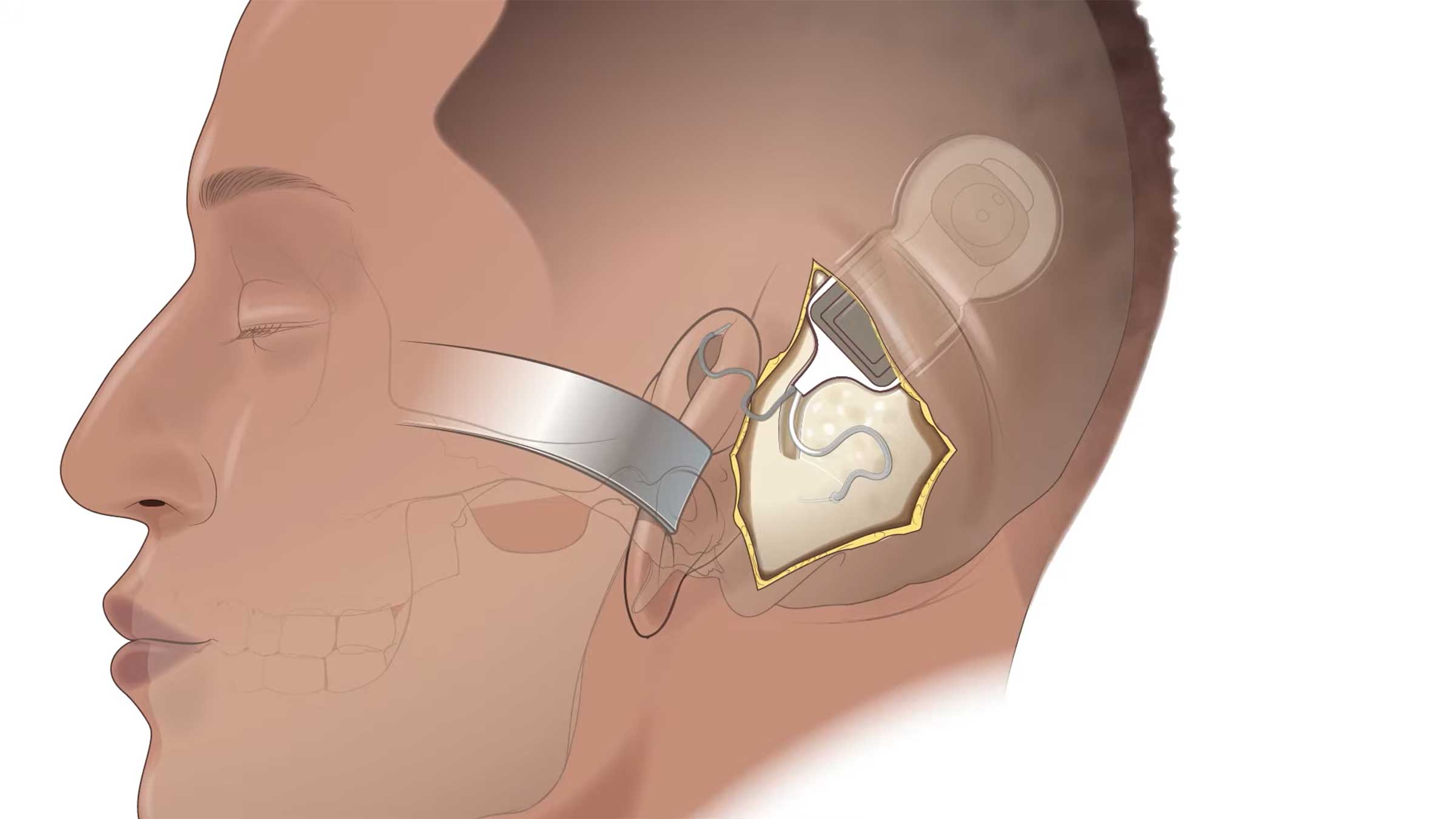
At that first appointment, Debby LaPrete, AuD, a clinical audiologist, explained to Kremer how the devices work. The implant’s internal portion is surgically placed close to the auditory nerve (by placing it into the cochlea), and a receiver is implanted in the skull behind it. A small device worn outside the ear picks up sound and turns it into digital signals. It sends those signals through the skin to an implanted device, which then stimulates the inner ear using tiny electrodes inside the cochlea.
Most users find the technology life-changing when compared to traditional hearing aids.
Like Kremer, a typical cochlear implant candidate has moderate-to-profound hearing loss. They’ve likely worn hearing aids in one or both ears and are no longer benefiting from them.
Adjusting to a cochlear implant
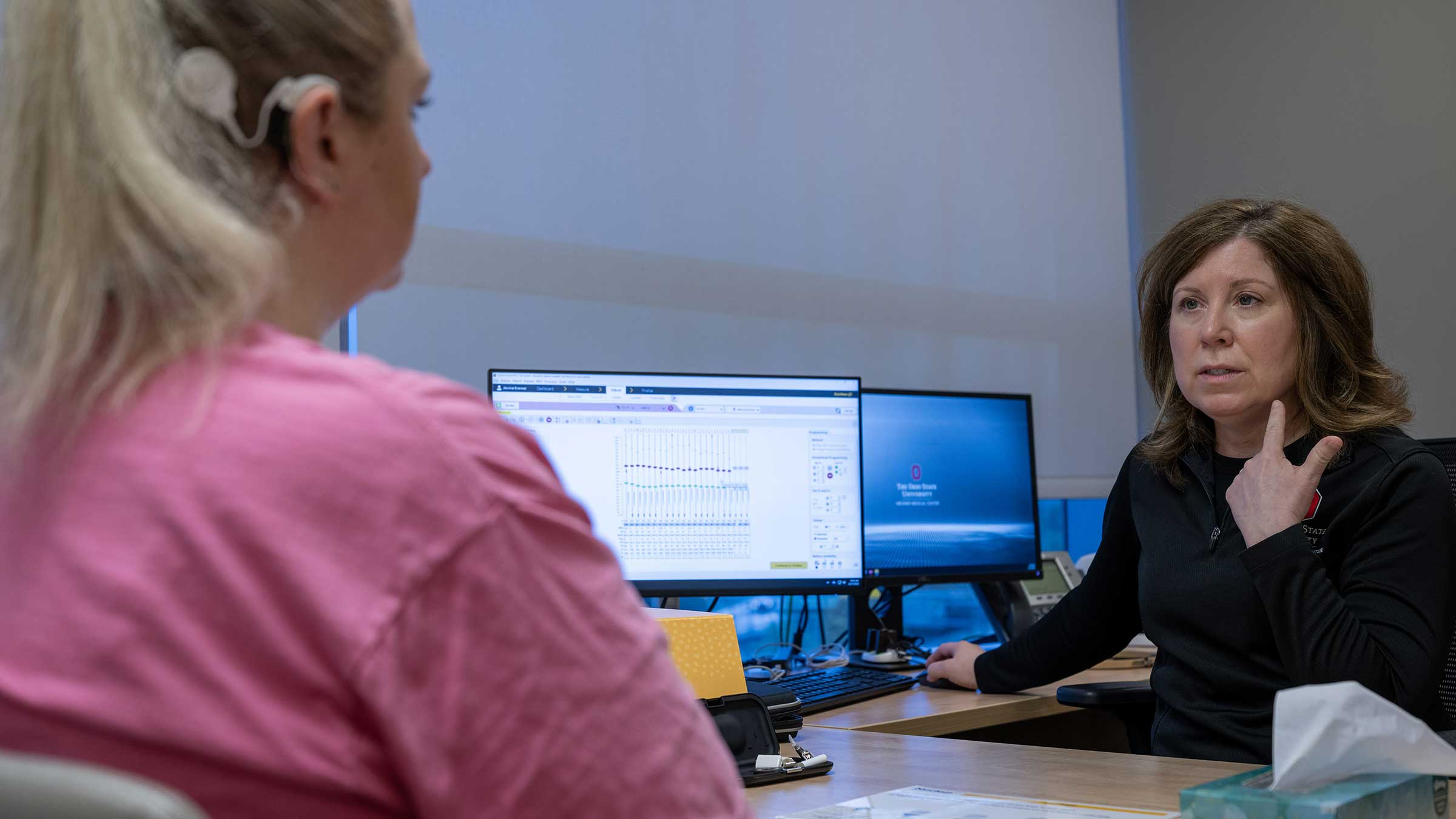
A cochlear implant isn’t an instant fix for hearing loss. It took Kremer a few weeks to recover from her surgery before she got her device turned on. Like they are for most people, those first sounds weren’t clear. “Very often, when we first turn it on, speech sounds like a robot or a cartoon, but their brain will learn to listen to that new sound through auditory rehabilitation,” LaPrete says.
Within a few months of rehab and adjustments, Kremer had 95% sentence recognition with her cochlear implant in a quiet environment. “The 6-month period of hearing rehab wasn’t a walk in the park, but it’s definitely worth it,” Kremer says.
Kremer thought music sounded horrible at first, but she’s learned to enjoy it when she streams it directly to her implant with Bluetooth. “Music is maybe 85% as enjoyable as when I had normal hearing. Once you get speech down, then you can start focusing on music,” she says.
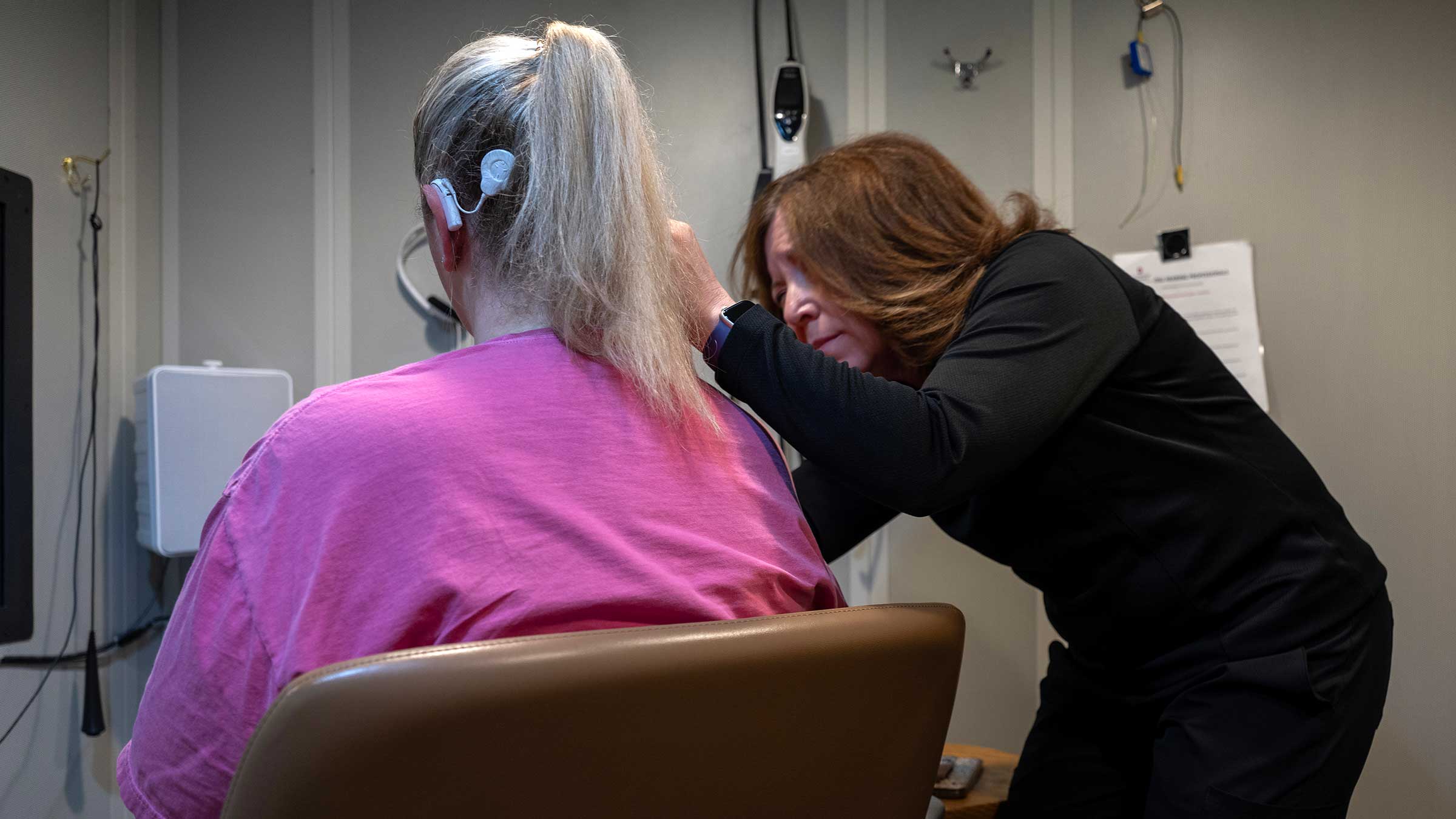
In spring 2026, Kremer got a cochlear implant activated in her right ear and is thrilled to have two hearing ears again. “Having directional awareness again has been amazing, and it’s so much easier to follow along with conversations at social gatherings. Not having to rely so much on lip reading has been great,” she says.
From patient to advocate
Today, Kremer works in the pacemaker clinic at The Ohio State University Wexner Medical Center Richard M. Ross Heart Hospital, which she says perfectly accommodates her hearing loss and is a 9-5 position. She has captions on her iPhone as a backup communication tool when necessary, but rarely needs them.
“With two implants, I find it’s easier to multitask at work now while talking. I am definitely asking people to repeat themselves less often, as well,” Kremer says.
Like many people, Kremer was self-conscious at first about going to work with the implant processor attached to her head. “This is why making the processor fully implantable with nothing worn externally is in progress,” LaPrete says.
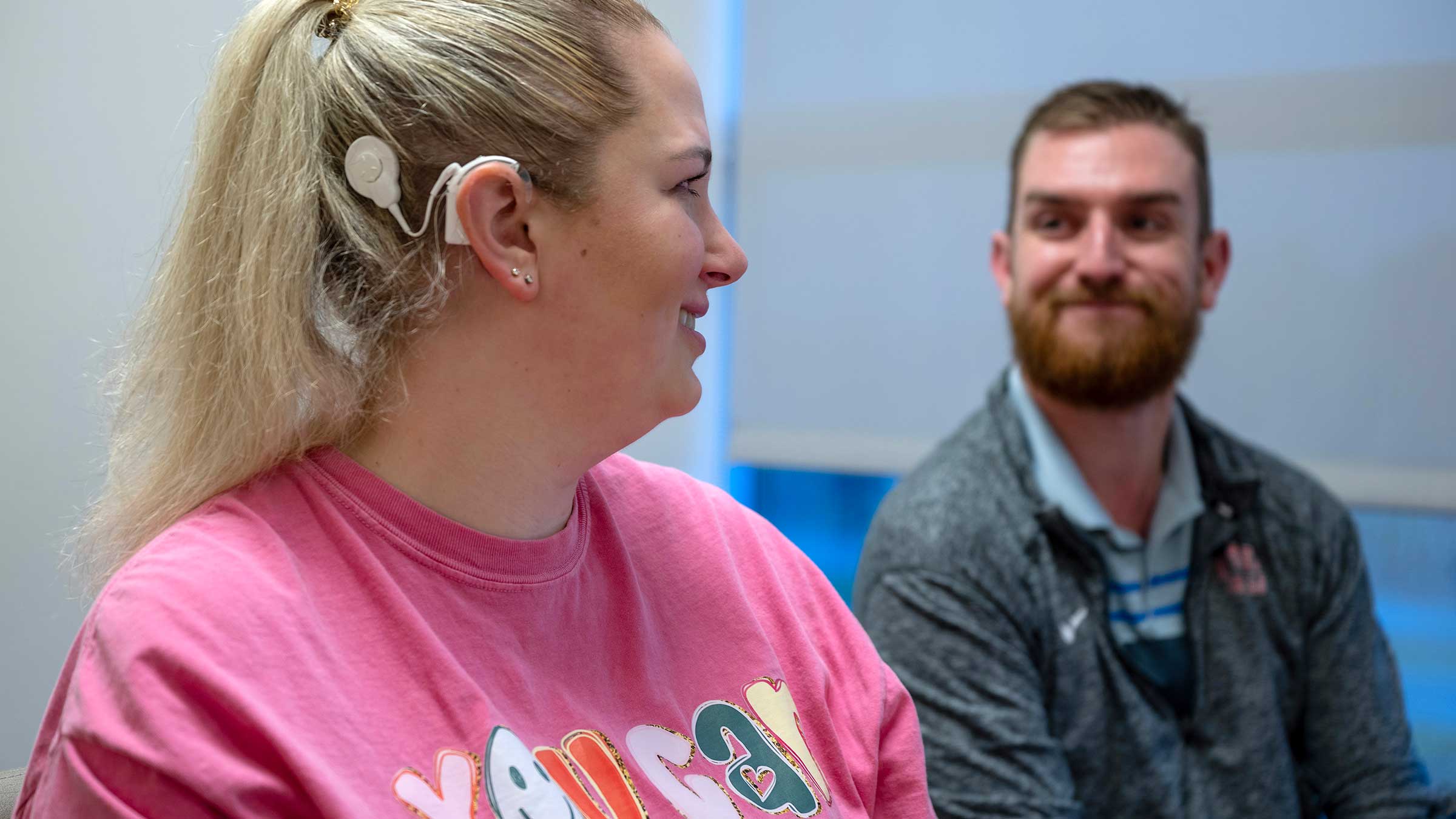
However, Kremer’s patients rarely ask about her hearing device. “When they do, it’s an opportunity to educate more people about how awesome cochlear implants are,” she says.
Kremer has also been sharing her journey on TikTok in the hopes of encouraging more qualified recipients to consider the same life-changing device. Fewer than 10% of eligible candidates receive a cochlear implant, due to cost barriers, fear or a lack of knowledge.
Kremer has no misgivings about her cochlear implants. “Looking back, my only regret is that I wish I had known more about them earlier so that I could have done it sooner, because it has helped so much,” she says.

Having trouble hearing?
Ohio State specialists can determine the cause and how best to manage hearing loss.
Get started today