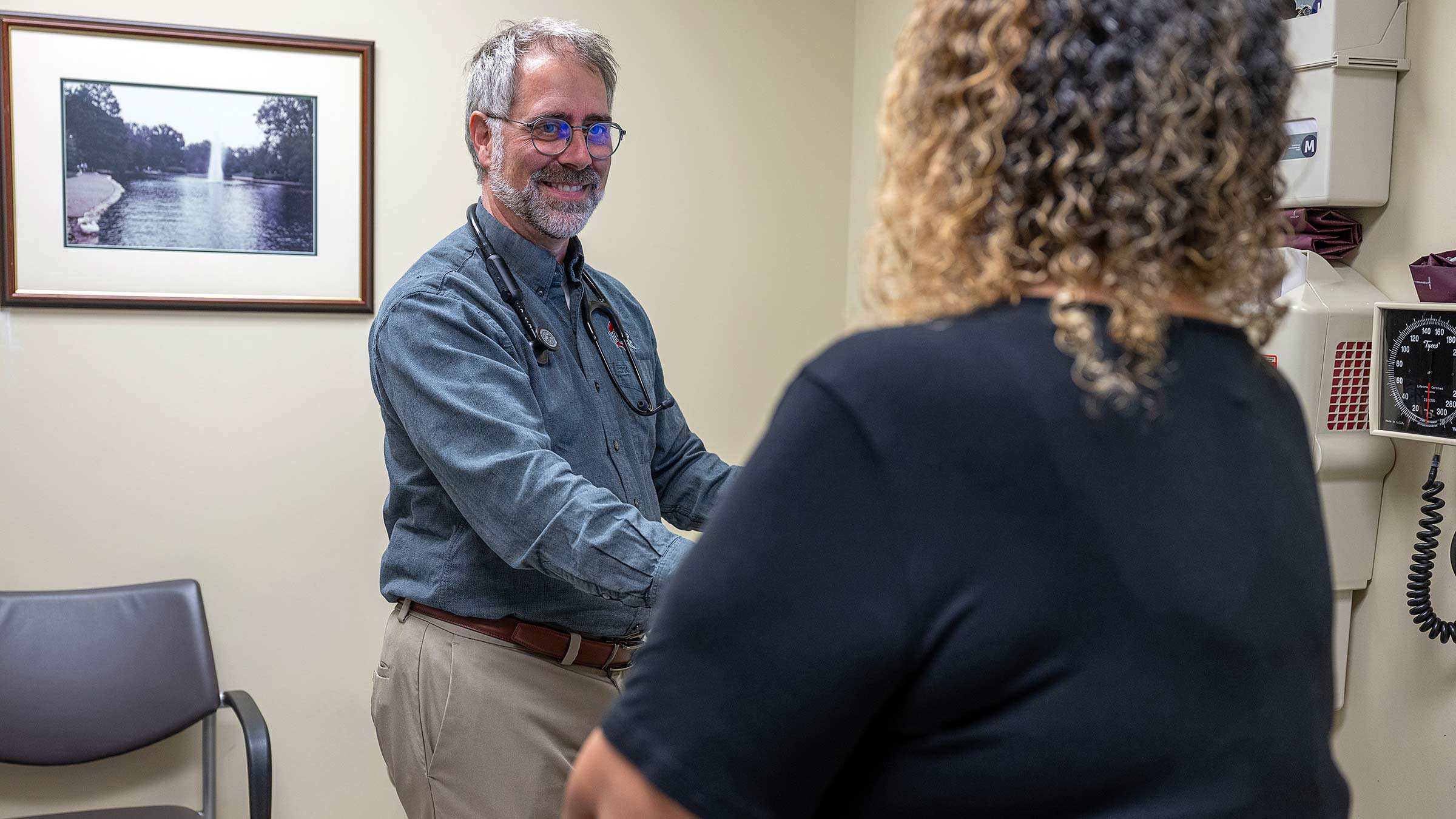
Primary care practitioners play many roles, helping you maintain wellness, managing issues that arise, and providing essential links to specialized care when needed.
Your PCP knows your health and family history, your wellness habits and what’s important to you, serving as a central hub for your wellness needs and a point of contact for navigating the healthcare system.
It’s important to find the right fit. Use these tips to help guide your choice.
Find a practitioner you trust
Trust and communication are key. Your primary care practitioner will know a lot about you, ask sensitive questions and have serious conversations.
If you’re dealing with something uncomfortable, you want to trust that your PCP will take you seriously and answer your questions.
Find someone who makes you feel at ease.
Ask your practitioner questions
You can schedule a meet-and-greet session with a primary care practitioner or an initial visit called an “establish-care visit.” Use this as an opportunity to get to know the PCP.
Tell them your health goals and ask if they’re comfortable helping you reach those goals. Ask the type of conditions they’re comfortable treating, how long they’ve been practicing and why they chose the healthcare field. If you have specific concerns, make sure to bring them up.
The majority of primary care practitioners are trained and able to care for people across all walks of life, so it may be a good fit right off the bat, but it’s never a bad idea to do that first meet-and-greet to be sure.
If you don't feel like it’s a good match, it’s OK to find someone else, but check with your insurance provider to make sure another establish-care visit will be covered.
Learn how the primary care practitioner’s office operates
Also use the meet-and-greet as an opportunity to find out how the office runs. Is it effective and efficient? How are you treated overall?
Ask how you might reach your PCP after hours and how you’ll communicate with the office (such as on the phone or through an electronic records system like MyChart).
Find out if colleagues are available if your PCP is absent and if your practitioner will collaborate with colleagues about your care.
Make sure the practitioner’s office location is convenient
Depending on your situation, location may be a factor. Often, people will be more likely to visit a practitioner if they are close by. You may consider whether you’d prefer the clinic to be closer to work or home or some other location that allows you easy access.
Ask if the practitioner’s office offers additional services
You’ll want to consider the importance of other in-office professional services, such as a mental health counselor, nutritionist, physical therapist or pharmacist.
You may also want to know about various on-site services. Some offices are equipped with a lab that can analyze blood samples or perform imaging, such as X-rays, ultrasounds or mammograms. Others may lack these facilities but have access nearby.
You may also want to know if telehealth appointments are an option.
Also ask about the availability of interpretive services, if needed. While such services are required of healthcare professionals, you may want to ask what type of advanced notice is needed to have an in-person interpreter available.
Review reputable information online about the practitioner
Take a look at reviews. They can be important, especially if a practitioner has many negative reviews. But take scattered negative reviews with a grain of salt.
The state medical board has information about official actions taken against practitioners and whether licenses are current.
You can also look at a PCP’s profiles, which should give some information about background and credentials.
Confirm that your insurance covers this primary care practitioner
One of the main considerations is making sure the practitioner is in your insurance provider’s network. This will help make things easier from a cost standpoint.
Consider different types of primary care practitioners
When searching for a primary care practitioner, you’re most likely to encounter physicians as well as advanced practice providers – most commonly certified nurse practitioners (CNPs) and physician assistants (PAs).
A physician, usually designated with an MD or DO, is a practitioner who can do more complex care. Primary care physicians receive four years of medical school training and three years of residency training before they start seeing patients.
Certified nurse practitioners (CNPs) and physician assistants (PAs) have two to four years of training at the master’s level after an appropriate bachelor’s degree. They are patient-centered individuals who focus on prevention and primary care and can diagnose and treat most common conditions. They usually have more time to spend with each patient because they see fewer each day compared with physicians. In Ohio, they’re required to have a collaborating physician colleague, whom they can reach out to if they have any questions or concerns.
If you’re a patient who needs complex care, has multiple health conditions or is managing a variety of medications, you might want to choose a physician.
If you’re relatively healthy, an advanced practice provider is a great choice and will likely be able to see you sooner.
Consider different types of PCP practices
Pediatricians
Pediatricians focus strictly on children, their growth and development, through age 18 or 21. If you have a child who needs more complex care, having someone especially trained to take care of children would be important. For generally healthy children, pediatrics and family medicine are both good choices.
Family medicine
Family medicine practitioners care for individuals across all stages of life: newborns, children, adolescents, adults, pregnant people, senior citizens. They’re trained for the full spectrum of care.
General internal medicine
General internists care for adults only but generally do not provide Ob/Gyn services.
Geriatricians
Geriatricians care for people 65 and older. They have extra training on how to care for elderly patients and typically have more time built into their schedules for each patient. Geriatricians may also visit nursing homes. Older patients with complex or varied healthcare needs may choose a geriatrician.

The first step in the journey to your best health begins with a primary care provider who cares
Get started today