Finding new ways to treat depression
Upending the “trial-and-error” approach to depression to uncover and target its root causes.
Figuring out which treatment will lift someone’s depression can feel like guesswork even to the therapists who diagnose the illness every day.
What relieves one person’s depression can leave another person still spiraling.
“By and large, the approach in our field has been trial and error,” says psychologist Jay Fournier, PhD.
“If something doesn’t work, we try something else. If that doesn’t work, we try something else, then something else.”
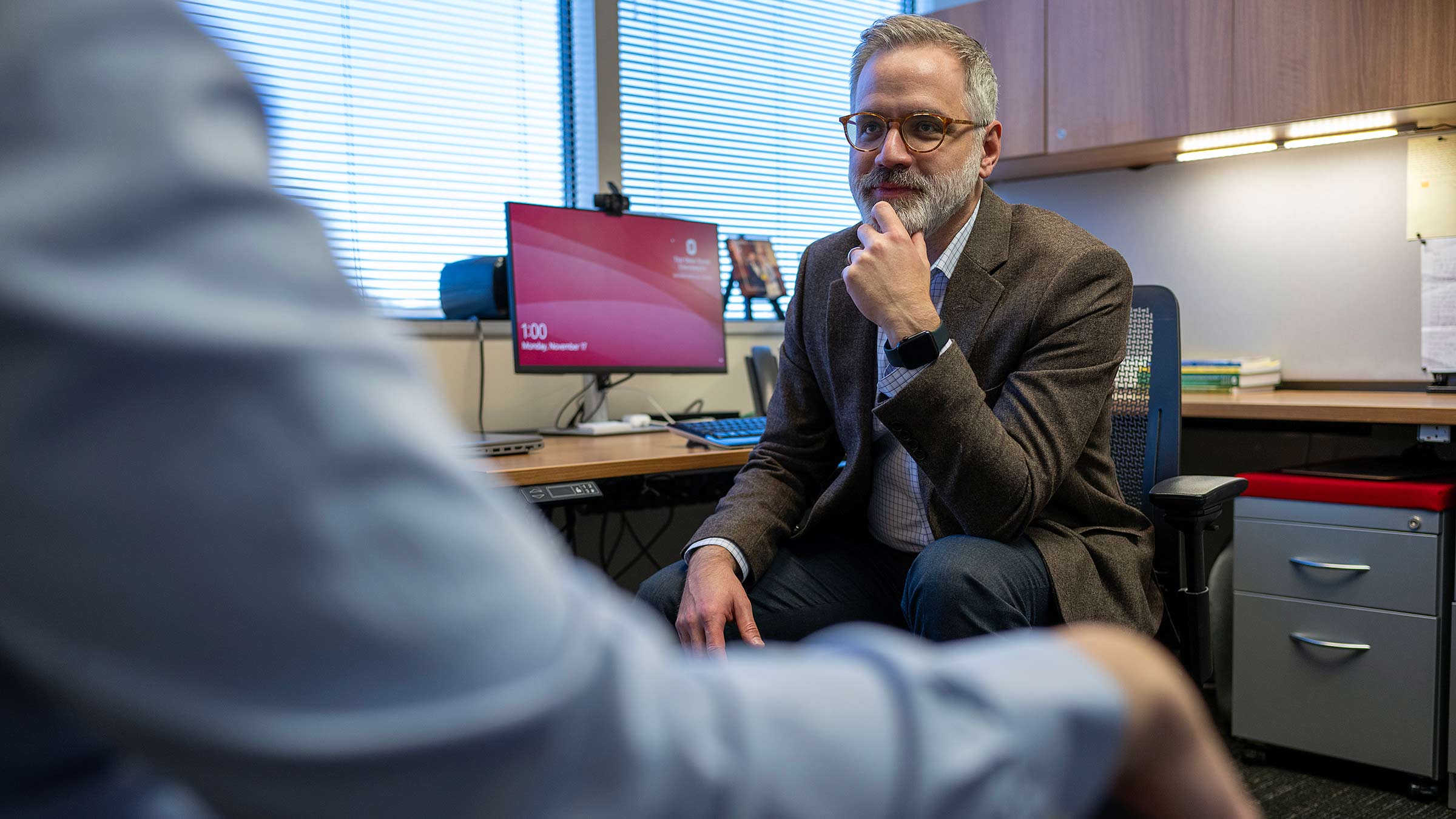
Dr. Fournier and his staff at the Depression Recovery Center at the Ohio State Wexner Medical Center are working to change that. They’re studying new ways to diagnose people with depression and better pinpoint the best treatment for them, so more can break free from depression’s grip.
Instead of relying on any one test or measure, they’re looking at many, including health measures such as gut health, sleep patterns and brain functioning, to develop algorithms that can help find the right remedies for each person.
If so, that will be a marked change in how mental health clinicians across the industry typically treat depression.
“We’re trying to move beyond the trial-and-error approach to providing careful assessment to see which treatment is most likely to get them well,” Dr. Fournier says.
New depression treatments offer more options
People with various types of depression, from major depressive disorder to seasonal affective disorder – are most often treated with talk therapy and medication, usually antidepressants.
But those don’t work for everyone. On average, about one-third of people treated for depression find that antidepressants or therapy don’t help.
In the past two decades, many other options have become available, including various types of brain stimulation as well as ketamine, an anesthetic given under close supervision. Psychedelic drugs are also actively being studied to see if they can help people emerge from depression when other treatments can’t.
“We would like to be able to know the first time a patient sees us whether they’re more likely to respond to medication or to therapy,” Dr. Fournier says, “or if they need something entirely different.”

Understanding the causes of depression
For decades, mental health professionals believed depression came from a chemical imbalance in the brain. Some people’s brains have less serotonin or norepinephrine, brain chemicals that influence mood. As a result, they need a boost in those chemicals.
“We’ve learned it’s more complicated than that,” Dr. Fournier says.
Brain chemicals do affect mood. But depression isn’t caused by simply having too much or too little of one or more, he says.
Instead, the disease stems from a blend of factors that impact each other, including:
- genes that affect the brain’s structure and activity
- family history of mental health issues
- life experiences
- trauma
- personality
- hormonal changes
- physical illnesses such as cancer or diabetes
Whether someone develops depression could also depend on how much support they have from others, as well as how they take care of their physical health through exercise and diet.
Even with strong support and healthy habits, people can still face depression, which affects people differently. Some may struggle to get out of bed; others work obsessively.
“You might be very surprised by who has depression,” says Anthony King, PhD, director of the Stress, Trauma and Resilience Program and the Anne K. “Nancy” Jeffrey professor of Mental Health Equity and Resilience at the Ohio State College of Medicine.
“Sometimes very successful, high-achieving people have depression.”
Challenging negative thoughts
While Ohio State researchers are looking at whether people respond to new therapies for depression, they’re also studying traditional ones, including mindfulness-based cognitive behavioral therapy (CBT).
Some studies show CBT is considered even more effective than antidepressants over time, says Scott Langenecker, PhD, a professor and vice chair of research for the Department of Psychiatry and Behavioral Health at the College of Medicine.
CBT is based on the idea that our thoughts and beliefs influence how we feel and act, so, by changing our negative thoughts and self-defeating habits, we can change how we feel.
Dr. Langenecker has studied how a certain type of CBT helps people who often have a flood of repetitive negative thoughts. It’s called rumination-focused CBT.
“Rumination CBT can not only improve depression, it can also alter the brain pathways that influence how we think about ourselves and handle challenges,” Dr. Langenecker says.
Among his patients who responded to the therapy was a woman who had depression for 21 years, beginning in middle school. After six months of rumination therapy, her depression left her, and it hasn’t returned.
“That’s what we hope for in everyone we treat with depression – a new lease on life.”

Inside the depressed brain
Depression can affect how the brain works, so researchers at Ohio State are examining the brain activity of people with depression and those without. And they’re seeing patterns.
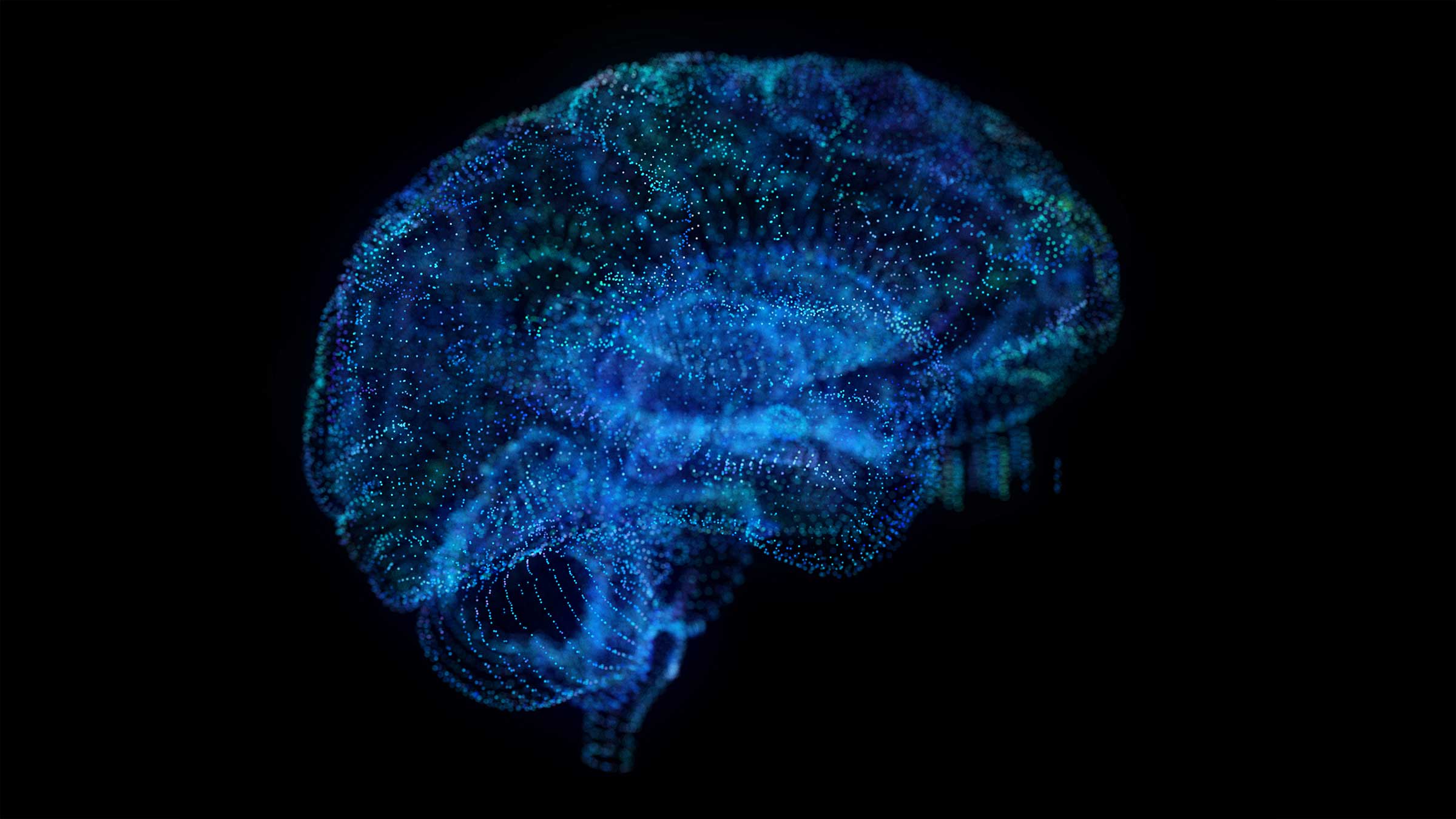
Some people with depression have less activity in the reward circuit of their brain, a network in the middle of the brain that generates a sense of pleasure and motivation. When this system is less responsive, everyday activities can feel less rewarding, and it can be tough to get motivated, sometimes even to get out of bed.
A different part of the brain is associated with rumination, the habit of staying stuck in the same loop of negative thoughts, often guilt about the past and worries about the future. People who struggle with rumination have been shown to have more connections in a circuit of the brain involved in self-reflection and mind-wandering. And those portions of the brain are less connected to other brain regions that help us solve problems and take action.
Differences in brain function, even among people with depression, explain why the same treatments don’t work for everyone, says Stephanie Gorka, PhD, director of the Division of Risk and Resilience and the Kaufmann Family professor of Breakthroughs in Psychiatry and Behavioral Health.
“The brain can tell us a lot more information than basic symptoms can,” says Dr. Gorka.
How the brain reacts to stress and rewards
In her studies, Dr. Gorka records the brain activity of people as they react to both stressful situations as well as rewards.
Participants of one study wear a cap fitted with 34 electrodes connected to a computer that displays brain activity in real time as the person receives unpredictable, mildly uncomfortable electric shocks. The stress of waiting for and experiencing the shock is measured in the electrical activity from the person’s scalp.
In another of Dr. Gorka’s studies, participants play a simple computer game where they both win and lose small amounts of money. While they play, sensors record how strongly their brain reacts to each outcome.
“Some people show a big burst of brain activity when they win, while others have only a muted response, suggesting their brains are less sensitive to rewards,” Dr. Gorka says.
“If we can reliably measure and quantify these patterns, we can begin targeting the brain systems that drive suffering.”
New frontiers in depression recovery
Sometimes people with depression find themselves in an agonizing loop. Even after taking various antidepressants and therapy, they don’t feel much better.
If someone has tried at least two different treatments taken at the proper doses and their depression hasn’t lifted, more options are now available to them at the Depression Recovery Center, including:
- Transcranial magnetic stimulation (TMS) delivers magnetic pulses to areas of the brain that affect mood. Overactive brain areas can be slowed, and underactive areas can be stimulated.
- Electroconvulsive therapy (ECT) uses a brief electrical current to cause a controlled seizure in the brain, creating a release of brain chemicals affecting mood.
- Ketamine/esketamine is a type of anesthetic that, when used in low doses, may cause rapid shifts out of depression.
Sparking a fire
Medicines like ketamine, esketamine and psychedelics have been shown in studies to help people with difficult-to-treat depression feel better quickly – sometimes within a day, says Dr. King.
The drugs can rapidly change how brain cells communicate and improve depression – much faster than standard antidepressants can, which typically take several weeks.
“Not everybody responds,” Dr. King says. “But after just one dose, there’s often a marked change.
“People say, ‘It’s like I just woke up. It kindled a fire in me.’ And many of these people have struggled with depression all their lives and have thought about suicide a lot,” Dr. King says.
Dr. King is studying ways to keep people feeling well in the months and even years after taking psychedelics. Meditating, journaling and being in nature are some strategies that help. People also may get another dose of a psychedelic over the next year, begin taking other medication or start another type of therapy.
“I do think psychedelics can kindle a fire. It starts a process in motion that eventually can lead to people feeling better or having more control over the depression.”

Start recovering from depression
Ohio State specialists help find hope and new options for depression recovery.
Learn more and schedule an appointment