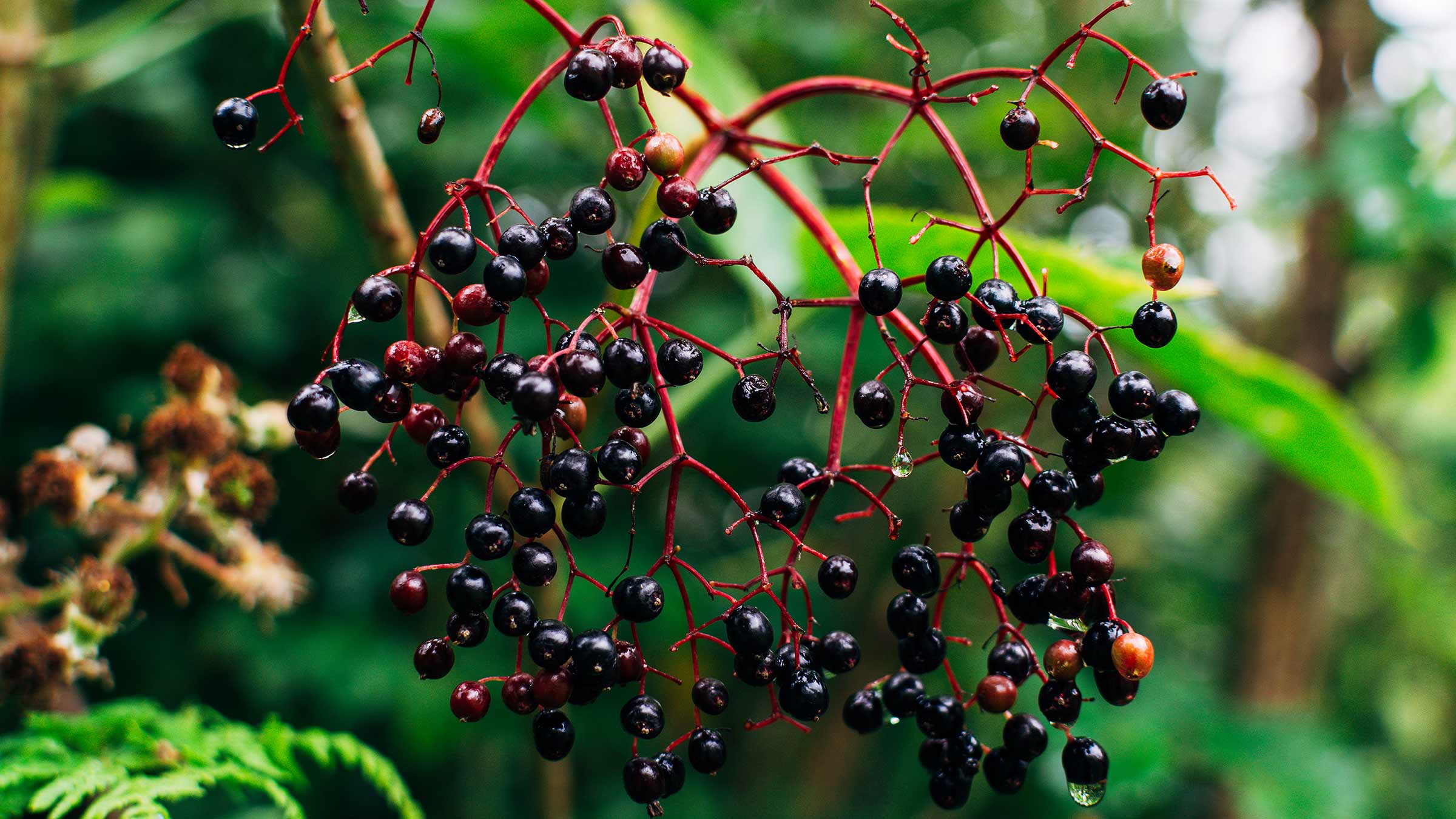
Elderberries have long been used in folk medicine and even today are sold as “immune boosters.”
So far, the evidence for their effectiveness is limited, but there are some recognized benefits of this fruit.
What are elderberries?
Elderberries are the fruit of a variety of trees known as Sambucus, with Sambucus nigra (or European elder) being the most common. Both the fruit and the flower of the tree are edible. It’s important to note that the fruit, a berry, must be cooked before it’s safe for consumption.
What are the health benefits of elderberries?
Elderberries are nutritional powerhouses: One cup of elderberries contains 97% of the recommended daily amount (RDA) for vitamin A and 57% of the RDA for vitamin C. They’re also an excellent source of potassium and fiber. Elderberries are also packed with antioxidant compounds like quercetins, anthocyanins and flavanols (10 times the amount of other berries).
Risks of consuming elderberries for health benefits
When uncooked, elderberries contain a toxic substance that can cause nausea, vomiting and diarrhea, so any preparation of elderberries you use should be cooked.
Commercial preparations of elderberry, such as syrups and lozenges, don’t contain this substance and are generally recognized as safe for that reason. The bark, seeds and leaves also contain this toxic substance and should be avoided in home preparations or products. The flower of the elderberry is edible whether raw or cooked.
Pregnant or lactating women should avoid elderberries, because there’s no research on whether it’s safe for them.
How is elderberry helpful with curing flu and cold symptoms and swelling?
Both the berries and flowers of the elderberry tree have been used for centuries as part of folk medicine and traditional medicine in European, Native American and Egyptian culture to treat issues such as cold and flu, respiratory illnesses, burns, wrinkles and acne.
Today, elderberry is sold in syrups, gummies, lozenges, pills and teas for the purpose of boosting the immune system to protect against the cold and flu.
What research reveals about elderberry’s health benefits
There are limited studies to suggest that consuming elderberry products can relieve cold and flu symptoms and can help shorten the length of time of sickness. However, studies with humans have been small in size, and the National Center for Complementary and Integrative Health (NCCIH) says that more research and larger studies are needed to definitively prove the specific health benefits of elderberries.
So, don't skip getting your flu shot and seeking medical attention if you feel you have the flu or cold. But taking elderberry products can be a safe way to seek relief from symptoms and possibly shorten your illness.
Other studies, mostly in rats and mice, suggest that elderberry extract may help reduce cholesterol, blood pressure and blood sugar, but no direct correlations have been found to reduce heart attacks.
More human studies and larger, longer studies are needed to confirm any possible health benefits of elderberry for heart health or diabetes.

Healthy eating is within your reach!
Make an appointment with our dietitians or nutritionists.
Schedule an appointment