New Ohio State University Hospital showcases future of innovation, care and education
University Hospital sets the national stage for technology, patient experience and advanced treatment.
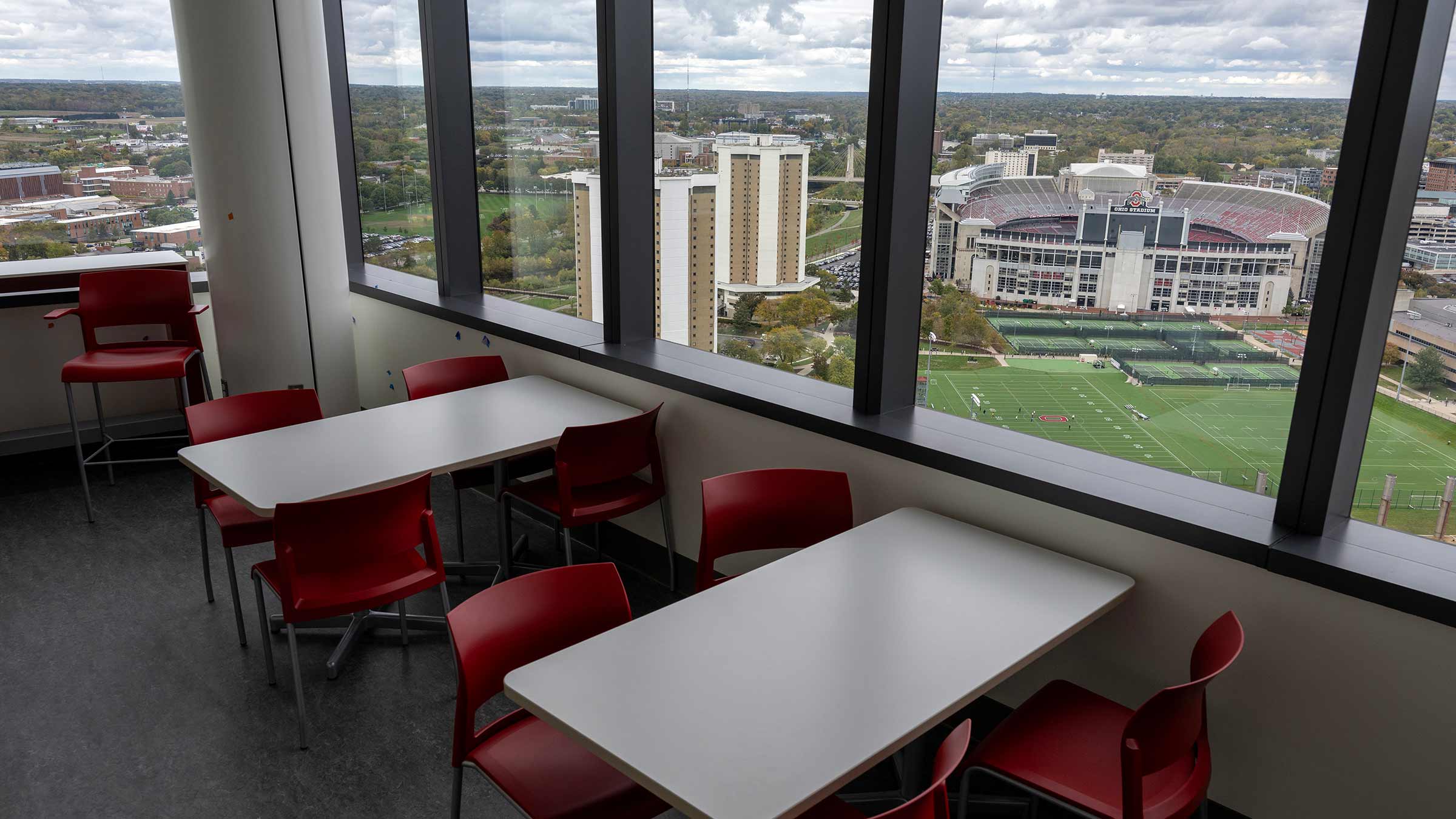
On the 24th floor of the new Ohio State University Wexner Medical Center University Hospital, a new parent can relax with their baby in a private, sun-filled room overlooking the city of Columbus or Ohio Stadium.
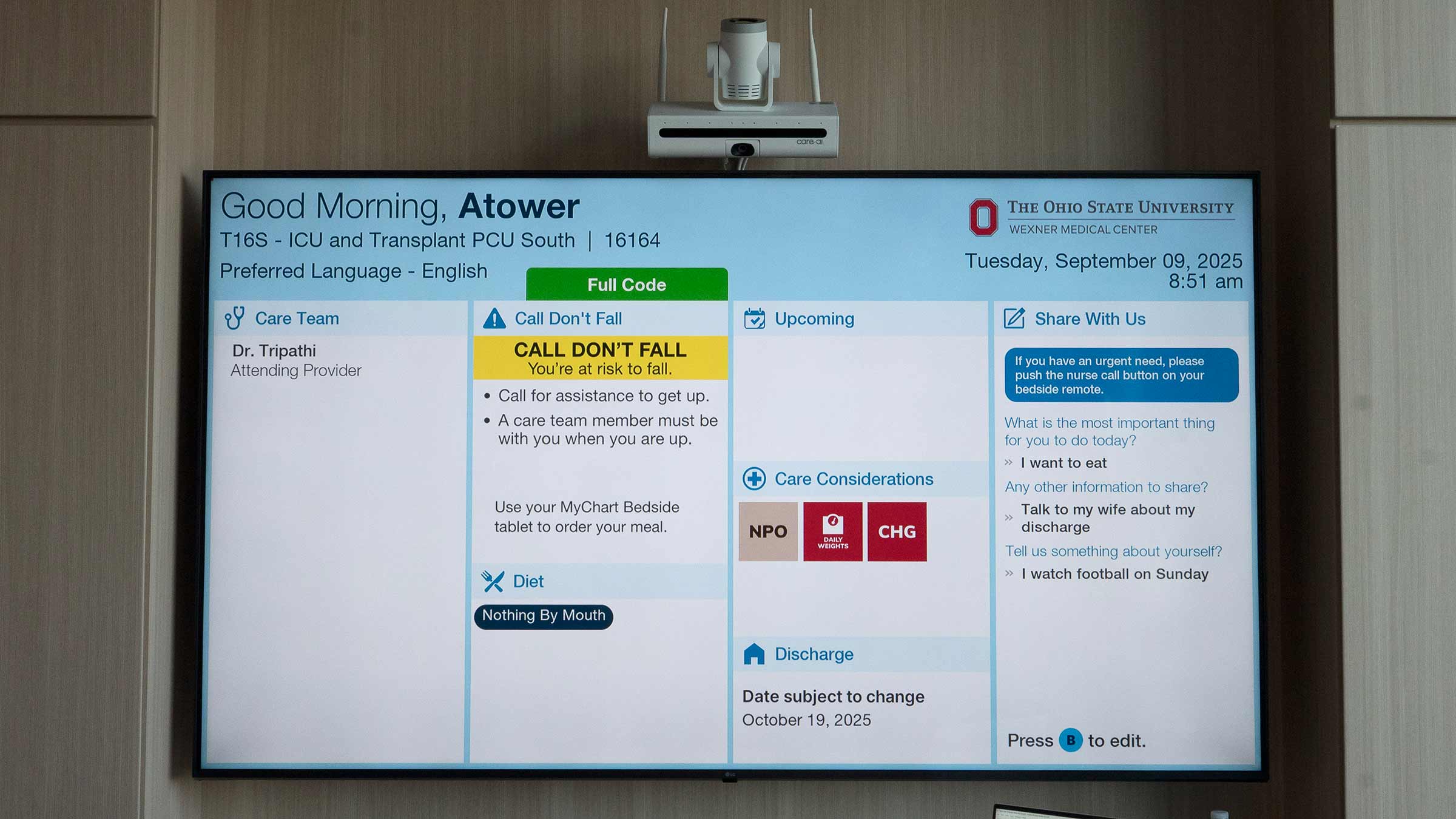
A 75-inch screen offers videos about preparing to take baby home, provides the names and roles of each care team member who enters the room and allows doctors to check in remotely from anywhere, at any time of day.
There’s on-demand bedside ordering from a state-of-the-art kitchen designed to speed hot, fresh food throughout the hospital. And in-room sofas and recliners convert into beds, so loved ones can extend their visits.
With these modern amenities and advanced technologies, the 26-story, 820-room hospital will begin welcoming patients Feb. 22.




Serving Ohio and beyond with latest technology, advanced care
The 1.9-million-square-foot building is the largest single-facility construction project ever undertaken at Ohio State and the largest single-facility hospital project opening in the United States in 2026. With 148 beds devoted to The Ohio State University Comprehensive Cancer Center – Arthur G. James Cancer Hospital and Richard J. Solove Research Institute (OSUCCC – James), it will make that facility the country’s second-largest freestanding cancer hospital.
“It’s a remarkable place. But the new University Hospital is more than just a structure, it’s what it’s going to allow us to do,” Walter “Ted” Carter Jr., president of The Ohio State University, says of the facility.
“With technology and spaces that can adapt for the future, this new hospital builds on the legacy of Ohio State’s land-grant mission and signals our commitment to evolve and advance in ways that continue to benefit all Ohioans, our nation and the world,” President Carter says. “Perhaps most importantly, this hospital represents our bold vision for the future – one that embodies our relentless focus on excellence across our education, research and patient care missions.”
The hospital tower replaces the current, 625-bed Ohio State University Hospital made up of two buildings built in the 1950s and the 1970s.
“Our current hospital has served our community well, but a new facility is needed for Ohio State to continue leading the healthcare transformation,” says John J. Warner, MD, chief executive officer of The Ohio State University Wexner Medical Center and executive vice president at Ohio State.
“The new University Hospital is designed to match the caliber of expertise provided at Ohio State and expand our commitment to deliver world-class care, advance innovative treatment breakthroughs and provide outstanding clinical education – allowing us to better serve our patients now and into the future,” Dr. Warner says.
Those patients, Dr. Warner notes, include people from all 88 Ohio counties, all 50 U.S. states and 26 countries. That reach and impact emphasizes that the medical center offers the highest-level critical care services and specialties, making Ohio State a destination academic medical center that many rely on.
“As we open the doors to our new hospital, we’re excited about the new opportunities it will bring for even greater collaboration, innovation and transformation that improves lives,” he says. “This is truly a historic moment for the Ohio State Wexner Medical Center.”
“This new hospital is an investment in the health and well-being of our state and reinforces our decades-long commitment to make a positive impact that will be felt for generations to come,” Dr. Warner says.
Among its features:
- Twenty-four state-of-the-art operating rooms, including two hybrid neurovascular suites designed for complex procedures such as emergency stroke treatment
- More than 200 intensive care beds
- A modern labor and delivery unit, planned in partnership with Nationwide Children’s Hospital, with 44 private neonatal intensive care rooms and 51 NICU bassinets to accommodate families with multiples
- With the support of a generous grant from the Franklin County Board of Commissioners, nearly 100 isolation-infection rooms and the ability to convert a 60-bed floor into a full isolation-infection floor in the event of a public health crisis
- In-room technology that helps nurses monitor patients who are at risk of falling

A new hospital to meet needs of a growing community
With a population expected to exceed 3 million by 2050 – an increase of more than 700,000 people – the central Ohio region will have expanding healthcare needs, and the Ohio State Wexner Medical Center needs to grow to help meet those needs, says Andrew Thomas, MD, MBA, The Robert F. Wolfe and Edgar T. Wolfe Foundation Chief Clinical Officer Chair for the Ohio State Wexner Medical Center.
While about half of medical center admissions come from central Ohio’s Franklin County and about 15% come from the six surrounding counties, more than one-third come from the rest of the state.
“We believe that care is best when it is delivered locally by our affiliated hospitals in communities across Ohio. But, if a patient needs a type of care not able to be delivered locally, we proudly serve as a resource for patients from across the state. This expanded hospital capacity will allow us to serve even more Ohioans in the years to come,” Dr. Thomas says.
Designing a new hospital
Designing and building a nearly 2-million-square-foot hospital on only 4 acres of land is no small endeavor.
Among steps that helped to dot the i’s and cross the t’s were visiting a number of highly respected medical centers across the country, consulting groups of faculty and staff and seeking input from patient advocacy groups.


“We tried to listen to as many voices as possible and incorporate that into the design,” says John Stiles, director of Space Planning for the Wexner Medical Center. “There are lots of little touches around the building that folks are going to see and think, ‘Oh, I had impact or input,’ or ‘They were really thinking about me when they put in this design feature,’” he says.
The Walsh-Turner joint venture team broke ground in late 2020, and at one point managed as many as 1,200 workers per day, says Project Manager Ragan Fallang.
Those workers erected 15,000 tons of structural steel, more than double the amount found in the Eiffel Tower, and placed nearly 1,900 miles of wiring, enough to stretch to Glendale, Arizona.
Faculty and staff input crucial to new hospital design
“We are incredibly excited and proud to have a new, state-of-the-art hospital building, but the real heart of our medical center is the people – the thousands of dedicated faculty and staff – who provide hope and healing to everyone who comes to Ohio State for care,” Dr. Warner says. “With more than 2,000 new Buckeyes hired to support the new University Hospital, two things are clear. Our new hospital will serve as a magnet to attract the best and brightest clinicians, researchers and educators to Ohio State. And it’s their expertise, compassion and energy that makes Ohio State a place where patients receive the very best care and experience every time.”
Dr. Thomas adds that part of the “secret sauce” in building a top-notch hospital was gathering feedback from frontline staff to make sure things were done the right way.
Nearly a decade ago, 20 interdisciplinary planning groups involving hundreds of Wexner Medical Center staff were convened to provide design input. Planners built life-size mock-up versions of patient, diagnostic and operating rooms, where faculty and staff could test various scenarios and suggest improvements before the design was finalized and construction began.
“The staff know what the patient experience is like day to day. They’re really able to provide the input about what’s important in the rooms from a workflow standpoint, as well as what sorts of things will improve patient experience and comfort,” Fallang says.
For example, Blaire Schumacher, MS, BSN, RN, a charge nurse for the University Hospital operating room (OR), along with some of her peers, helped redesign the workflow of certain ORs to make it easier for staff to avoid contaminating sterile areas when bringing in patients and equipment. She and others were able to demonstrate the need for the change in the model rooms.
Offering input on the design of patient rooms in intensive care units (ICUs) was Hunter Jefferis, DNP, RN, NEA-BC, a nurse manager for medical intensive care units. His recommendation led to the redesign of ICU bathrooms to allow staff to have a better view of patient beds from corridors and nursing alcoves on the units.
“It was really important for us to advocate for our patients. Our leaders worked closely with us and valued our input as the content experts,” Schumacher says.
“We’re all excited to get in this space and see the countless amounts of effort and dedication come to fruition.”
Amenities abound in a new University Hospital
Patient and family amenities also were at the forefront of planning for the new Ohio State University Hospital, with a focus on modern conveniences and spaces that help ensure patients, visitors and staff are able to find areas to relax and feel more at home.


Amenities include:
- Healing, natural light streaming through the 9-foot-by-9-foot windows in each patient room, throughout hallways and in common spaces, such as the John F. Wolfe Lobby and Wolfe Foundation Crossroads.
- The large, bright 400-seat Terrace Café, two coffee shops, a retail pharmacy and a gift shop
- The second-floor, 20,000-square-foot outdoor Linda and Joe Chlapaty Terrace, with full-grown trees, other landscaping and umbrella-covered seating
- A bright conservatory for use as a quiet respite space, looking out onto a second-floor outdoor garden
- The Janet and Elden Thomas Sanctuary for spiritual reflection for people of all faiths, and nearby wudu rooms for ritual foot washing
- Dedicated staff respite rooms, bright staff lounges and private staff changing spaces with food lockers
- A two-story escalator and 50 elevators, including one with a “baby button” that goes directly from the lobby to the Labor and Delivery unit
Features for learning enhance patient care in new University Hospital
In designing with a patient-first mindset, planners also created a hospital that is ideal for learners, with abundant educational areas, state-of-the-art technology and opportunities to work with a wide range of professionals.
Patients with similar conditions will be clustered geographically on the same units and floors so care teams remain together more often, streamlining communication and allowing for more time with each patient.
Dr. Thomas says new designs also offer more space for large-team workrooms with enhanced learning technologies, where educators can offer lectures, or experts and learners can discuss the best next steps for patients.
Students, case managers, social workers and other care coordinators will be embedded with clinical care teams, allowing for robust collaboration.
“When they go out and practice, our learners will certainly be prepared to go anywhere,” Dr. Thomas says.
“For years, our teaching teams have done the best they can in the 1950s and 1970s buildings, but this new facility will be second to none when it comes to spaces built for the clinical training of all disciplines,” Dr. Thomas says.
Bringing a new University Hospital to life
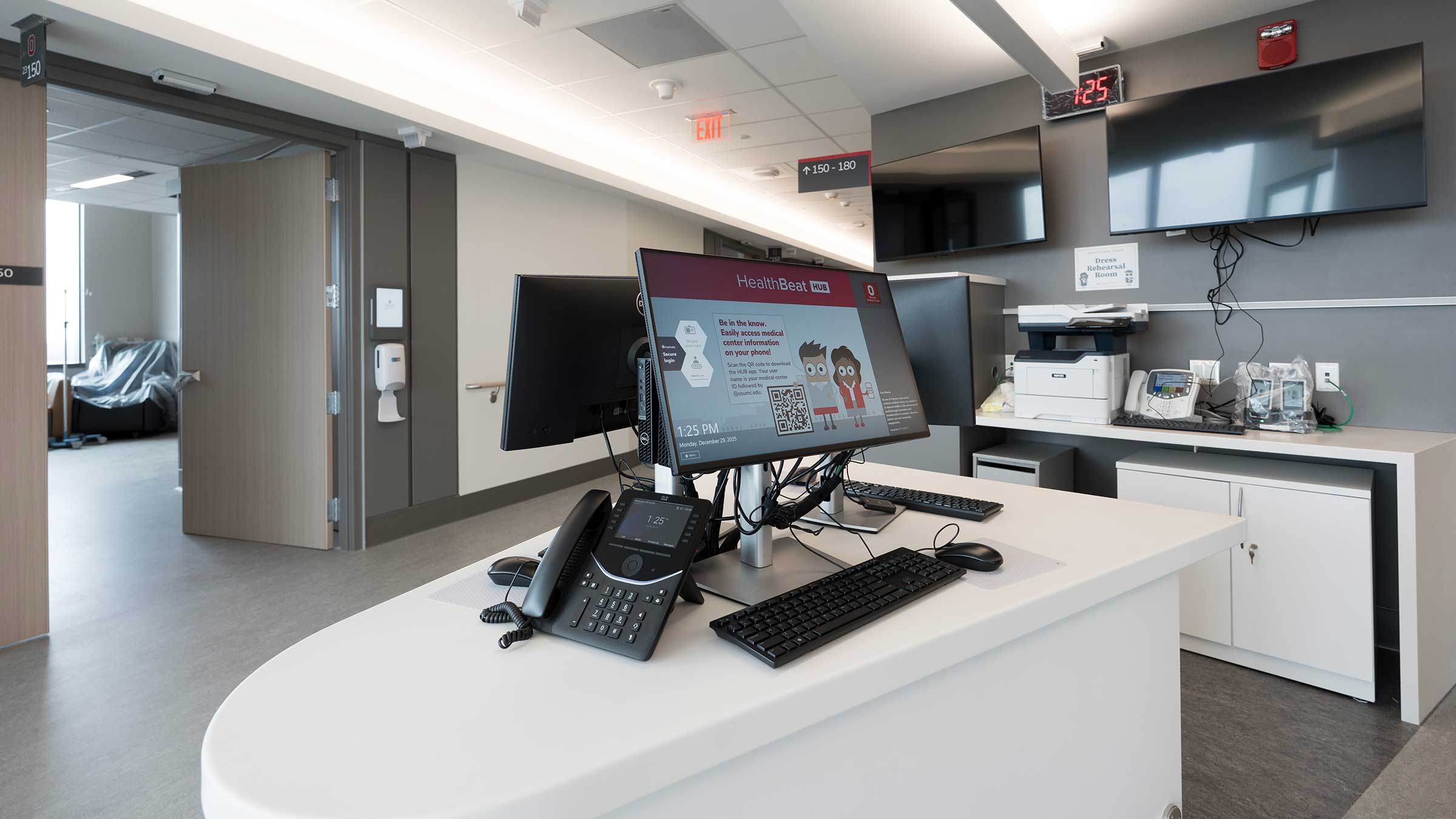
The hospital is preparing for staff and patients with the help of 35 tower trainers and 365 super-users and provider champions, as well as dress rehearsals during which staff care for mock patients in dozens of scenarios, says Karen Sharp, MHA, who is directing the activation of the new hospital.
Sharp’s job is to ensure that the facility has everything patients and staff need on day one, and that faculty, staff and learners are prepared to work in the new space. She also has planned the transfer of hundreds of patients from the current Ohio State University Hospital to the new rooms that await.
She calls it “bringing the hospital to life.”
“It goes from being just empty rooms to a place with energy and a place with life and a place where we are coming together in a way to take care of even more patients in new ways and to save lives,” Sharp says.

World-class care for every person, every time
The new Ohio State University Hospital delivers the nationally ranked expertise and innovative breakthroughs Ohio State is known for.
Learn more