How surgery for a rare brain disorder saved her sight
Idiopathic intracranial hypertension left NaAsiaha Simon with intense headaches and double vision. An Ohio State surgeon didn’t give up until Simon found lasting relief.
In her living room of bright walls, a circle of pink on the ceiling, burnt orange all around, NaAsiaha Simon sorts her eyeglasses.
She has 63 pairs. All prescription glasses. Lots of blues, pinks and greens; a clear pair, a few spotted, sparkled or striped; and a solid black, Harry Potter-like. Besides the collection she keeps in a foldout case, she has at least five pairs in her car, a couple in her bed, some behind her bed.
Simon became partially blind in her right eye a few years ago from a rare brain disorder. So, why not make wearing glasses fun? A confidence booster.
Usually, she picks out a pair of glasses before choosing her outfit. Not today. Wearing a dress with a tie-dye blend of blues, she slides on a canary yellow pair.
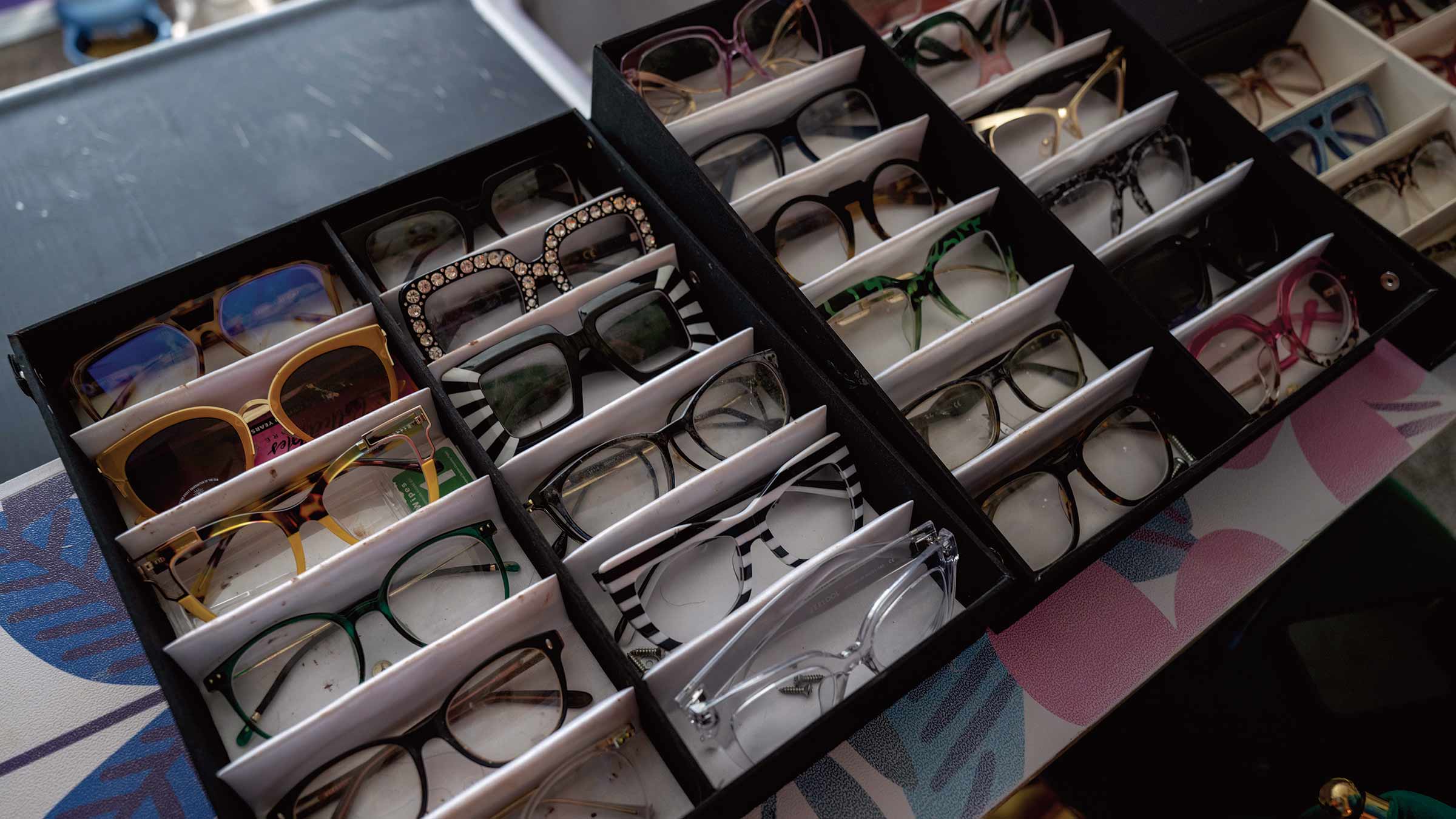
“My yellow glasses make me feel empowered,” says Simon, 36, who lives outside of Dayton in Fairborn, Ohio. “It yells joy.”
After four brain surgeries in five years, Simon believes in bringing bright, happy colors into every day. She no longer has daily headaches or double vision. She’s no longer exhausted all the time and battling depression about having a rare brain disorder that could have stolen her vision completely.
A troubling change in her vision
In the spring of 2020, an eye exam showed swelling behind Simon’s right eye, in the optic nerve, which sends visual information to the brain to help people see.
An ophthalmologist referred her to Ciaran Powers, MD, PhD, a neurosurgeon with The Ohio State University Wexner Medical Center who specializes in treating diseases that affect blood flow in the brain and spinal cord.
Reviewing MRI scans of Simon’s head, Dr. Powers saw signs of idiopathic intracranial hypertension (IIH), a disorder that causes spinal fluid to build up inside the skull. The fluid surrounds and protects the brain and spinal cord, but if too much of the fluid remains in the skull, the added pressure, over time, can cause blindness.
Only about one to two out of every 100,000 people, on average, have IIH, most often women age 20 to 45.
Simon grew up in the Pentecostal church and recalls thinking when she was diagnosed: “What did I do, Lord, to deserve this?”
Headaches she thought were ‘normal’
An adult brain makes about a can of soda’s worth of spinal fluid each day. This clear, colorless liquid is made from blood filtered inside the skull.
Simon’s skull had a lot more spinal fluid than it should have, Dr. Powers says.
“The pressure in her head was really high,” says Dr. Powers, who’s also a clinical professor of Neurological Surgery in The Ohio State University College of Medicine.
Besides blurry vision, Simon had double vision and worst of all, daily headaches. She’d figured stress from her fast-paced job as a publicist caused them.
“I had just thought the headaches were normal. I have a headache. I drink a little coffee. I relax, and it goes away,” Simon says.
A lasting solution was far more complex. She needed brain surgery.
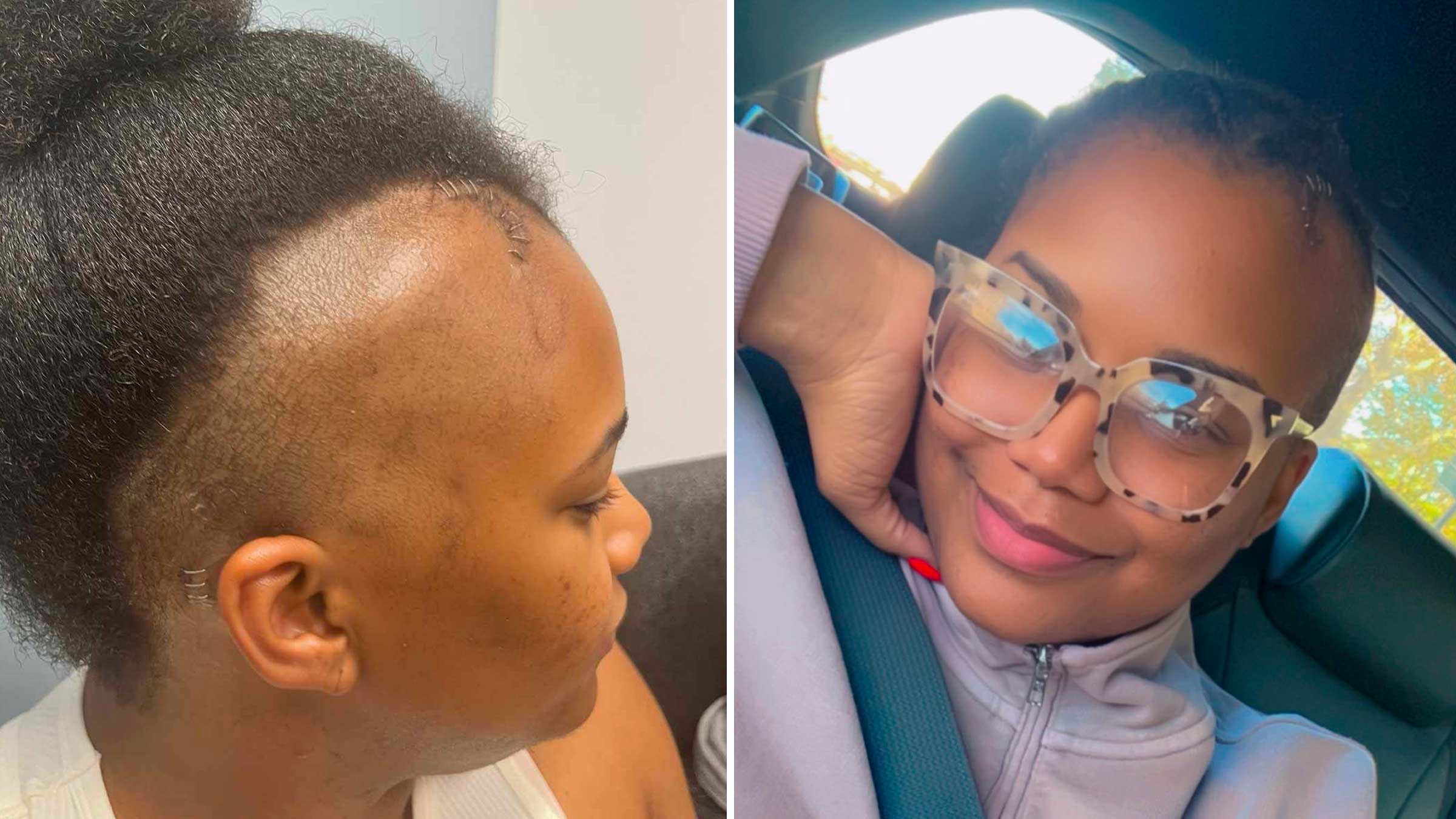
The mental toll of idiopathic intracranial hypertension
In June of 2020, Dr. Powers put in three stents, short expandable metal tubes, to open up veins in Simon’s head and boost the flow of spinal fluid.
If medication or weight loss can’t reduce the buildup of fluid, surgery is necessary and stents are a first step. Often, they’re successful and can last awhile without needing to be replaced.
“Sometimes it takes multiple efforts. I promise my patients, ‘I’ll keep working with you until it’s no longer an issue for you,’” Dr. Powers says.
The stents took the edge off Simon’s headaches, but pain still lingered. As she recovered from the surgery, she felt exhausted and grew forgetful, so much so that she had to write everything down to recall it.
Still, she tried to power through, returning to work as a publicist, a business she launched just six months before finding out she needed brain surgery.
“I was so anxious to tell people ‘I’m back and I feel good,’” Simon says. “I was in overdrive. I didn’t want to appear weak.”

The cost of pretending
Even as she dealt with daily headaches, Simon kept posting on social media like she was fine − snapshots in Denver, Los Angeles, Chicago. On set at client shoots, she wanted the world to see the same unstoppable publicist she’d been before surgery.
In her family, too, she felt she had a reputation to hold up. She’d always been the overachieving eldest of nine, the one her siblings called “the Beyoncé of the family,” for her spunk and general know-how.
And yet, behind the posts on social media, she was unraveling, second-guessing what she said, what she wore, even the smallest of decisions.
“I thought I was going crazy,” she says.
One night she dreamed she took the entire bottle of pills on her nightstand. When she woke up, she prayed and vowed to go to a counselor – as her mother, who’s a counselor, had suggested. Simon was diagnosed with situational depression.
“I felt like a failure. I kind of felt like everything was being taken from me,” Simon says.
Headaches grew worse as pressure in her skull built up again.
The long game of treating IIH
Eight months after her first surgery, Simon was wheeled back into the operating room. Dr. Powers added a few more stents to bring down the pressure in her skull.
Still, Simon’s headaches came back. Her head seemed to always hurt.
“The odds were in her favor that the stents would have been enough,” Dr. Powers says. “They just weren’t.”
When stents don’t improve the flow of spinal fluid, another option is a shunt, a long, thin tube that extends from the head to a spot where the fluid can drain either near the belly or the heart. However, shunts typically have to be replaced more often than stents, as tissue grows in them or as they shift or become blocked.
“It may be an ongoing process of seeing what your symptoms are, and what we can do to help the symptoms get better,” Dr. Powers says.
A new route to relief for IIH
In the fall of 2023, Simon had a third brain surgery. To reduce pressure in her head, Dr. Powers installed a shunt that extended from her brain behind her ear, down her back and into her belly, where the spinal fluid would drain.

Though the shunt eliminated pressure in her head, it also made her feel bloated, and her stomach hurt.
Those symptoms disappeared after her fourth surgery in November 2025. Dr. Powers replaced the first shunt with one that extended from her head to near her heart. Any extra fluid that collects in her head now drains near her heart, where it can be absorbed into her bloodstream.
That took away Simon’s headaches.
“I’m grateful. So many things could have gone wrong. So many things could have happened. The fact is that I’m still here and able to tell the story,” Simon says.
‘I am strong. I am powerful.’
Before Simon’s headaches and blurry vision went away, her depression began to lift as she returned to social media.
 “Taking selfies helped me realize that I am strong. I am powerful. I am confident,” Simon told a TEDx audience in Dayton in 2023.
That same year, she’d started a moving exhibit, the Gem City Selfie Museum in Dayton, to offer people a series of bright, artistic backdrops for taking selfies.
Online, Simon began posting about both the ups and downs of her health. She stopped pretending she was OK when she wasn’t. And even when the stakes were highest, she let the public in.
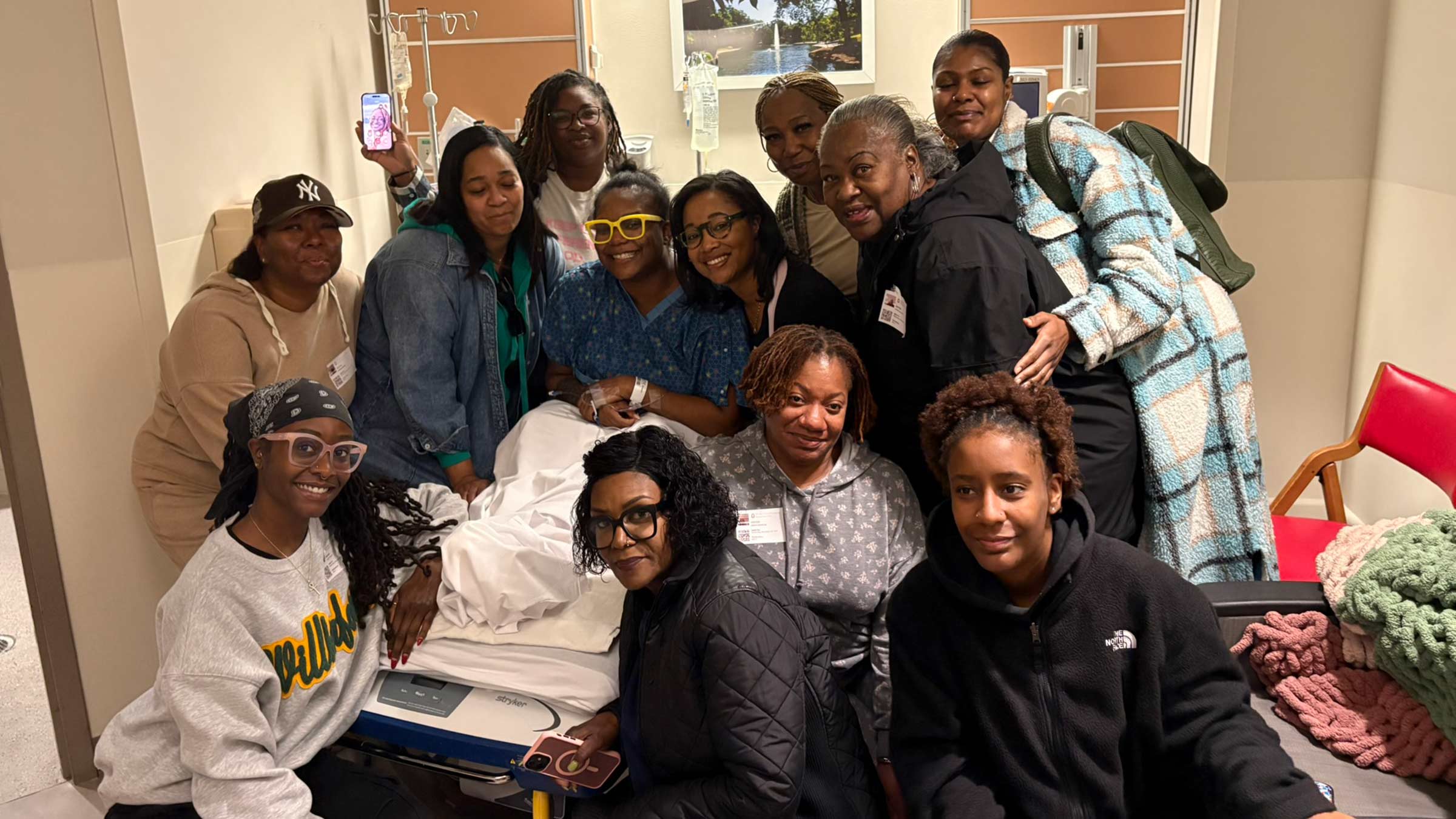
Just moments before her last brain surgery, Simon took out her phone and pressed the record button. She wanted a video for Instagram. Earlier, she’d asked Dr. Powers if he’d be willing to be filmed with her, lip syncing the song “Never Knew Love Like This Before” to celebrate the many who’d texted, posted well wishes or flew in for the surgery. All Dr. Powers had to do was dance in the background. Could he do it?
Generally he stays away from social media, but sure, he told her.
David Havlicek, MD, also a neurosurgeon, joined in.
The two swayed while pushing the gurney with Simon on it, as she pretended to grip a microphone with her left hand and mouthed the words: I never knew love like this before. Now I’m lonely never more. Since you came into my life.
“I just wanted to show people that, yes, this is my fourth brain surgery, but I’m going in with joy and happiness,” she says.
She went into the surgery laughing.

Expert care for brain and spine disorders.
Learn more about the causes of neurological conditions and treatment options available at Ohio State.
Learn more