Robotic knee replacement helps physician regain her stride
After years of worsening knee pain, robotic-assisted surgery helped an Ohio State physician return to caring for her patients.
For most of her life, Benita Petri-Pickstone, MD, a family physician, walked with a limp.
Her joints wore unevenly over time, eventually leading to severe osteoarthritis.
A knee replacement was inevitable after an X-ray showed her femur and tibia were bone-on-bone without any cushion, but she wasn’t ready until the pain set in.
“I couldn’t do anything. I was just in constant pain all the time. I couldn’t sleep. Nothing was making me comfortable. I just couldn’t get pain relief,” she says.
She relied on a cane as she saw her patients.
When the pain became too great, Dr. Petri-Pickstone made an appointment with Jeffrey Reeves, MD, an orthopedic surgeon at The Ohio State University Wexner Medical Center who specializes in robotic-assisted joint replacement.
He thought she was an ideal candidate for robotic knee replacement surgery, given her history of a previous knee surgery and complex anatomical issues.
For the clinical associate professor in Family Medicine at The Ohio State University College of Medicine, the surgery was life-changing.
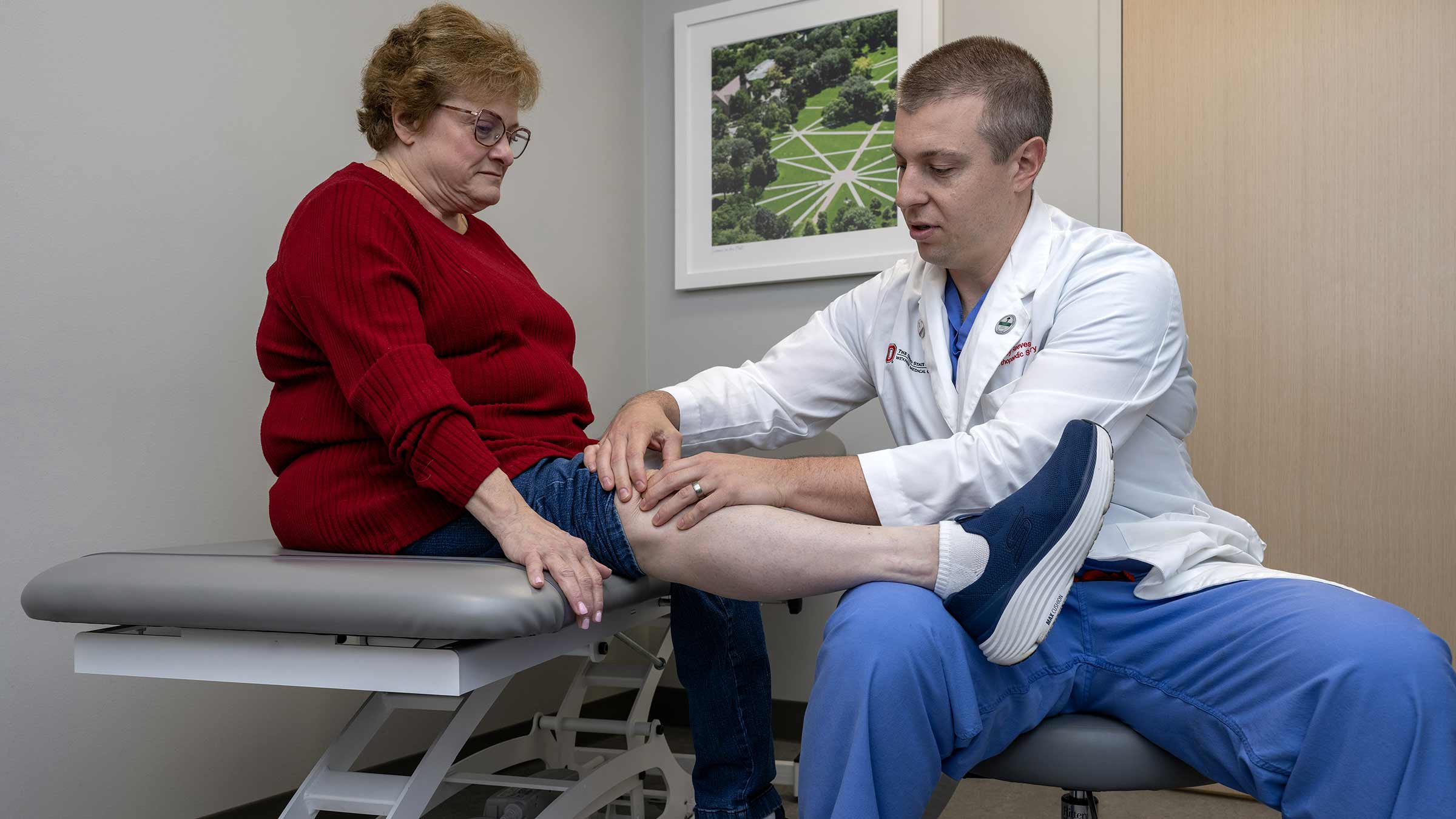
Orthopedic surgeons at the Ohio State Wexner Medical Center are using CT-based robotic tools to help personalize implant alignment, preserve soft tissue and, in some cases, avoid additional surgeries.
Orthopedic robotics doesn’t replace a surgeon’s skill, Dr. Reeves says.
“For certain patients, robotics can offer a superior option because it helps us precisely make our bone cuts, alleviating the need to release soft tissues, hopefully making the patient’s knee feel more like their knee,” he says.
When anatomy isn’t typical, it can lead to complex knee replacements
Complex knee replacements can benefit from added planning and precision.
Dr. Petri-Pickstone was born with a congenital knee deformity that made her right leg bow inward, leaving it about 3 centimeters shorter than her left and giving her a knock-kneed appearance.
As the arthritic damage worsened with age, even routine movement became difficult and exhausting.
The family physician at Ohio State Outpatient Care Gahanna was relying on a cane to get between exam rooms and bracing herself whenever she had to kneel to examine a patient.
When the bad days began to outnumber the good, she opted for surgery.
In December 2024, she had robotic-assisted knee replacement surgery with Dr. Reeves.
“I use robotics in about 70% of my knee replacements, especially when anatomy is more complex,” he says.
Not the robot you picture
Many people picture surgical robotics as large, multi-armed machines controlled from a computer console. In orthopedic surgery, the technology can look much simpler.
Ohio State orthopedic surgeons use both – a robotic-arm platform and a handheld robotic tool.
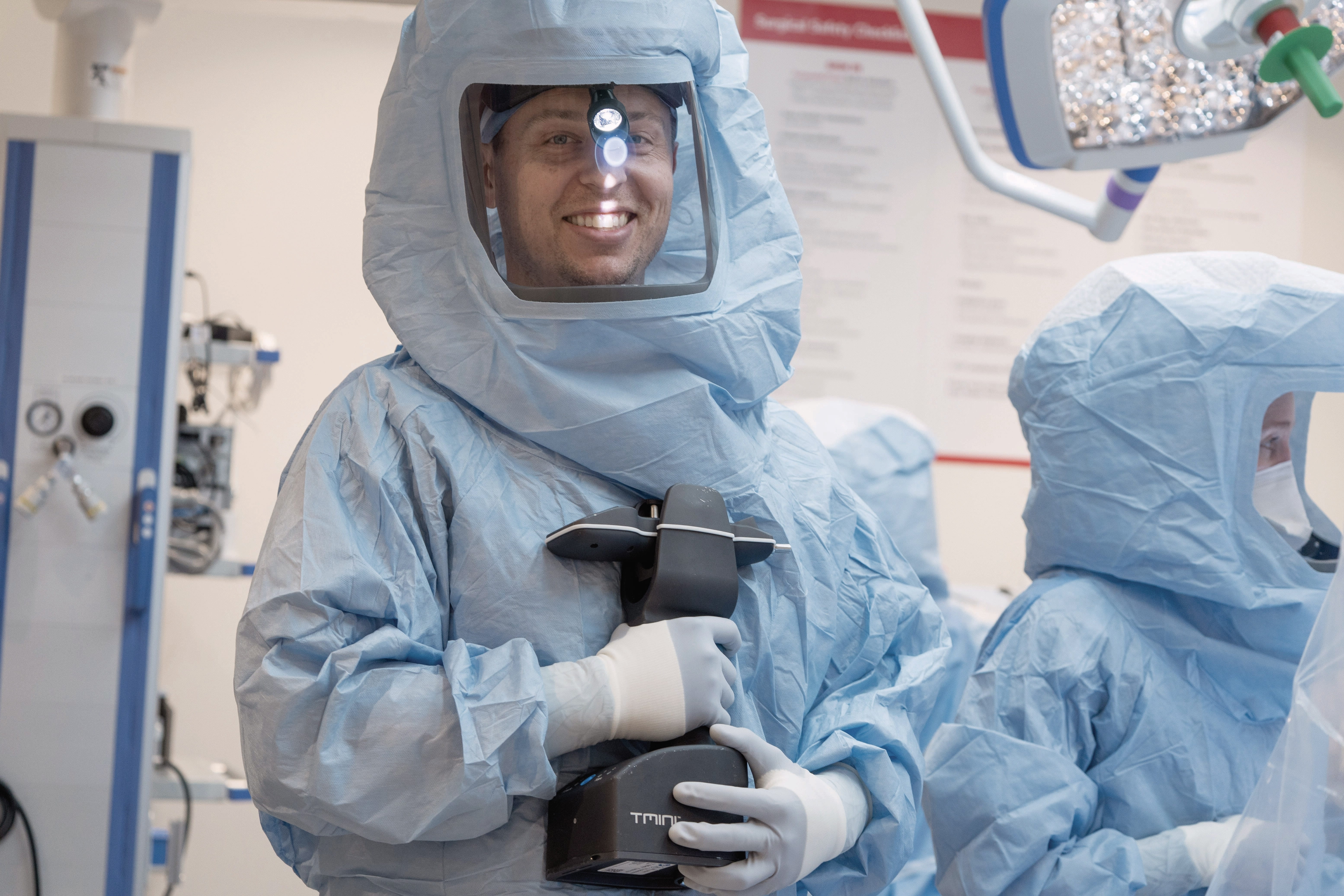
For Dr. Petri-Pickstone’s surgery, Dr. Reeves used the handheld tool that resembles a power drill but is connected to a computer that uses a CT scan as a map for the planned repairs.
“I think the robotic knee replacement appealed to me because he explained that the cuts are more precise. I thought it would be more advanced,” she says.
Dr. Reeves used a detailed surgical planning process to tailor the knee replacement to Dr. Petri-Pickstone’s anatomy, which was shaped by decades of limping.
“If we had made her knee completely straight, I don’t know that it would have felt as natural to her,” says Dr. Reeves, who was able to straighten much of her leg. “We were able to balance the knee to ensure a good functional outcome, while preserving her soft tissue envelope, which will hopefully keep her knee feeling like ‘her knee.’”
Robotic knee replacement: Where art meets surgical accuracy
Before surgery, CT scans created a 3D map of her knee that Dr. Reeves used to plan implant placement and surgical cuts.
In a traditional knee replacement, surgeons rely on anatomical landmarks and instruments placed in the femur to estimate alignment and guide the procedure.
With robotics, surgeons can position the implant with submillimeter and subdegree accuracy. That precision may also improve patellofemoral mechanics – how the kneecap tracks in its groove – which can affect a patient’s comfort after surgery, Dr. Reeves says.
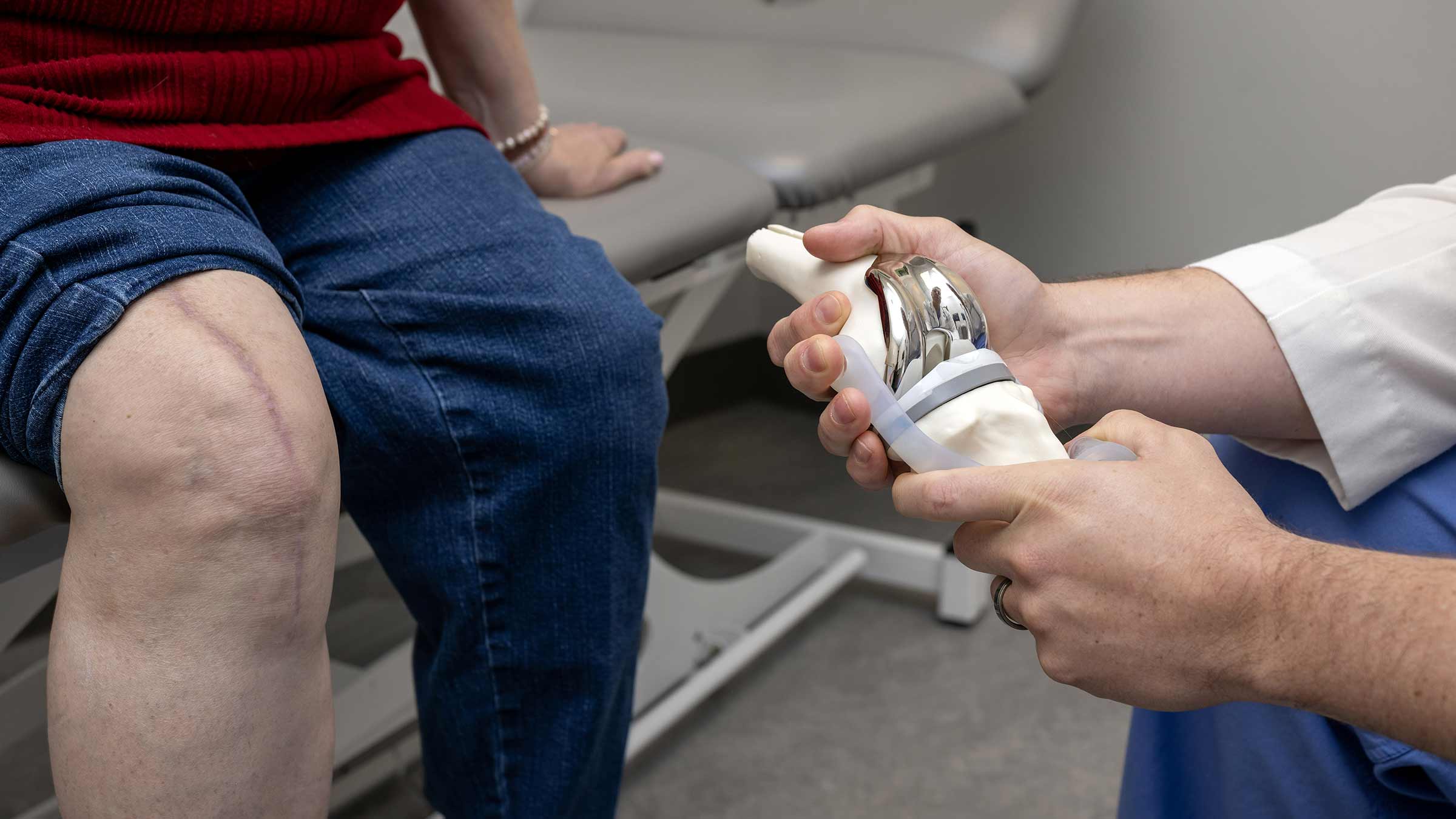
Surgeons are increasingly focused on patient outcomes such as comfort, gait and quality of life after surgery.
“My anatomy wasn’t correct. I was pretty well deformed. He wasn’t satisfied. He cut the bone to make it as straight and balanced as possible,” she says. “I’ve had no problems [since the surgery].”
Dr. Reeves sees robotics as one way to improve knee replacement outcomes by helping surgeons better preserve soft tissue and tailor the replacement to the patient.
Knee replacements restore function, but they don’t always feel entirely natural to patients.
“Give me a paintbrush and I won’t make much of a picture. But in the hands of an artist, that same paintbrush can create something beautiful. Robotics is the same way,” Dr. Reeves says.
“You have to be very familiar with that paintbrush – how it works and how to use it – to create the outcome you want,” he says.
Studies show that robotic knee replacement can improve the accuracy of implant positioning. However, long-term data is still evolving. Because knee implants often last many years, meaningful comparisons between robotic and manual techniques can take decades, Dr. Reeves says.
Recovery and operating times are generally similar for both approaches but can vary.
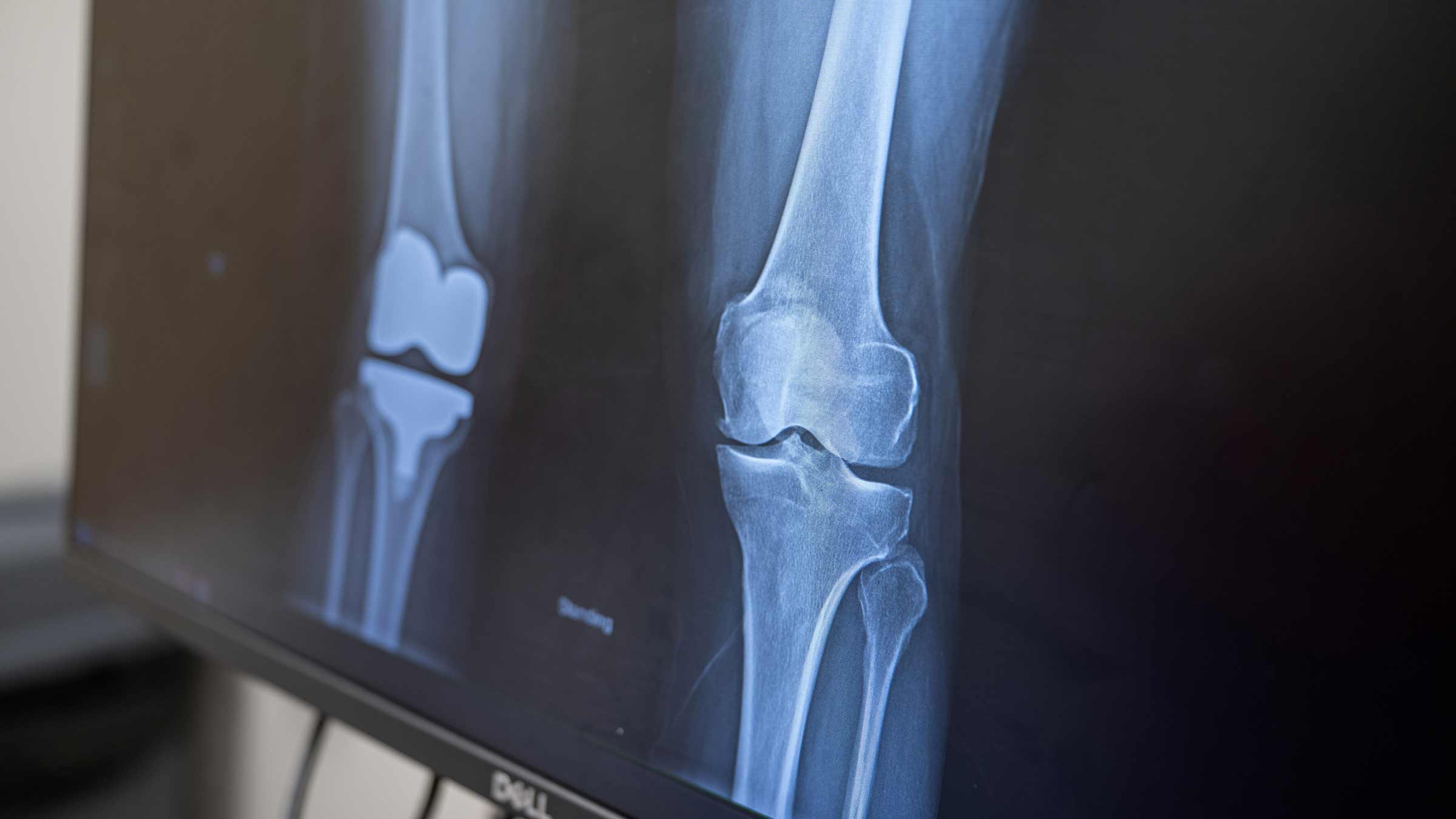
Back in step after robotic knee replacement
After years of living with a painful limp, Dr. Petri-Pickstone regained much of her leg’s length and symmetry.
“My knee is pain-free, so I couldn’t be happier,” she says.
Patients who hadn’t seen her in a while began commenting on her health instead of their own at the start of appointments.
“What’s really funny is I’ve been in practice a long time, so my patients have gone through this journey with me,” she says. “They all knew I was having knee surgery.”
Some have even gone on to have procedures of their own with Dr. Reeves after seeing her results.
“You’re not limping anymore. It looks wonderful,” they told her.
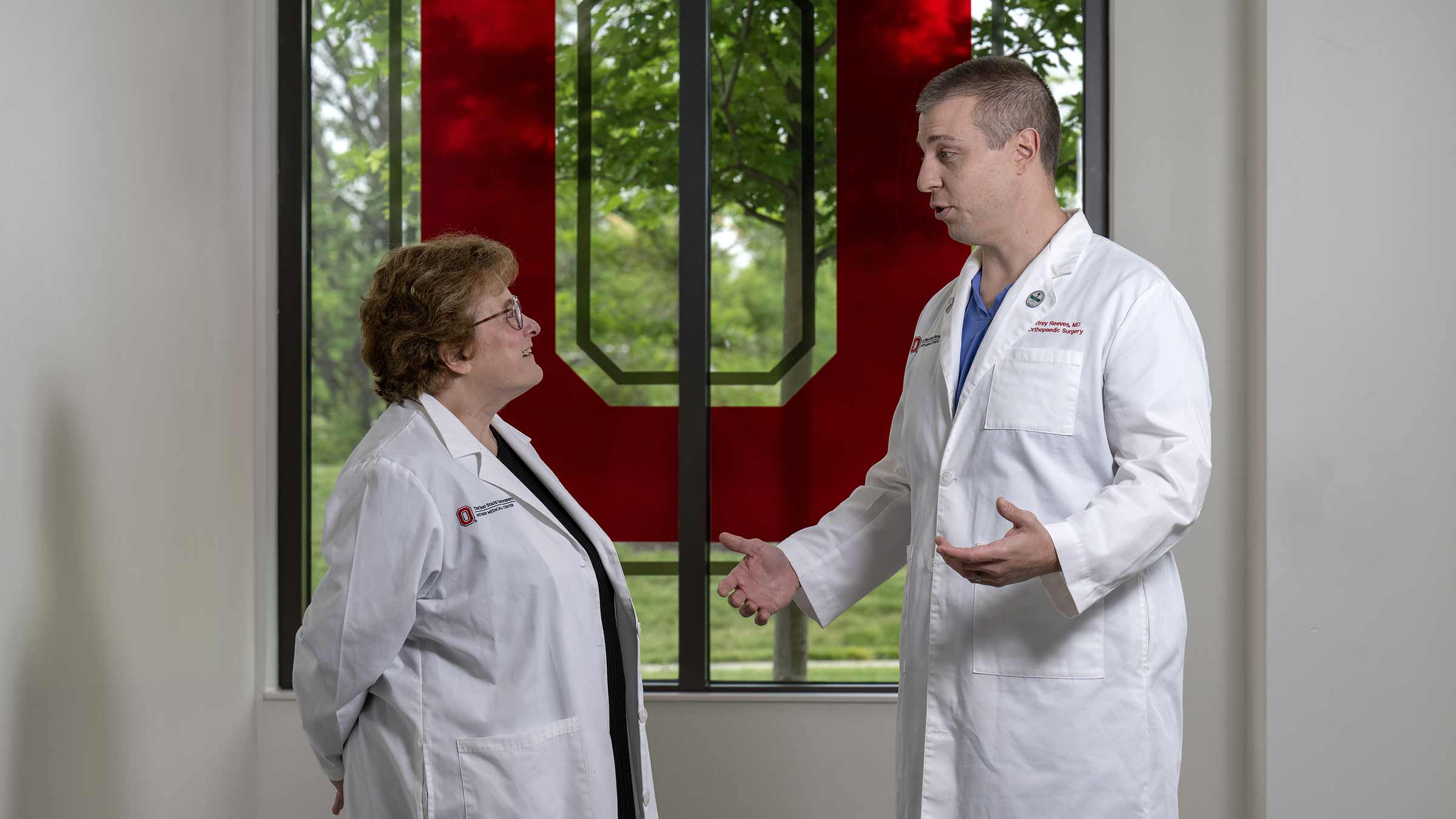
After surgery, Dr. Petri-Pickstone was able to return to caring for her own patients at Ohio State.
“It’s very satisfying when another physician tells me I’ve positively impacted her life,” Dr. Reeves says.
“He’s very kind and compassionate,” Dr. Petri-Pickstone adds. “You sometimes think of surgeons as being matter-of-fact, but he wasn’t. As a fellow physician, I really appreciated that.”

Living with knee pain?
The knee specialists at Ohio State Sports Medicine can diagnose and treat your knee pain to get you back to your sport, or back to a pain-free life.
Expert care starts here