To keep the brain healthy as we age, we must “use it or lose it.”
Lifelong learning is a great way to do this.
The importance of lifelong learning
While we may have mild difficulties retrieving recent memories as our brains age, we can still learn and store information. Learning new information or new motor skills can keep the brain sharp and potentially delay aging effects on the brain.
But research by Ohio State’s College of Social Work has found that older adults do more than gain new knowledge and skills when they engage in lifelong learning opportunities.
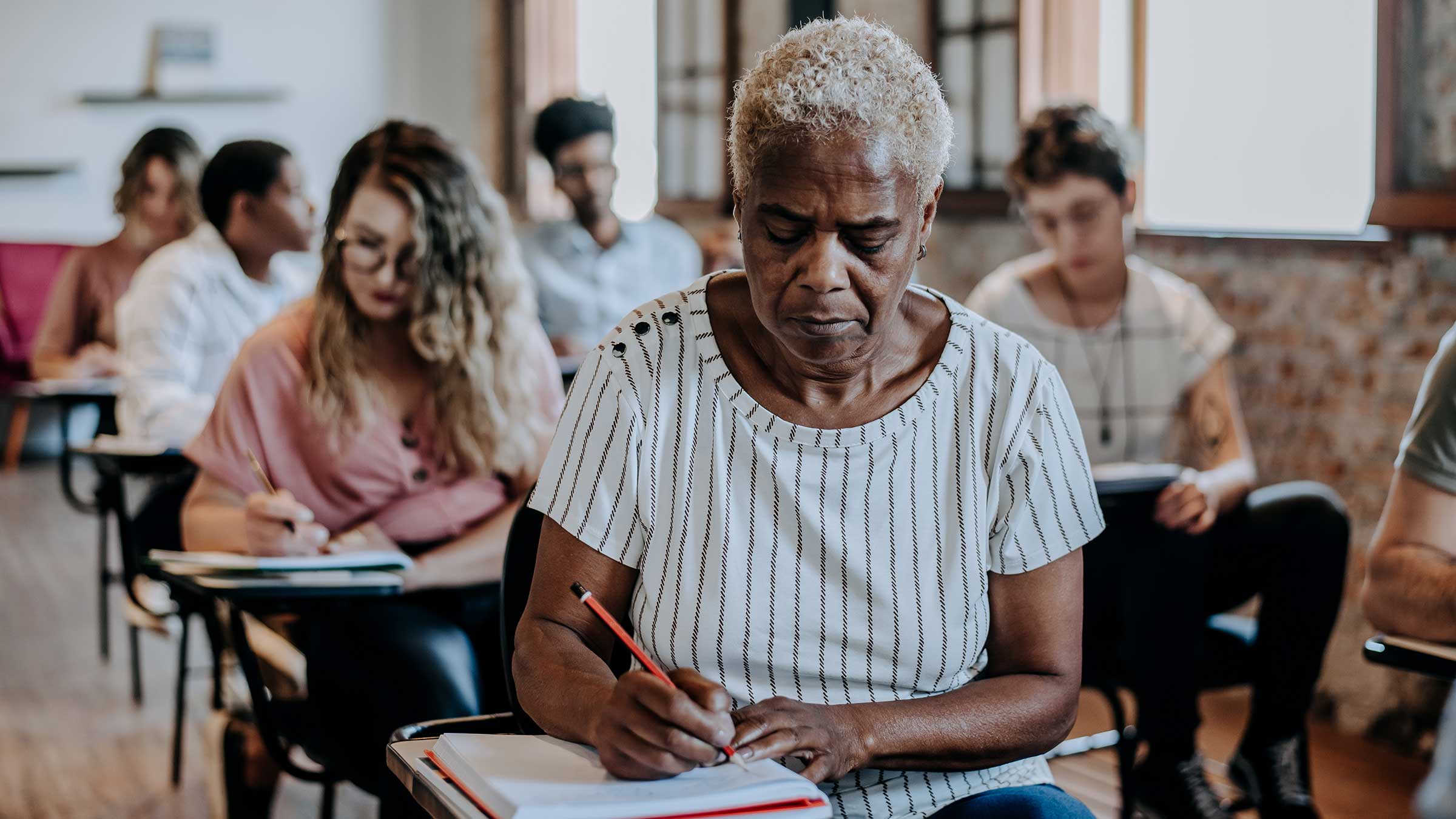
An online survey of 107 participants taking college courses through Program 60 showed that they experienced increased emotional satisfaction and enjoyed taking classes with younger students.
The researchers also reported that such programs expand new social networks with people of different ages and support older adults’ health and well-being, leading to more successful aging.
About Program 60 for lifelong learning
Program 60, available at The Ohio State University and other state universities, gives seniors an opportunity to take college courses tuition-free.
Through the program, people ages 60 and older attend undergraduate or graduate-level classes on a non-credit, non-degree basis as space is available.
How taking college classes can help older adults stay lifelong learners
College courses benefit older adults by:
- Teaching the latest information and how to assess that information in the digital world
- Teaching new regulations or new programs that may be of benefit to seniors and their families.
- Providing socialization and a place to hone communications skills
- Improving learning or motor skills that keep brains sharp as we age
Why older adults should consider interacting with younger generations
Older adults also benefit from building social networks that include people of all ages.
Young people can learn from the older generation through their experiences and knowledge. Older people need to learn the new digital world and new programs that may benefit them.
Other ways older adults can stimulate their minds
Socialize with others
Join a group, go to a play, concert or lecture, involve yourself in discussions that allow you to make associations, judgments, deductions and assessments based on life experiences.
Challenge yourself
Play games, work puzzles, play a musical instrument, invent, innovate.
Work your body
Exercise regularly.
Engage in hobbies or learn new skills
Travel, read, write a story, a letter or a blog.
Give back
Volunteer or lend a helping hand. Teach, or participate in research.

Learn how Ohio State is centering neurology care around you
See all the neurology specialty clinics at the Ohio State Wexner Medical Center.
Learn about neurology care