Emergencies, by their very nature, are unpredictable, and they can be challenging to prepare for. If you’re on a budget or only want necessities, below are must-haves when it comes to over-the-counter medication.
Pain relievers
Pain relievers can be used for aches or to reduce a fever.
- Ibuprofen and naproxen – good for muscle aches but should be avoided by people who have stomach ulcers or poor kidney function.
- Acetaminophen – great for headaches but shouldn’t be consumed with alcohol. It can be great to reduce fevers or pain, even if you feel like it's time to go to the hospital. Be sure to note the time and dose of how much you gave so you can share with healthcare staff as they evaluate your fever. Many people don’t realize it's OK to take a fever reducer before going to the emergency department, as this is often the first step in seeing if the fever will come down.
- Chewable aspirin or non-coated aspirin can be useful when life-threatening chest pain occurs and you’re waiting for EMS to arrive, because it’s antiplatelet. But this should be done only if the EMS directs it to be done while they’re on the way.
Allergy medication
Allergy medication can be used for seasonal allergies or stings.
- Diphenhydramine is great for when you have a bee sting or a strong allergic reaction, but it tends to make people very sleepy.
- Cetirizine or loratadine are great for everyday environmental allergies and are less likely to make you drowsy.
Antacids
Antacids are great for helping in the moment when heartburn occurs, and you might already know some of the foods most likely to upset your stomach.
Calcium carbonate comes in many different flavors and helps to neutralize stomach acid quickly. As the name suggests, it’s also a great form of calcium.
Bandages and ointment
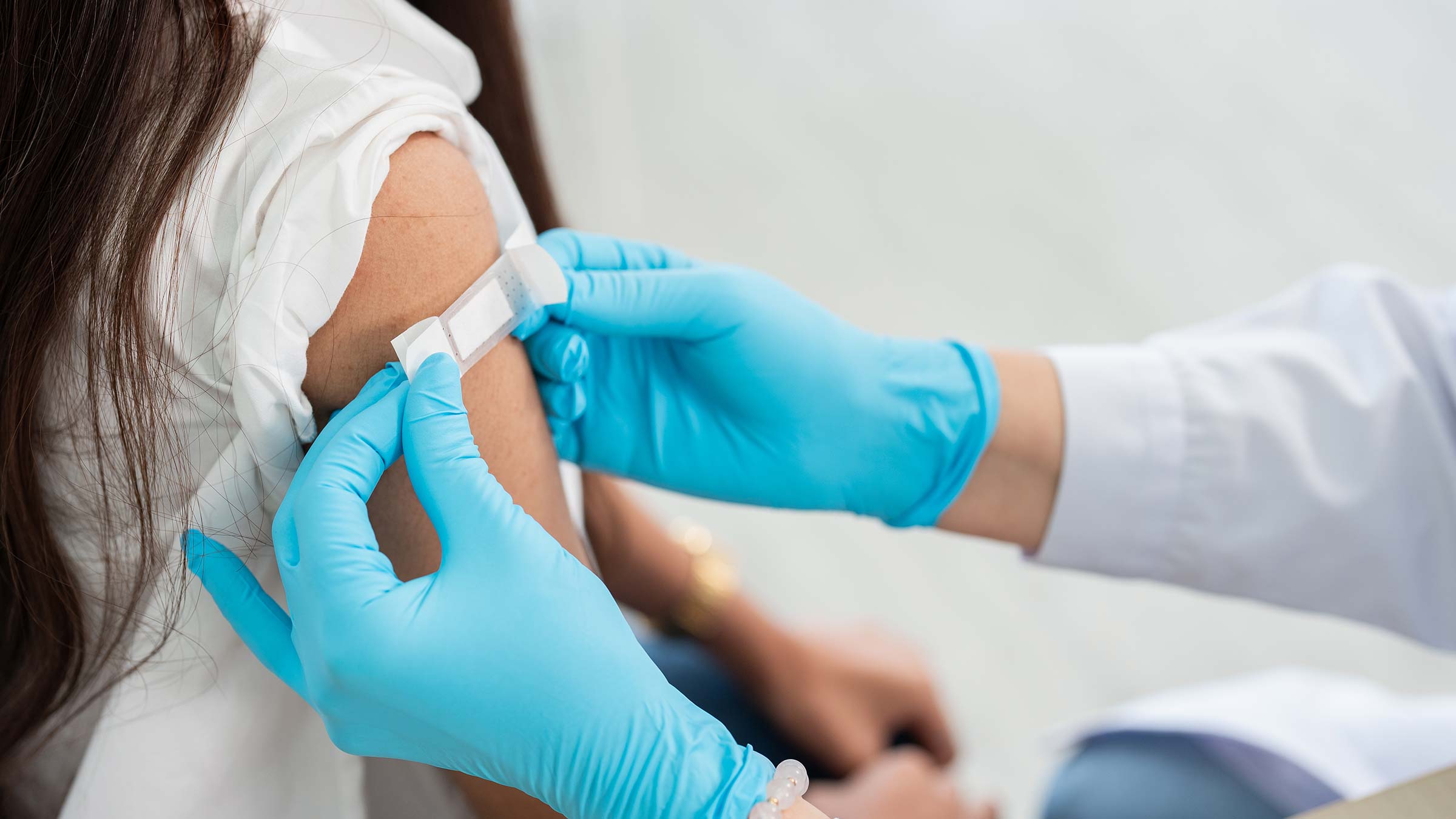
Bandages and ointment are great to have on hand for minor cuts and scrapes. I recommend buying varying sizes. After getting a cut, it’s best to wash the areas with soap and water if possible, then coat it in ointment to help protect the area. You could use antibiotic ointment, but it’s not always necessary if you’re able to wash the area with soap and water.
Choosing which over-the-counter medicines to keep at home depends on your health, what you have easy access to and what you can afford.
Preparing for the unexpected
If you’re preparing for the unexpected, you can expand to add the following medications to treat the conditions below:
- Constipation might sneak up unexpectedly. Adding more fiber and water into your diet is the best way to overcome this problem. If you don’t have time to wait, a stimulant laxative might be useful to have on hand to help you feel better soon. Options include senna and bisacodyl that might include a stool softener too with docusate.
- Cough and cold medicine are especially helpful if you might be in contact with viruses. Cough drops are excellent to have, especially if you have a favorite one (they often go out of stock during the winter). Cough suppressants or mucus expectorants can be helpful but might be best to buy when you need them, since not every cough and cold is the same.
- Sleepless and restless nights often occur when you need to sleep the most, so it might be worth having something to assist. While melatonin is a popular choice, magnesium glycinate is another supplement many like for better sleep.
It’s also good to keep any go to items on hand that work well for you. We all tend to have our favorite items for allergies or stomach relief.
Non-medication items
Non-medication items to keep just in case:
- Ointment and creams: These aren’t always about beauty; our skin needs moisture to function its best. Creams are water-based and usually well-absorbed to moisturize the skin. Ointments are oil-based and are great at protecting the area they’re placed on, so they’re excellent for scrapes and cuts to help protect the area.
- Thermometer: It’s worth checking the batteries to see if it still works!
- Blood pressure cuffs and blood sugar tests: If you’ve been diagnosed with diabetes or high blood pressure, these can be helpful tools to help you check your condition when you don’t feel well, even if you don’t need to test regularly. If you have diabetes, it’s also great to have glucose tabs on hand for when your blood sugar goes low.
- Supplements: If you don’t have a particular supplement in your daily routine, there aren’t many that would be recommended for most people to have on hand. However, some people might keep a multivitamin – B vitamins, vitamin C and/or vitamin D – to help them feel their best. B vitamins boost energy, vitamin C strengthens immunity and vitamin D aids bones and mood. Since vitamin D can be stored in the body for a long time, it's worth discussing with your doctor before taking it.
What to consider before stocking up
Check expiration dates. Most over-the-counter medications are good for around a year, but check the bottle/box beforehand to make sure you can use it in time. Expiration dates are based on 90% of the active ingredients in a medication and how long they remain effective. Unfortunately, there aren’t many studies looking at how the product might degrade past those dates. Safety is always a concern if you take expired medications.
If you’re on a budget, you can build your supplies in phases. Prioritizing what’s most important in your household is different for everyone; many over-the-counter items can be found at dollar stores in smaller amounts and can help you have just a few on hand. The items are eligible for reimbursement through a flexible savings account or health savings account if you’re enrolled in one and have funds available.
Consider health conditions for yourself and others in your household. Some might be prone to more illness than others, which will determine what to have on hand.
Storing your medicine the right way
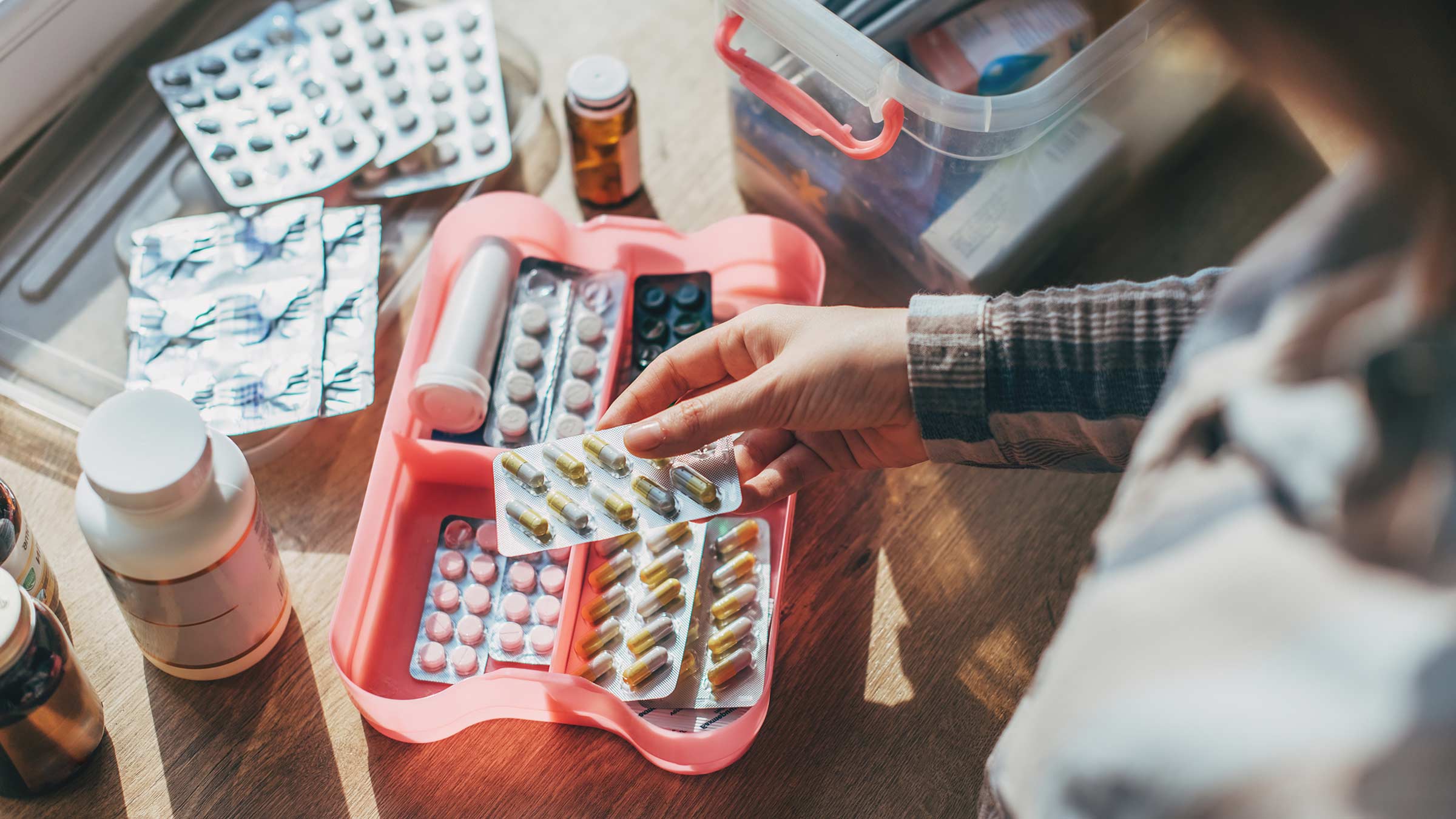
Medications should be stored in a spot where the temperature remains stable and lower in humidity, and away from kids and pets.
Depending on your home set up and general routine, the two locations that could work best are the kitchen or a nightstand. The nightstand can also be good if it has a drawer or door to help keep it away from kids and pets.
Where to avoid storing: If you have a kitchen cabinet not near the oven or fridge, this is the best spot, since both of those appliances can put out heat. People often think of the bathroom, but, depending on how well your bathroom fan pulls out moisture, this location often has many humidity swings that can damage medication effectiveness.
At least once a year, go through your cabinet to discard any expired medications. Some people use daylight saving time changes in the spring and fall as a reminder to check their medications. You can also check ahead of any scheduled drug takeback days.
Things to watch out for and avoid
Hopefully you’ve talked with your doctor or pharmacist about health conditions that might make certain over-the-counter medications unsafe, but I tend to have patients ask the most about acetaminophen and ibuprofen.
If you have poor kidney function or an active stomach ulcer, then ibuprofen is not a good option for you. Acetaminophen should not be used with alcohol, as both are processed through the liver.
Additionally, depending on your liver function, there might be different recommended max doses to take. If you’re unsure, don’t hesitate to ask.
When taking a product, be sure to look at the drug facts label. It’s always good to double-check what medication or medications are in the product and not double up on the same active ingredient or ingredient class.

Manage your healthcare anytime, anywhere
MyChart is your free, secure online portal to manage your appointments, medications and so much more.
Learn what you can do with MyChart