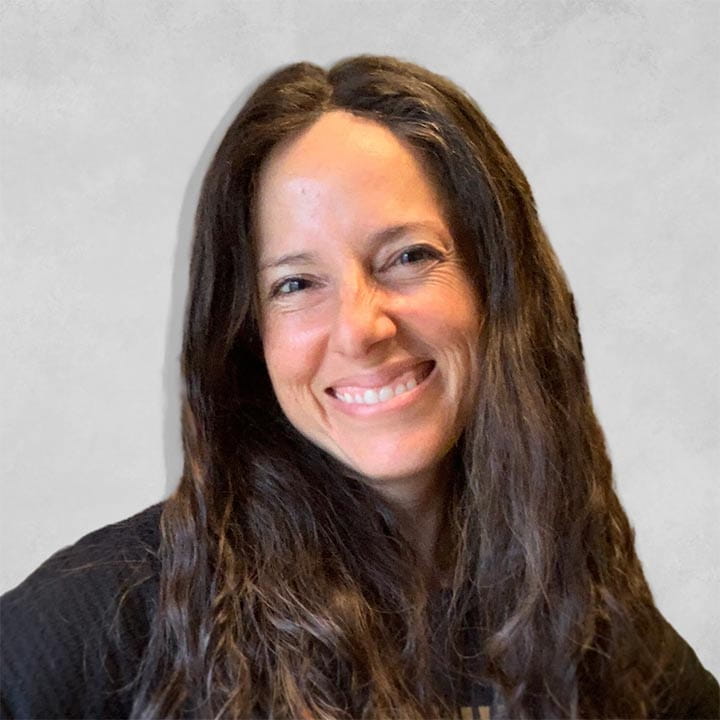
Helping a speech therapist keep her voice after oral cancer
Ohio State head and neck cancer surgeons help a speech therapist save her career despite a tongue cancer diagnosis.
During a routine dental cleaning, Elizabeth Mora’s dentist noticed a small white spot under her tongue. He assured her the spot was nothing more than a benign patch that can occur inside the mouth, called leukoplakia.
Mora didn’t think much about it until months later, when a periodontist examined her mouth before gum treatment and noticed the raised patch about the size of her pinky fingernail. He expressed concern and recommended she get a biopsy before he treated her gums.
Mora was referred to The Ohio State University Comprehensive Cancer Center – Arthur G. James Cancer Hospital and Richard J. Solove Research Institute (OSUCCC – James) for a consultation, and received a callback that same day. She was officially diagnosed with early-stage squamous cell carcinoma (SCC) on her tongue. “I was devastated and cried my eyes out,” she says.
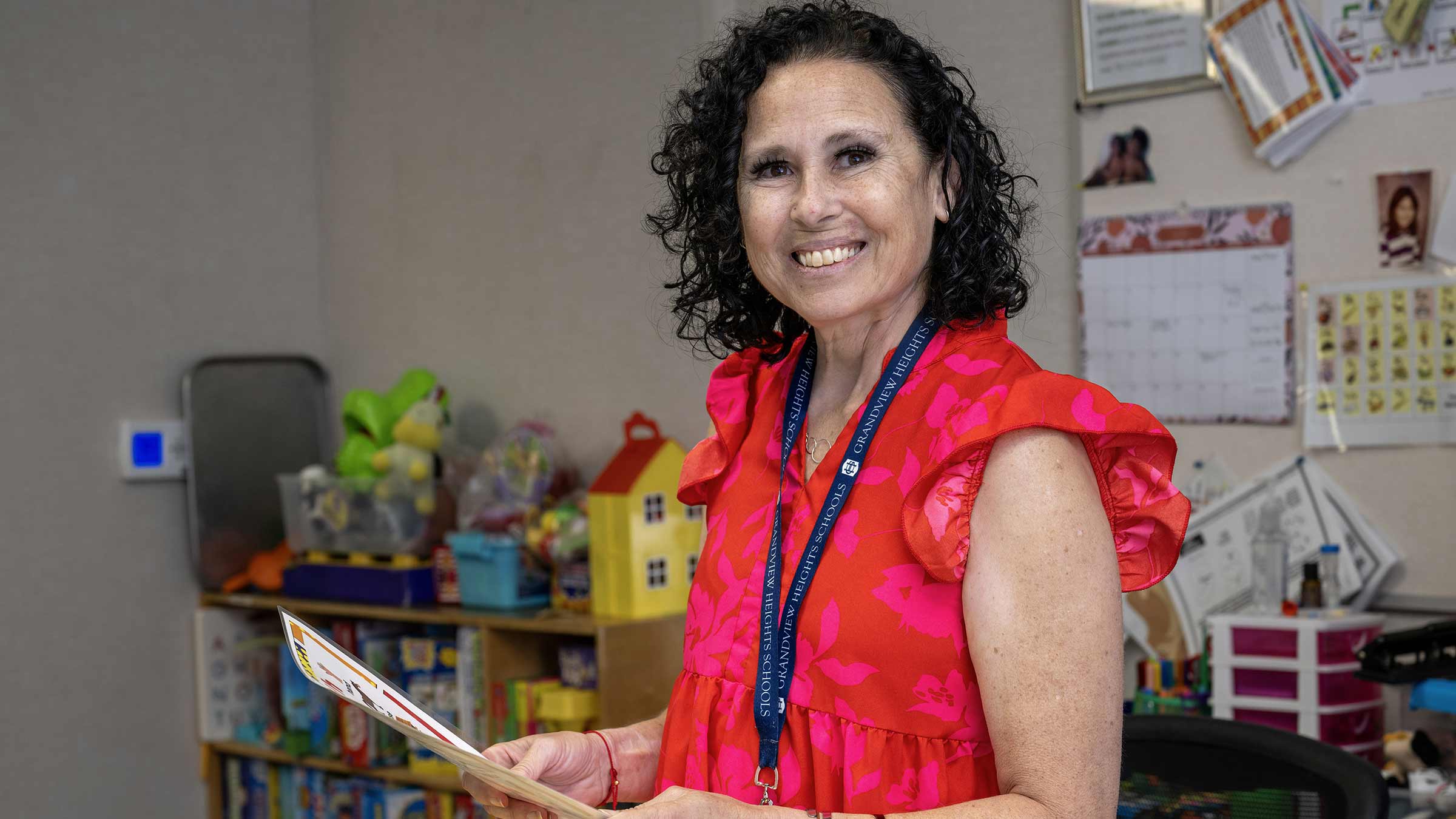
Mora’s decades working as a speech-language pathologist made her tongue cancer diagnosis particularly distressing. Few people know more about the tongue’s importance than a speech therapist. This vital muscle is essential for eating, oral health, breathing and speech articulation. Losing even a small amount of speech could derail Mora’s career.
“As a speech pathologist, my career was on the line, so it was very scary,” Mora says.
Expert surgeon provides reassurance and empathy
SCC is the most common cancer of the mouth, arising from the cells that line the mouth and tongue. It’s highly curable, often with a single operation, when it’s caught at stage I, as in Mora’s case.
“I feel lucky that it was caught so early and that I found the right doctors,” Mora says.
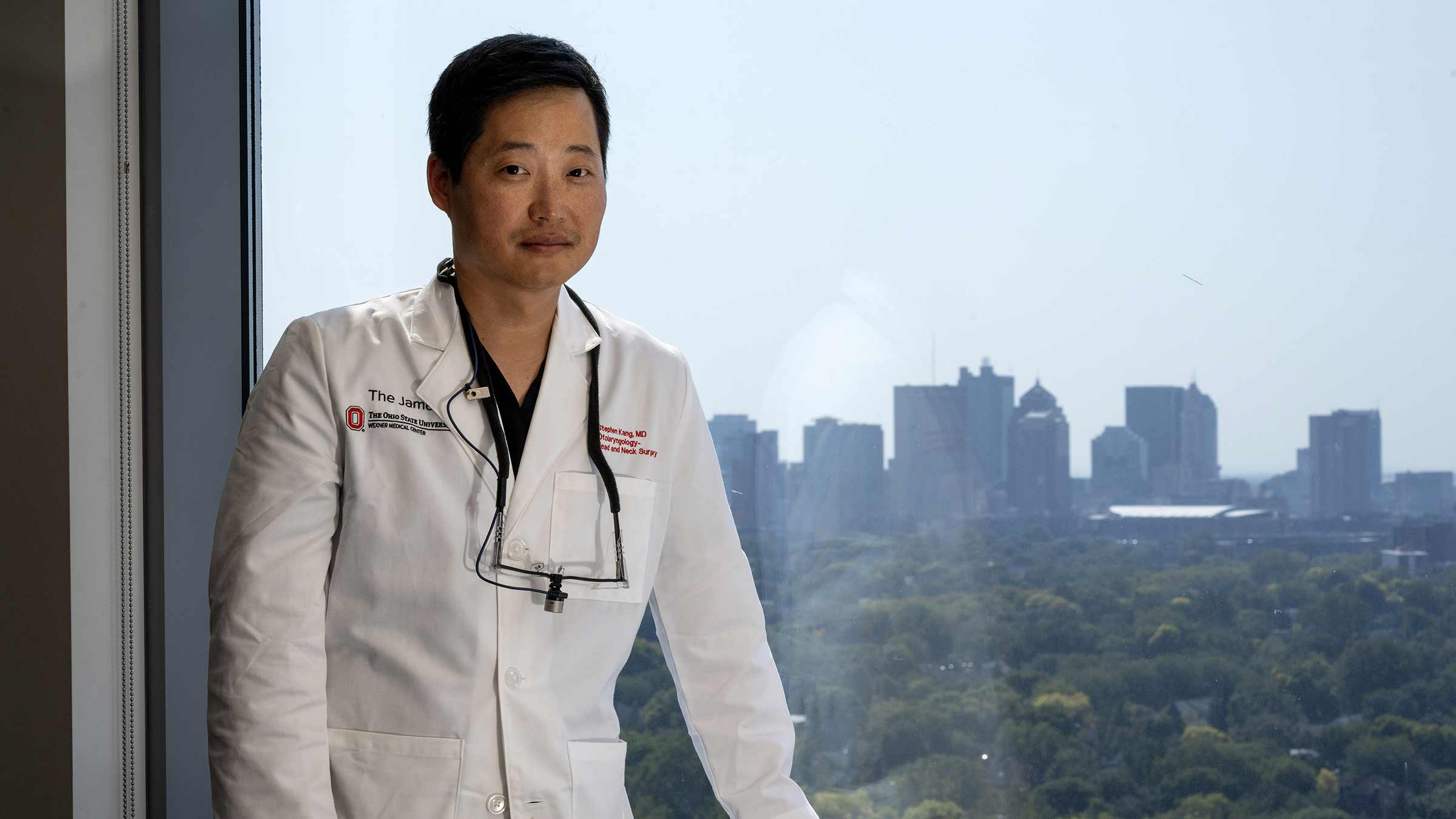
After Mora’s diagnosis, she met with Stephen Kang, MD, a head and neck cancer surgeon at the OSUCCC – James and professor of Otolaryngology at The Ohio State University College of Medicine. Dr. Kang outlined a surgical approach that would involve removing the cancer and reconstructing her tongue with a transplanted piece of tissue from her left forearm.
Mora feared that surgical tongue reconstruction would significantly affect her ability to speak clearly. “Because I’m a speech pathologist, I’m very aware that it would affect my work if I couldn’t use my tongue normally,” she says.
Dr. Kang knew it was critical that he re-create the shape and mobility of Mora’s tongue. While reconstructing the tongue with a tissue transfer is the standard approach to repairing it after tumor removal, the surgical team at The Ohio State University Wexner Medical Center is more experienced than most. “We treat as many oral cancer patients and perform as much complex surgery as any place in the entire country, so we’ve really advanced how we reconstruct these patients,” Dr. Kang says.
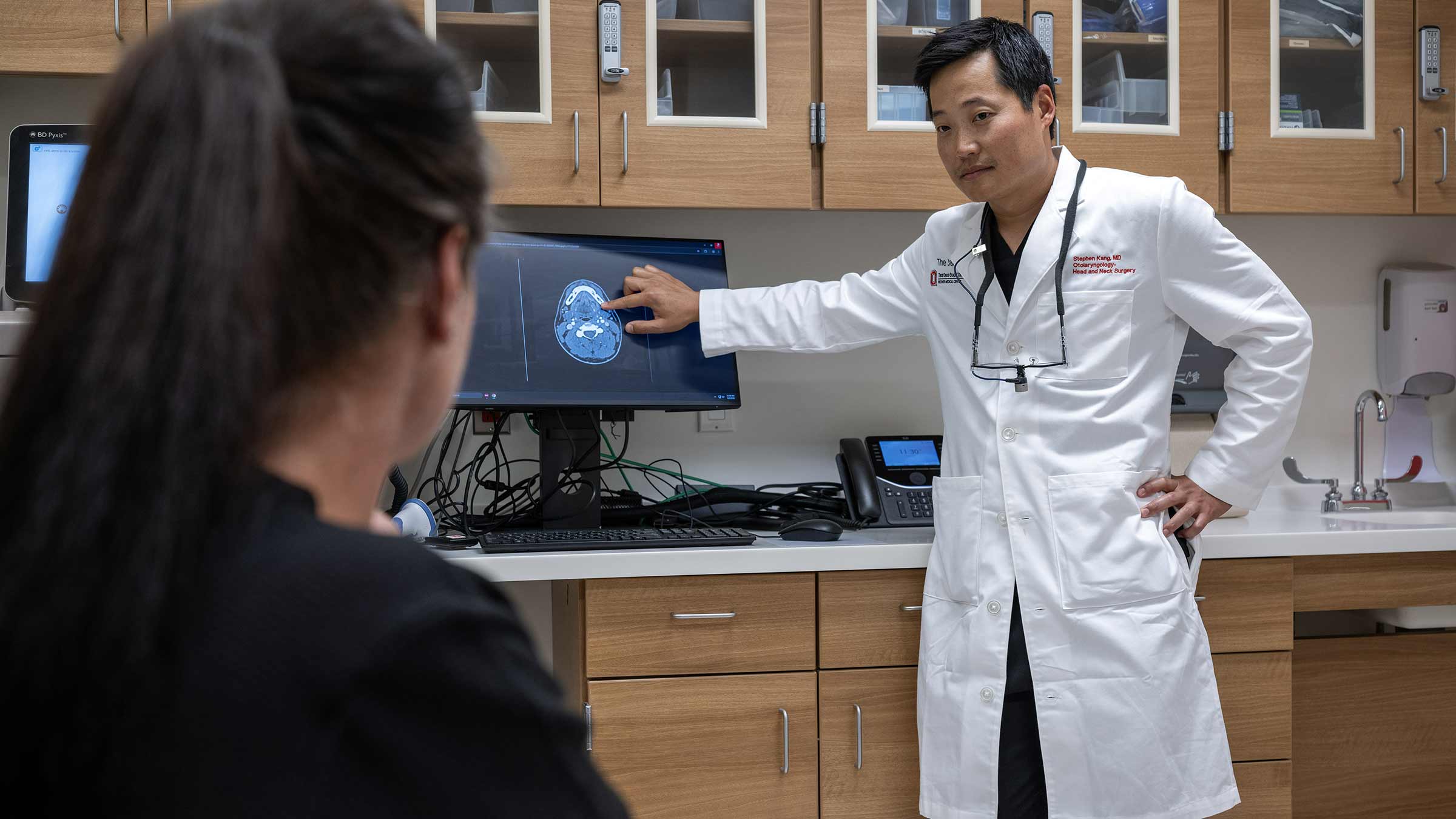
In the past, free flap procedures on the tongue often left people with speech and swallowing issues. Today’s procedures have more positive outcomes thanks to the use of thinner, more pliable transplanted tissue, advanced 3D surgical planning technology and surgeons' improved ability to connect sensory nerves. People like Mora can undergo this complex tissue transfer without others noticing any difference in how they speak and eat.
Precise tumor removal spares healthy tissue
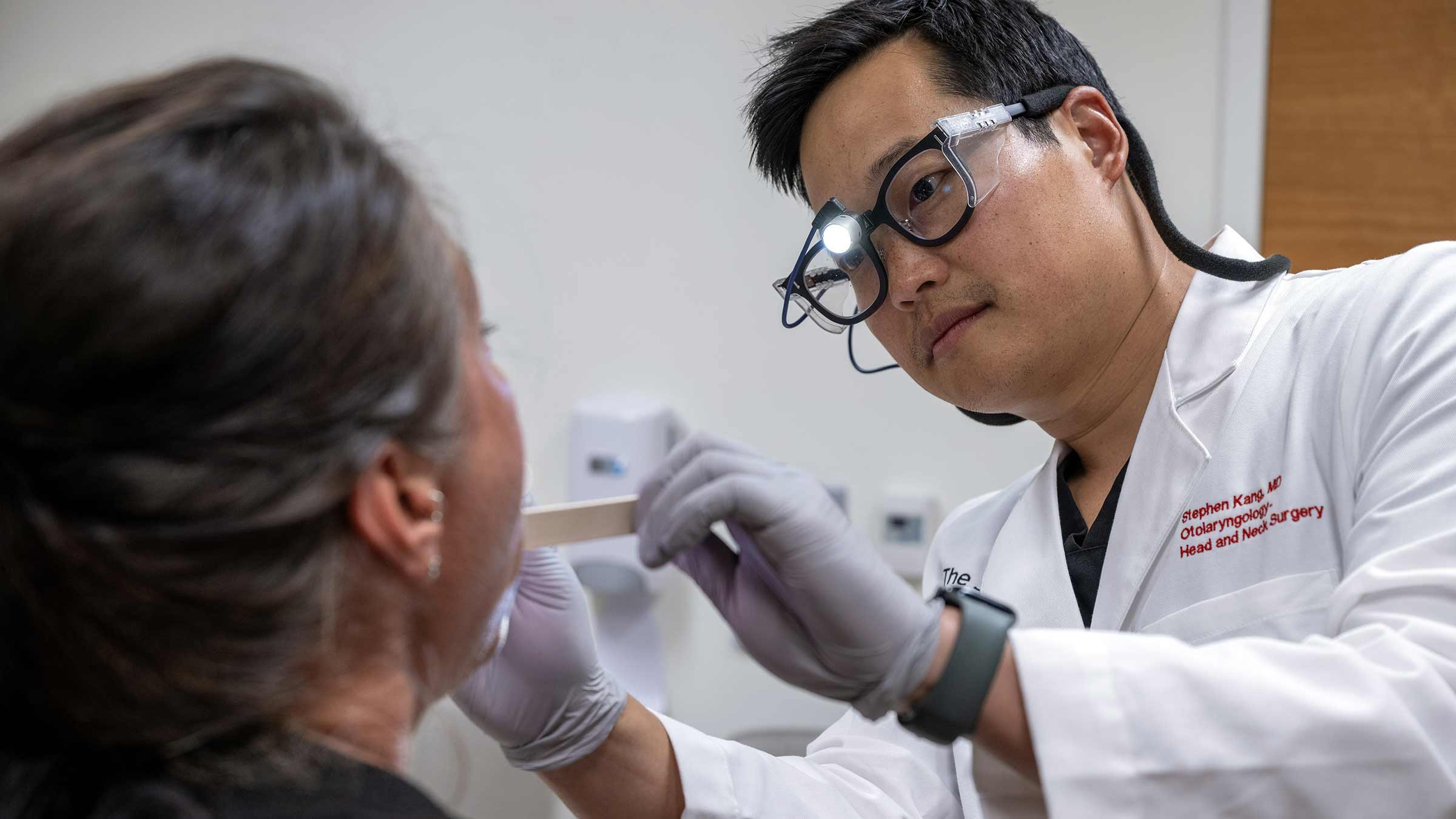
Although the squamous cell carcinoma spot on Mora’s tongue was small, surgery required removing tissue from the tumor’s margins – the cuff of normal tissue around a cancerous area – to eliminate every cancer cell. Margins are a significant factor in patient outcomes because a single cancer cell left behind can lead to a recurrence, but removing too much healthy tissue can lead to other negative side effects. “We want to remove enough cancer to cure the cancer – and not a single bit more,” Dr. Kang says.
Detecting the early signs of oral cancers
Oral cancers, like Mora’s SCC diagnosis, are some of the most common conditions that head and neck cancer specialists treat at the OSUCCC – James. As with every cancer, the earlier the stage, the easier they are to treat.
Oral cancer symptoms usually present as white, raised spots that don’t resolve after two to three weeks. These can mimic canker sores or appear as white or red patches, plaques and non-healing ulcers in the soft tissue of the mouth. Primary care physicians, dentists and oral pathologists are key partners in identifying signs of cancer and referring people for a biopsy test.
“We rely on our colleagues in primary care, dentistry and oral pathology to identify these people because they’re the first point of contact,” Dr. Kang says.
Following cancer treatment, Mora was sure to reach out to her periodontist. “I wrote a letter to him thanking him for saving my life, because what if he had passed me over, and the cancer kept growing?” Mora says.
Lengthy surgery with multiple experts
SCC accounts for over 90% of tongue cancer cases. Surgically removing the cancer offers very positive outcomes, but that doesn’t make it simple. “State-of-the-art reconstruction can make a huge difference in patient outcomes,” Dr. Kang says.
The lengthy operation for Mora’s tongue cancer required two surgeons and a team of clinicians. “Not only is our team experienced, but we’re experienced working with each other, so we know each other’s idiosyncrasies and preferences. Our surgical team works closely with the medical and radiation oncology teams to choose the best treatments for patients, whether it involves surgery, chemotherapy, radiation or a combination. That type of teamwork is really invaluable,” Dr. Kang says.
A head and neck surgeon prepared a flap of tissue from Mora’s forearm, and Dr. Kang removed the tumor from her tongue and resculpted it with the new tissue. He re-created her tongue’s shape and mobility by connecting the flap’s artery and vein to those in her neck to facilitate immediate blood flow to the new tissue.
At the OSUCCC – James’ Head and Neck Oncology clinic, tissue transplants that require connecting veins and arteries are successful 98% of the time – despite the challenges of working with the tiny blood vessels involved. These vessels are typically 2-3 millimeters in diameter, so surgeons use a microscope to see while reconnecting them. Deep experience matters because vessels that small are prone to small clots and very sensitive to reductions in blood flow, which can cause them to fail in their new spot.
“We’ve done this reconstruction so many times that we’ve fine-tuned it to where the outcomes are better, hospital stays are shorter, tissue-transfer success rates are higher and time under anesthesia is much shorter,” Dr. Kang says.
Recovering from tongue cancer surgery
Mora spent eight days recovering in the hospital, where she says her experience was “top-notch.”
“Every single person – every nurse, every nurse’s assistant, every physician’s assistant and Dr. Kang himself – was a 10 out of 10,” she says.
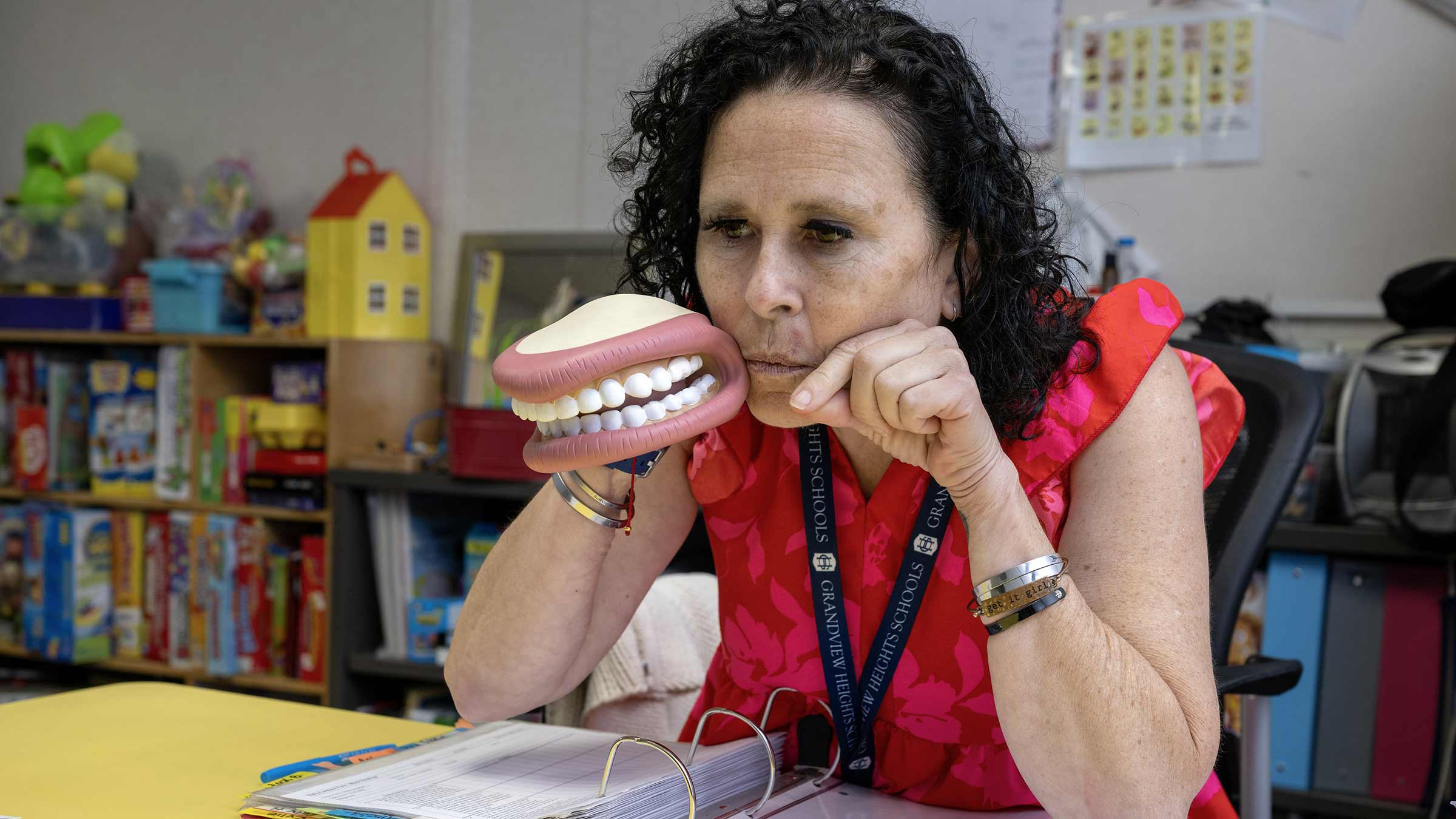
Most people who undergo a procedure like Mora’s spend a few weeks or even months in speech therapy. As a speech therapist, she had the background and motivation to direct her own speech therapy and taught herself to avoid biting her tongue where it permanently hangs over her bottom teeth.
“Especially when you make certain sounds in the English language, like S and Z, your tongue is flat, and the air is vibrating over it. I had to remind myself to pull my tongue back so it wasn’t in the way,” she says.
Mora did tongue-strengthening exercises, and it took six to eight weeks before she returned to work and felt confident about her speech.
“At work, people said they couldn’t even tell I had surgery on my tongue because I was speaking so well,” Mora says.
Dr. Kang sets a personal goal for his patients to function well enough that others can’t tell they went through treatment. “My benchmark for success for her and with every patient is that somebody who’s never met her before would have no idea cosmetically or functionally that she had a major cancer operation,” he says.
Pioneering head and neck cancer treatment for tomorrow
There are currently 12 head and neck clinical trials at the OSUCCC – James, featuring some of the newest, most exciting available treatments. One of the more promising new therapies in head and neck cancer is immunotherapy, a treatment that activates a patient’s own immune system to fight cancer. Surgeons and scientists at the OSUCCC – James are defining where it should sit in the treatment regimen to preserve as much normal tissue as possible while also elevating cure rates.
“There’s no doubt that immunotherapy is going to improve our patients’ lives. What we’re defining now is the timing and how to pair it with surgery and radiation so patients keep more function and more of them are cured,” Dr. Kang says.
Another area of differentiated expertise at the OSUCCC – James is intraoperative radiation therapy, where the radiation oncologist delivers radiation directly to the tumor bed – the area at the highest risk – while the patient is still under anesthesia. “The cells can be treated right then and there because we know the time from surgery to the time of initiation of radiation is really critical,” Dr. Kang says.
One treatment area that remains unresolved is how to restore the tongue’s muscle function. “We’re very good at restoring the shape and volume of the missing tongue, but we haven’t, as a field, figured out how to re-create tongue muscle yet. I’m hoping we’ll figure that out during my lifetime,” Dr. Kang says.
Celebrating eight years post-cancer
Today, Mora’s tongue still feels unusual, but she functions well, though she did lose her sense of taste on the side of her tongue where the cancer was removed.
Still, she remains grateful to be cancer-free and thriving in her career eight years beyond her tongue cancer diagnosis and treatment.
For Dr. Kang, seeing Mora healthy is what drives him to help people achieve their personal treatment goals. “We treat everyone with the same state-of-the-art care, but treating Elizabeth was an extra reminder of how important function is to people and their livelihoods.”

Early detection for head and neck cancers saves lives.
Schedule a screening appointment with the experts at the OSUCCC – James.
Schedule today