Discovering how common viruses can trigger cancer – and finding ways to stop them
Ohio State cancer physician helps lead global efforts to target viral infections that can cause cancer.
A seemingly magical disappearance is what prompted Robert Baiocchi, MD, PhD, to enter the field of viral oncology, which studies connections between virus infections and cancer.
It happened in the 1990s when he was working at Roswell Park Cancer Institute in Buffalo, New York, with a medical team that sparked an amazing recovery for a patient who had developed post-transplant lymphoproliferative disorder (PTLD).
PTLD, which causes white blood cells to rapidly multiply and lead to lymphoma (lymph node cancer), sometimes occurs following an organ or stem cell transplant as a reaction to anti-rejection drugs. Many PTLD cases are associated with the Epstein-Barr virus (EBV). Although nearly everyone has EBV in their body, it usually remains dormant but can be activated by various factors, including taking the immunosuppression drugs that prevent transplanted organs from being rejected.
The Roswell Park team’s leader, Michael Caligiuri, MD, who also was Dr. Baiocchi’s mentor, made a bold decision about the patient with PTLD, which had developed into lymphoma.
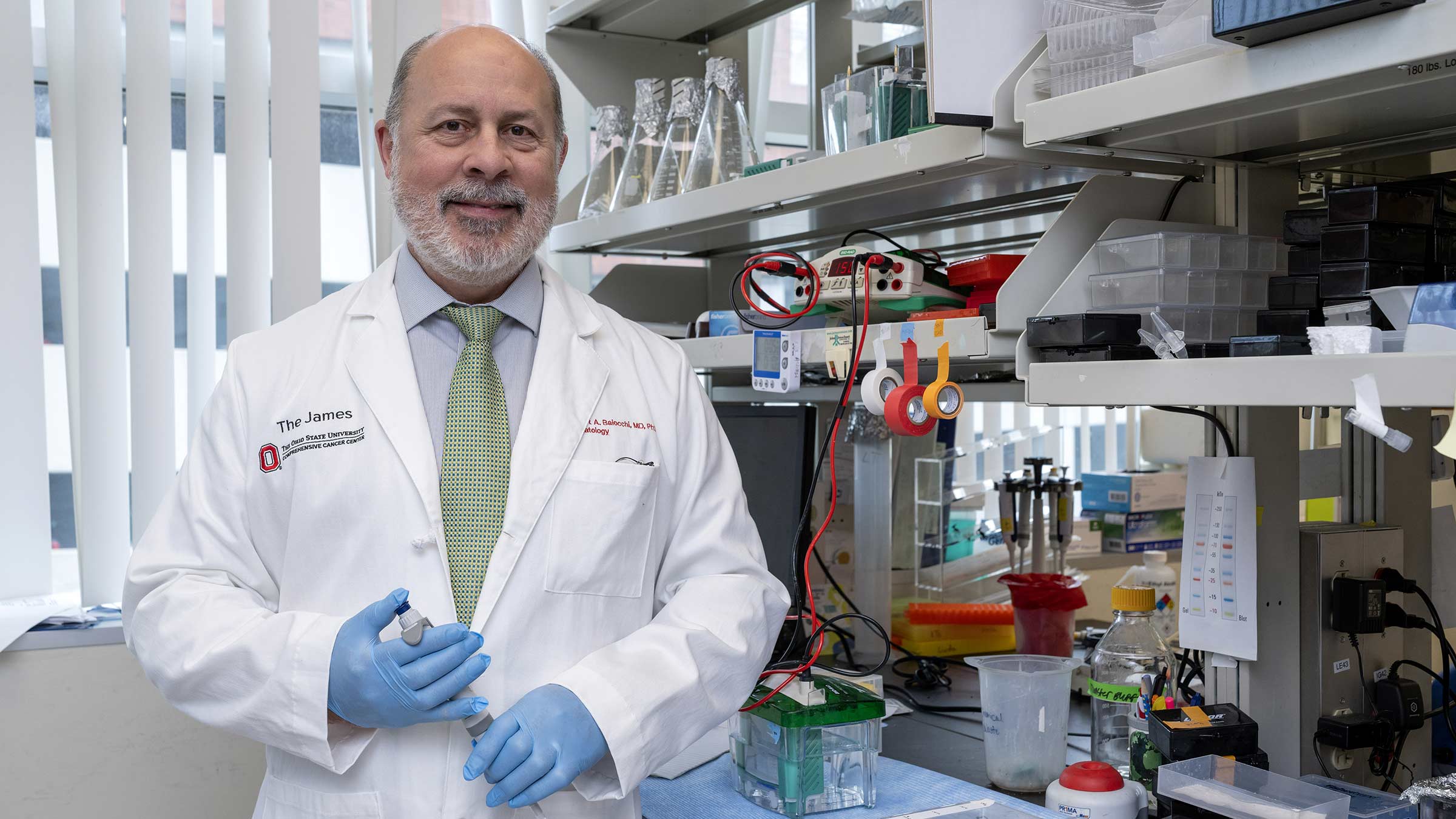
“We didn’t know much about PTLD then, but Mike wanted to remove the patient’s immunosuppression drugs to see how his immune system would respond,” Dr. Baiocchi recalls. “The lymphoma, which was in his blood at high levels, quickly disappeared because a huge population of cancer-fighting T cells rose up, and the disease melted away before our eyes.
“When I saw the cancer vanish over a week or two just by removing those medications and letting Mother Nature kill it, it was mind-blowing. That’s what got me hooked on viral oncology. We started working on new cell therapies, and on vaccines to prevent viral infections. My career really started then.”
Probing the mysteries of viral oncology
According to the World Health Organization (WHO), infections caused by viruses, bacteria or parasites account for an estimated 12% of new cancer cases worldwide. The WHO says the most significant viruses linked to cancer are human papillomavirus (HPV), the hepatitis B and C viruses and EBV.
At the OSUCCC – James, Dr. Baiocchi and his research team study how some of these microscopic agents work, and how best to combat them.
“I love the concepts of viral infection driving cancer, of turning immunity around to prevent it, and of finding cures for patients who are otherwise incurable,” Dr. Baiocchi says.
“Plus, I have a clinic, so I get to see patients and how our research can affect their care. The career of a physician-scientist is so multifaceted that you never do the same thing on a given day. It’s the best job anyone could have.”
Ironically, he almost didn’t have it.
Roving from art to medical science
Despite an interest in biology while growing up in Rochester, New York – influenced in part by an uncle who was a family doctor – he “did a 180” after high school and studied art at St. Lawrence University in Canton, New York.
His grandfather, the late Al Bryant, had been a prominent comic book artist in the 1940s and made a strong impression on Dr. Baiocchi. “I remember he would teach me how to draw, and I was fascinated by watching him.”
But Dr. Baiocchi’s parents wanted him in business school and weren’t interested in paying tuition for an art major. He also realized that drawing and painting “likely weren’t going to pay the bills,” so he switched to the University at Buffalo, State University of New York (SUNY), “where I finally started putting things together.”
Realizing he had to get serious about a career path – both as a practical matter and because he had met his girlfriend, Diana, who would later become his wife – he earned a bachelor’s degree in biology, entered a master’s degree program in natural sciences at Roswell Park and joined Dr. Caligiuri’s lab.
“Meeting Mike was a life-changing moment. I’d never had a mentor or anyone who really cared about my career development, except for Diana,” Dr. Baiocchi says. “When Mike heard my history, he shook his head and said, ‘We’ve got to get you on the right pathway.’”
Dr. Baiocchi earned a PhD in physiology and entered medical school at SUNY, completing two years before joining Dr. Caligiuri in a 1997 move to Ohio State, where he finished earning his medical degree, completed his residency and his fellowship training in Dr. Caligiuri’s lab, and in 2004, joined the medical faculty. He now helps lead lymphoma research at the OSUCCC – James and collaborates with basic, translational and clinical researchers nationally and internationally on multiple clinical trials in the viral oncology field.
“The cancers we study start with infection,” he says, explaining that EBV drives many of these aggressive lymphomas. “Almost everyone has that virus, but I find it interesting how certain patients get EBV-driven lymphomas for various reasons, such as immune deficiency caused by a genetic disorder, or acquiring HIV or AIDS, or receiving medicines to suppress their immune system for an organ transplant.”
National and international collaborations advance patient care
Dr. Baiocchi also contributes to a large body of work with the AIDS Malignancy Consortium (AMC) – a National Cancer Institute (NCI)-supported clinical trials group for AIDS-related cancers.
Through the AMC, he and colleagues have conducted trials that involved the first successful blood stem cell transplants for HIV patients with treatment-resistant lymphomas. Located in the bone marrow, blood stem cells create all cells that reside in the blood. Stem cell transplants can use a patient’s own healthy stem cells (autologous) but more often involve cells from a healthy donor (allogeneic).
“A lot of HIV patients are excluded from clinical trials, and so they were never getting stem cell transplants,” Dr. Baiocchi says. “That’s why we did the first prospective stem cell transplant trials for these patients, and they worked.”
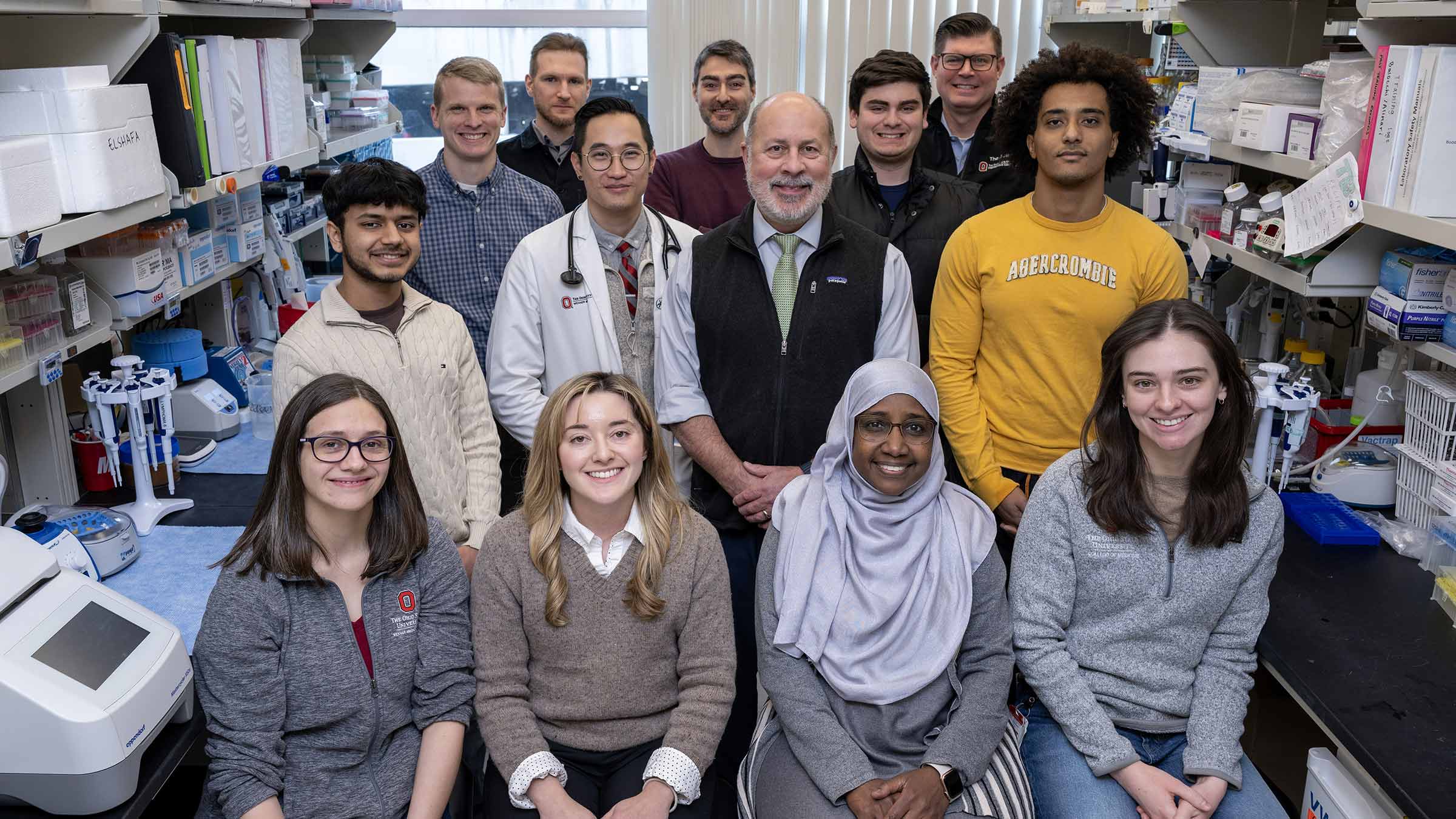
Dr. Baiocchi has worked with his colleagues at Ohio State to build a Viral Oncology Program, where faculty, postdoctoral students and graduate students focus on the development of strategies to harness the body’s natural defense system to prevent and treat virus-driven cancers.
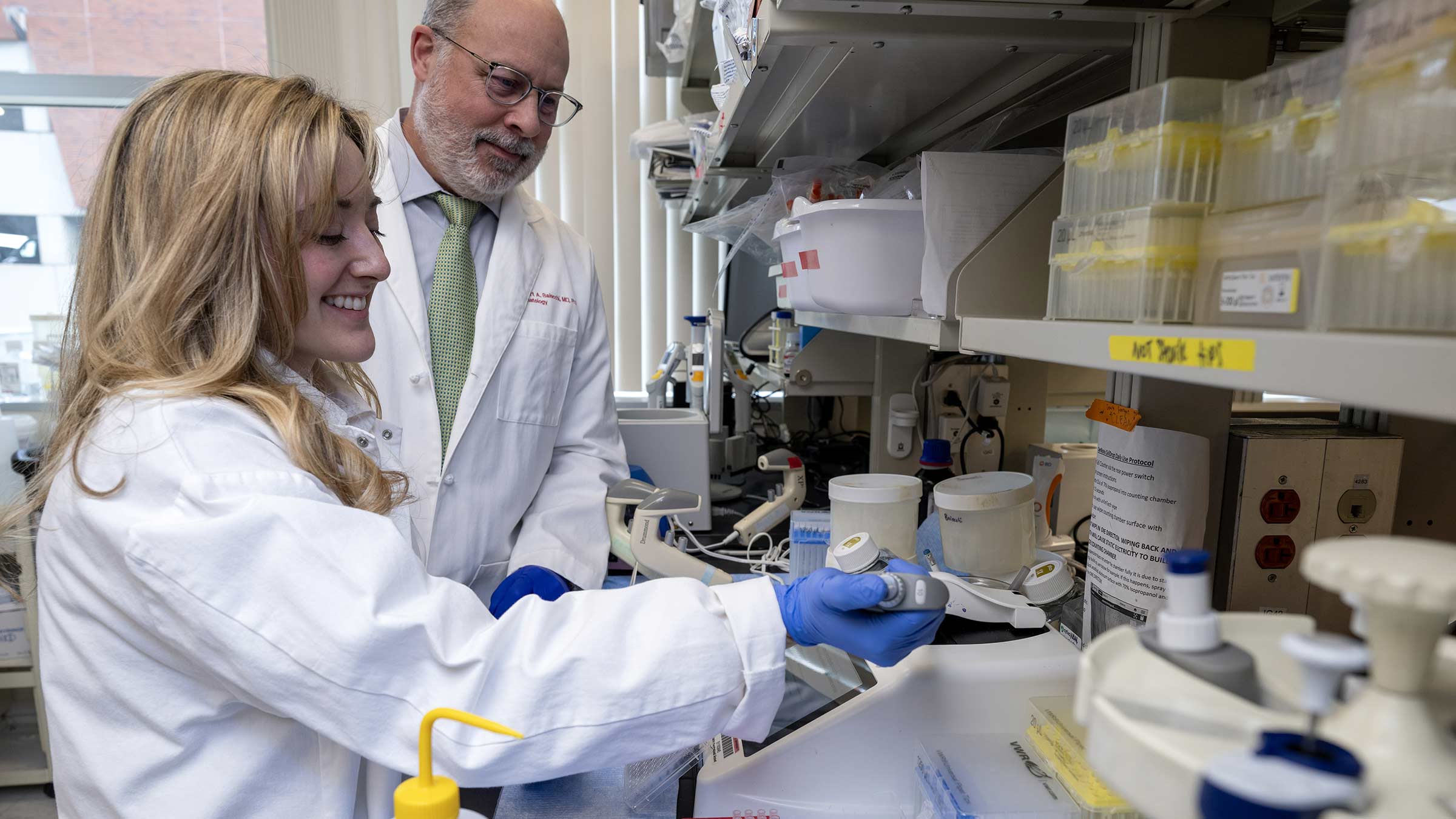
Dr. Baiocchi is also excited about his team’s work with the Global One Health Initiative (GOHi), operated through Ohio State’s Office of International Affairs, to improve the health of people around the world. A focus of his GOHi work has been studying why people in the East African nation of Ethiopia have such high incidences of lymphoma.
“One of our hypotheses was that they have more aggressive viruses there, and it turns out that about 25% of their lymphomas are EBV-positive, compared to less than 5% in the United States,” he says, adding that his team subsequently discovered nine genetic variants of the virus among sub-Saharan African patients, including some that are “super oncogenes,” or genes that when activated can cause cancer. This work led them to present a four-pronged approach to lymphoma patient care that has been accepted by Ethiopia’s Ministry of Health.
“It’s going to be a center of excellence in hematology where we’ll roll out standards of care that will improve the often-terrible outcomes for these patients,” Dr. Baiocchi says.
“They’ve built a hospital where they can perform autologous stem cell transplants, and we’re also starting initiatives in cell therapy and pathology, and a genomics initiative in which we’ll do gene sequencing for 5,000 Ethiopians. This effort addresses an important need, given the complete lack of genomic data on individuals of African descent and the unique vulnerabilities to cancer faced by this population.”
Hope for a mentoring legacy
Dr. Baiocchi believes changing the natural history of a disease through research is an ideal to strive for, but he hopes to especially be remembered as a mentor who helped young scientists develop distinguished careers, just as he benefited from several strong mentors. He currently leads the Division of Hematology’s Mentorship and Faculty Development Program, where he helps faculty navigate the complex pathway to achieve promotion and tenure.
“The value of mentoring is something I learned early from Dr. Caligiuri and others, and now I hope to make a mark by enabling my learners to do great things,” he says. Dr. Baiocchi leads the physician-scientist training programs in the Department of Internal Medicine and College of Medicine, where trainees develop critical skills to use their science to improve patient outcomes. “We can all make our own contributions to science, but the greatest impact we can make is to develop the next generation of scientists and physician-scientists. This is how we pay it forward.”
He also sets an example of contributing to the cause against cancer by participating in Pelotonia, the community and annual cycling event series that raises money for cancer research at Ohio State. He’s one of relatively few people who have ridden in every Pelotonia since the first event in 2009.
“Pelotonia has been a huge shot in the arm for our work,” Dr. Baiocchi says. “Almost all our graduate students and some of our postdocs have received Pelotonia Scholar grants. I’ve received Pelotonia Idea Grants that have led to NCI funding for new classes of drugs that we developed in the lab and are now in the clinic.”
He has no regrets about pivoting from his former art-career ambitions, noting that his artistic talents have served him well over the years.
“I still dabble in watercolors and drawings. Before PowerPoint and Photoshop, I did my own medical illustrations for publications for my PhD and postdoctoral fellowship,” he says. “But these days I’m more into the culinary arts – cooking and making wine for my friends and family.” (He and Diana have three grown children – Danielle, Ethan and Nick).
“I’d say I have a fun and well-balanced life,” he adds.
Accurate, early cancer diagnosis matters
The James Cancer Diagnostic Center gives patients direct, expedited access to diagnostic testing and consultation with Ohio State cancer experts.
Schedule an appointment today