Breaking the cycle of rumination, depression’s negative thought loop
Scott Langenecker, PhD, is pioneering a new way to help people overcome depression by escaping the cycle of ruminating thoughts.
Most people experience the occasional sleepless night as their minds whirl with fears, anxieties and unanswered questions. When these negative thoughts become persistent and repetitive, they fall into the category of rumination, and can take a heavy toll on mental health.
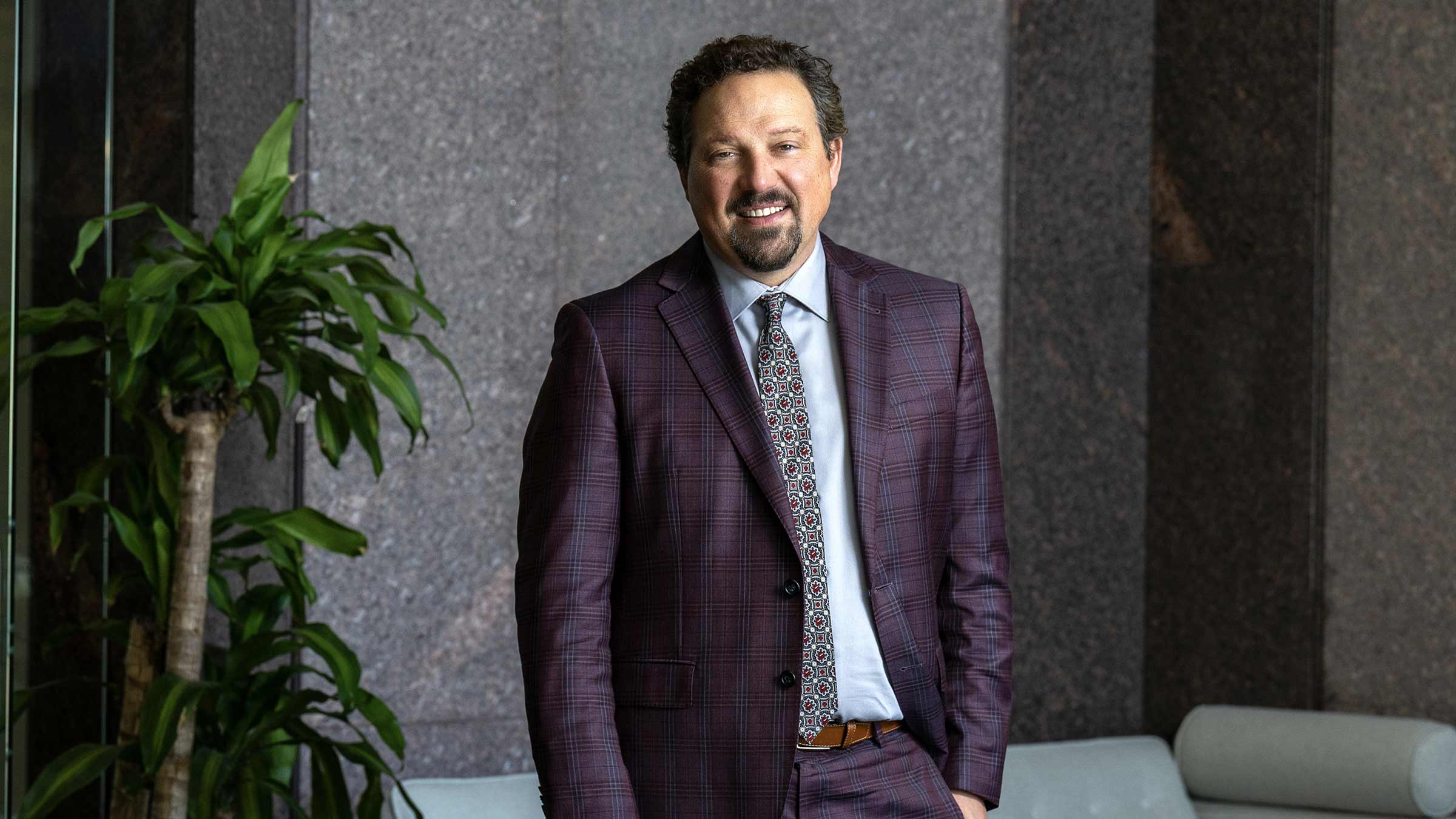
Neuropsychologist Scott Langenecker, PhD, has spent his career bringing hope and clarity to those who struggle with depression and other mood disorders. As a professor and vice chair of research for the Department of Psychiatry and Behavioral Health at The Ohio State University College of Medicine, he studies interventions that make a difference for people from all walks of life.
Now, he’s helping uncover the mechanisms behind ruminating thoughts to provide long-lasting treatment.
Discovering a calling
Growing up in a small farm town in Wisconsin, Dr. Langenecker once envisioned a modest career that paid the bills. He enrolled at the University of Wisconsin as a chemical engineering student before life took an unexpected turn. Sensing he could help, a friend asked him to record a mix tape for someone experiencing a suicide crisis. Dr. Langenecker rose to the challenge, sending a message to the person in crisis about their value as a human being and right to belong.
The message not only pulled its recipient out of crisis but also landed in the hands of a guidance counselor, who urged Langenecker to consider a career in psychology. At the same time, an English teacher praised his writing skills and encouraged him to incorporate writing into his future career. He changed his major to psychology and history and never looked back.
“I was this kid from a small town who had no idea what was in front of me,” he remembers. “But I knew that I loved learning about how people follow their dreams, how they process adversity, how they confront their problems – and how it’s all coded in the brain.”
Changing the trajectory
Dr. Langenecker’s dual fascination with human behavior and understanding how the brain functions made him an ideal fit for neuropsychology, the field of psychology that examines the relationship between the two. As he progressed through his doctoral and postdoctoral studies, he began focusing on helping people with depression expand their skillset. He found that focusing on skills like cognitive flexibility and inhibition could speed recovery.
“Repeated episodes of depression are harmful to the patient, their brain itself, and the people around them,” he says. “The faster we can pull them out of it, the better off they are.”
Over the years, Dr. Langenecker has assessed and treated patients from diverse backgrounds, including people living with developmental disabilities and people with traumatic brain injuries. He began his career working with adults before shifting his focus to adolescents, where early intervention can change the trajectory of someone’s life.
About a decade into his career, Dr. Langenecker began to chafe against the limits of traditional cognitive behavioral therapy (CBT). “There is a point in time when those of us who work with patients become impatient, because the tools we’re using are helpful but can’t always get us all the way there,” he says. “We start venturing out and exploring new ways to help people who are suffering to live more fulfilling lives.”

In 2013, Rachel Jacobs, PhD, a colleague at the University of Illinois Chicago, walked into his office and shared her vision to adopt a new form of CBT developed by a colleague, Ed Watkins, PhD, at the University of Exeter in England. The treatment was initially developed for adults, but Jacobs spotted its potential for teens struggling with ruminating thoughts.
It was the fresh approach Dr. Langenecker was looking for. Since then, he has devoted the bulk of his time and energy to developing and evaluating rumination-focused cognitive behavioral therapy (RF-CBT) for use in teens.
A new way forward through mental health struggles
Rumination is like “being prosecuted and persecuted by your own brain,” Dr. Langenecker explains. Some of his young patients experience persistent thoughts about their failure to live up to their ideal self. Others struggle with feelings of social exclusion or anger at the unfairness of the world.
“We find that teens try to distract themselves from rumination by things like social media, substance use and even self-harm, yet the rumination persists under the surface,” says Dr. Langenecker.
“Rumination kills hope and creativity and energy, making it harder for them to achieve their goals,” Dr. Langenecker says.
As a junior faculty member, Dr. Jacobs found Dr. Langenecker “particularly collaborative and approachable for someone so senior in their field.” With his backing, she conducted an initial proof-of-concept study that successfully pioneered RF-CBT with a group of several dozen teens.
Traditional CBT teaches patients to identify negative thoughts and come up with more neutral ones. With rumination, that process can perpetuate the loop. Rather than digging into ruminating thoughts to see where they lead, RF-CBT emphasizes concrete, action-based problem-solving.

“We tend to think that if we think about something long enough, we’ll figure it out,” Dr. Langenecker explains. “But that’s not true.”
After the success of Dr. Jacobs’s first study, Dr. Langenecker joined her in conducting a larger NIH-funded study. Imaging revealed a clear link between rumination and the region of the brain associated with self-reflection and wandering thoughts. In patients who have received RF-CBT, this region became less activated. At the same time, the teens experienced a significant reduction in ruminating thoughts.
Investing in mental health resilience
In 2023, Dr. Langenecker was recruited to Ohio State by K. Luan Phan, MD, chair of the Department of Psychiatry and Behavioral Health. The two had worked together for more than 20 years in other settings, but Dr. Phan convinced him that something distinct was taking shape at Ohio State.
“There’s something special happening here,” Dr. Langenecker says. “The commitment to scaling research and clinical infrastructure at Ohio State is unlike anything I’ve ever seen.”
“There is a real and palpable sense of hope that is backed up by investment,” Dr. Langenecker says.
Now, Dr. Langenecker is leading a third study comparing RF-CBT to another traditional treatment involving muscle relaxation. One of his collaborators, Mindy Westlund Schreiner, PhD, an assistant professor at Ohio State and clinical scholar at Nationwide Children’s Hospital, is conducting a pilot study on how RF-CBT can help teens at risk for self-injurious behaviors. Like Dr. Jacobs and Dr. Langenecker, she can testify to the difference it has made for her patients.
“What I like about RF-CBT, especially working with young people, is that it doesn’t dismiss negative thoughts as wrong or irrational,” she says. “It’s all about what you do to move on from those thoughts by acting within your control.”
She shares the example of a 16-year-old patient who struggled with depression, self-injury and suicidal thinking during the COVID-19 pandemic. She constantly stayed up late worrying about her family members and their exposure to the virus. Over the course of several months, Dr. Schreiner used RF-CBT to help her patient learn to translate thought into action, protecting her family however she could while acknowledging the limits of her control. At the end of the course of treatment, the patient rarely struggled with suicidal ideation and felt more confident in managing the challenges that arose.
Dr. Jacobs has witnessed similar transformations in her own practice.
“Small shifts in thinking can change someone’s life,” she says. “I have patients who reach out years later to tell me that they earned a degree or got a new job in part because of what they learned in therapy. RF-CBT is a powerful tool for reducing the burden of depression and helping people successfully transition to adulthood.”
While Dr. Langenecker devotes most of his time to research and administrative work, he’s passionate about treating patients using RF-CBT and equipping other clinicians to do the same. Moving forward, his vision is to expand access to RF-CBT by investing in more training.
Beyond RF-CBT, he remains dedicated to tackling depression from other angles.
“There are many pathways to depression and many pathways to building resilience, including RF-CBT,” he says. Since 2024, he has served as the chief operations officer for the State of Ohio Adversity and Resilience (SOAR) Study, a large-scale effort to understand how individuals respond and adapt to adversity across the entire state.
SOAR brings together Dr. Langenecker’s passion for helping young people break generational cycles of struggle with his drive to understand how the brain adapts and changes.
“It’s an amazing opportunity to fundamentally transform how we think about, talk about and treat mental health and substance use conditions,” says Dr. Langenecker, who now serves as SOAR’s principal investigator.
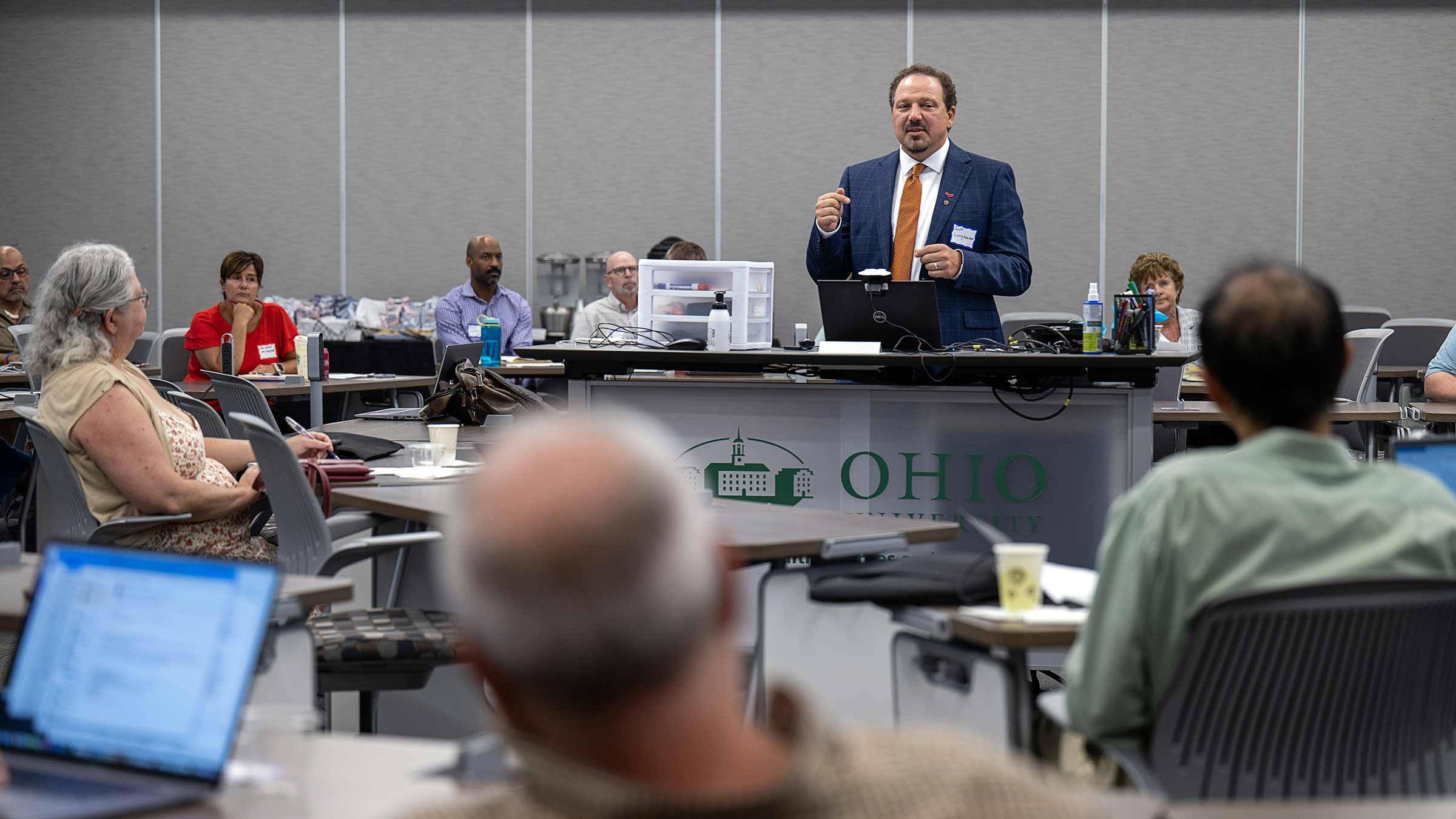
“We’re focusing on learning what people sort out on their own,” he says, “and identifying the skills, supports and opportunities that help them along the way.”
Outside the office, Dr. Langenecker is frequently on the road meeting SOAR study participants over a slice of pie and a cup of coffee. “A lot of people are struggling and suffering,” he says. “But there is hope for them. There is so much to learn and so much more we can do.”

Learn more about the SOAR Study and find out how to participate
SOAR study details