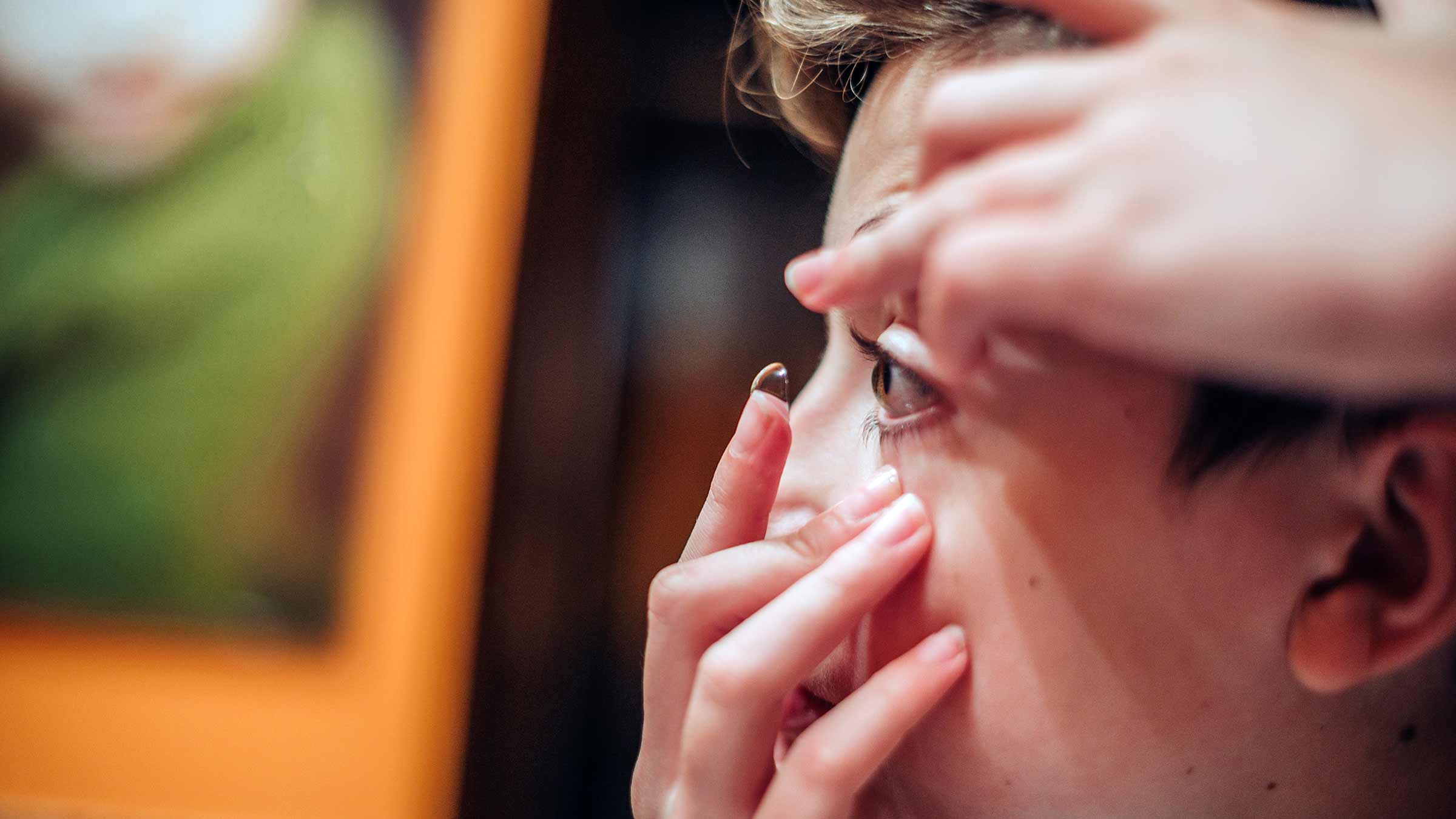
Contact lenses are amazing devices that are medically necessary for some conditions – and a wonderful luxury for typical vision correction.
While some rare conditions require contact lenses in infancy to develop proper vision, most contact lens wearers are people who can achieve excellent vision with glasses but would like freedom from wearing frames on their face. Some children become involved with sports and dance at a high level, and parents often ask when contact lenses would be on option to help them in these extracurricular activities.
How to know if a child is ready for contacts
Contact lenses are a medical device and need proper care to minimize risk of eye infection or injury. Making sure that a patient is able to wear lenses safely is very important. Just as every child learns to walk and read at a different pace, readiness for contact lens wear doesn’t occur at the same for every person.
Questions to ask when determining if a child is ready for contact lenses:
- Is your child responsible? Do they brush their teeth on their own? Do they have good hygiene, including washing hands well?
- Is your child willing to use an eye drop? Or are they afraid of eye drops?
- Is your child a rule follower? Will they abide by the instructions for proper lens wear?
- Does your child have the fine motor skills needed to apply the lenses to the surface of their own eye? Can they remove them safely on their own?
- Is your child motivated? (This is key. Motivation from a parent or coach isn’t enough.)
Talk to your child’s eye doctor if you’re considering contact lenses for your child. Your eye doctor probably has a pretty good idea of your child’s readiness, based on their interactions in the exam room.
Contact readiness checklist
Of course, not every prescription can be corrected with a contact lens, so the first step is to ask the doctor if contact lens wear is possible.
If it is – and your child is motivated – one great way to determine if your child is ready for contacts is to have them put artificial tear eye drops in their own eyes every day for a couple of weeks.
If they can put an eye drop in their own eye successfully (and you don’t find the bottle uncapped and on the bathroom floor), you can feel reassured that they are able and responsible enough to begin the fitting process.
My child is ready for contacts – now what?
At your eye doctor’s office, your child will be taught to apply the lens to their eye and remove the lenses. For their own safety, they won’t be allowed to take contact lenses home until they’ve proven they can do this on their own.
Some children need more than one visit to be successful. Some children can accomplish this as an elementary school student, and some find it daunting even as a teenager.
The key is to keep the experience positive and make the child feel fully in control, although parental supervision is important to making sure proper wear and lens care is maintained.
One final detail: All children need an updated pair of glasses, even if they wear contact lenses. If an eye becomes red or irritated, contact lens wear should be discontinued until a cause is determined and it’s determined safe to resume wearing lenses.
Wearing contact lenses is a great privilege, and many children can wear them safely and successfully under the care and supervision of eye doctors and watchful parents.

Great vision starts here
Ohio State's optometry clinics provide world-class eye care for your entire family.
Schedule an appointment