Empowering ordinary people to step up and save lives through bystander CPR
Through research, education and national leadership, Ashish Panchal, MD, PhD, is changing how communities respond to cardiac arrest.
Ashish Panchal, MD, PhD, still remembers the woman who was standing frozen in the Emergency Department at The Ohio State University Wexner Medical Center.
As a man fought for his life after going into cardiac arrest, all his wife could think about were their dogs.
“I really had to take the dogs out,” she kept saying.
The woman was overwhelmed, scared and was replaying in her mind the moment when her husband had collapsed.
“I didn’t know what to do. I didn’t know what was going on,” she told Dr. Panchal.
The task itself, taking the dogs out, wasn’t important. It was simply the one thing she could control in a moment that felt completely out of control, Dr. Panchal says.
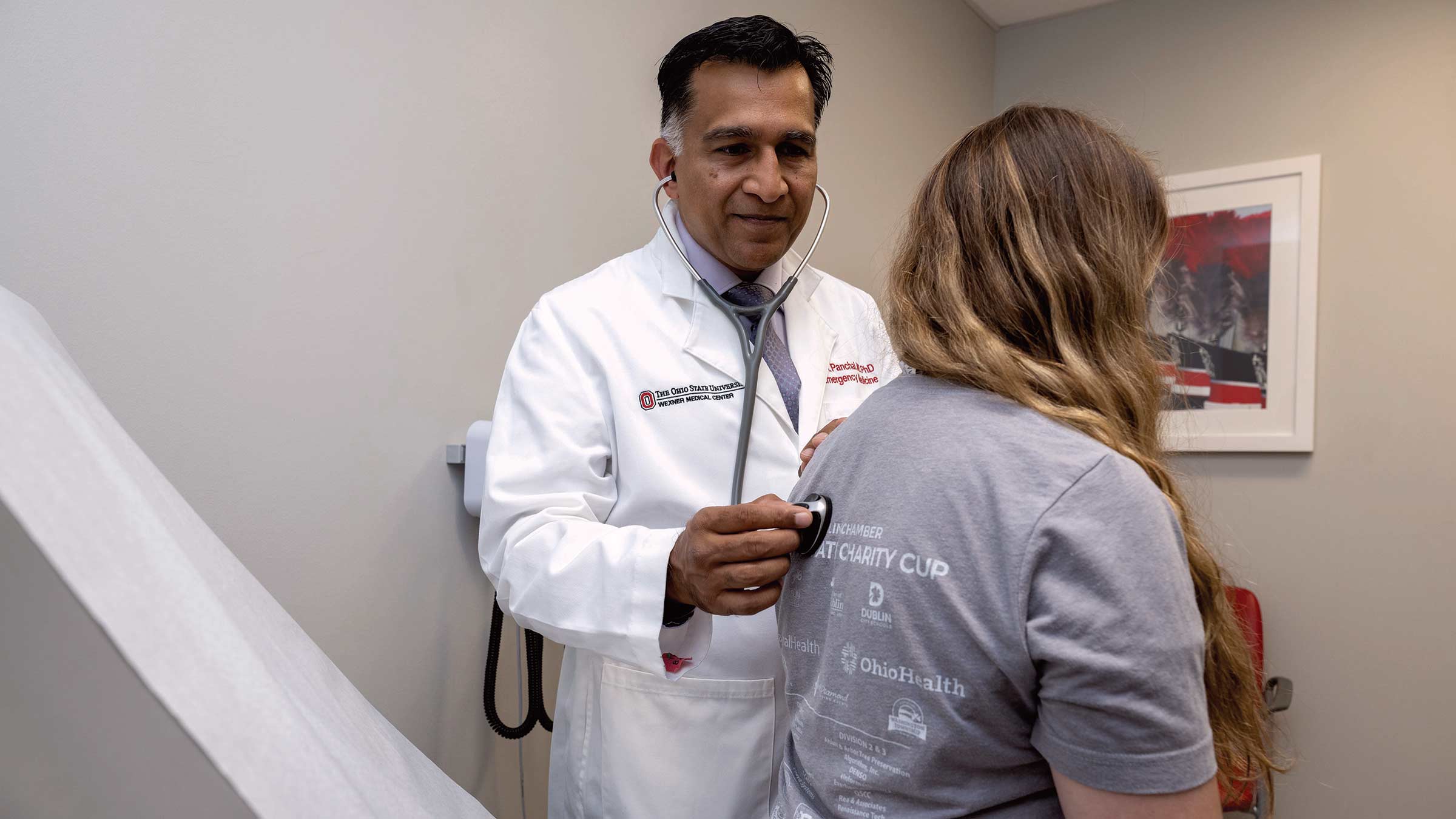
A researcher and national leader in cardiopulmonary resuscitation (CPR) guidelines, Dr. Panchal has worked to improve cardiac arrest survival rates, not just through clinical care, but by empowering bystanders to step in when seconds matter most.
The man survived his cardiac arrest, and his wife learned CPR before he was cleared to go home. She then spent years teaching others these lifesaving techniques so others know what to do during a cardiac arrest.
Her determination left a lasting impression on Dr. Panchal, who at the time was an emergency medicine resident physician in The Ohio State University College of Medicine.
“What struck me was the gap that exists in those moments at home; when someone could save a loved one but feels overwhelmed and unsure what to do,” he says. “That stayed with me early in my career, and it’s why resuscitation became my focus.”
Cardiac arrest often happens outside of a hospital setting
Most modern medicine focuses on what happens inside the walls of hospitals; Dr. Panchal’s work centers on what happens before patients even reach their doors.
Cardiac arrest happens when someone’s heart stops beating, often due to traumatic injury or abnormal electrical activity in the heart.
When people go into cardiac arrest, they’re at home about 70% of the time.
“Every second that goes by, we see huge losses in neurological outcome and survival from cardiac arrest when no one steps in to help,” Dr. Panchal says.
Without blood flow to the brain, the brain is deprived of oxygen. Within seconds, brain cell function is impaired, and within minutes, cells can begin suffering lasting damage.
“Your loved ones are the ones who are actually going to save your life just by calling 911 and doing some CPR,” Dr. Panchal says.
“Once your hands are pushing on your loved one’s chest, your hands are their heart and the blood flows,” Dr. Panchal says.
Bystander CPR can double or even triple survival odds for someone in cardiac arrest.
Emergency services dispatchers are trained to help bystanders start hands-only CPR.
“A lot of times, bystanders don’t know what help looks like or what they can do. And every second that goes by is a second of brain cell loss,” Dr. Panchal says. “We’re making sure everyone has some confidence in what they can do to help their loved ones.”
That’s why he wants people to see themselves as part of the response.
“Without the lay rescuer, without bystander CPR, without that person right at their side from the very beginning doing something, we can’t get the outcomes we want in the end,” Dr. Panchal says. “They are the critical ones who make it all happen.”
Empowering a culture of lifesaving through CPR
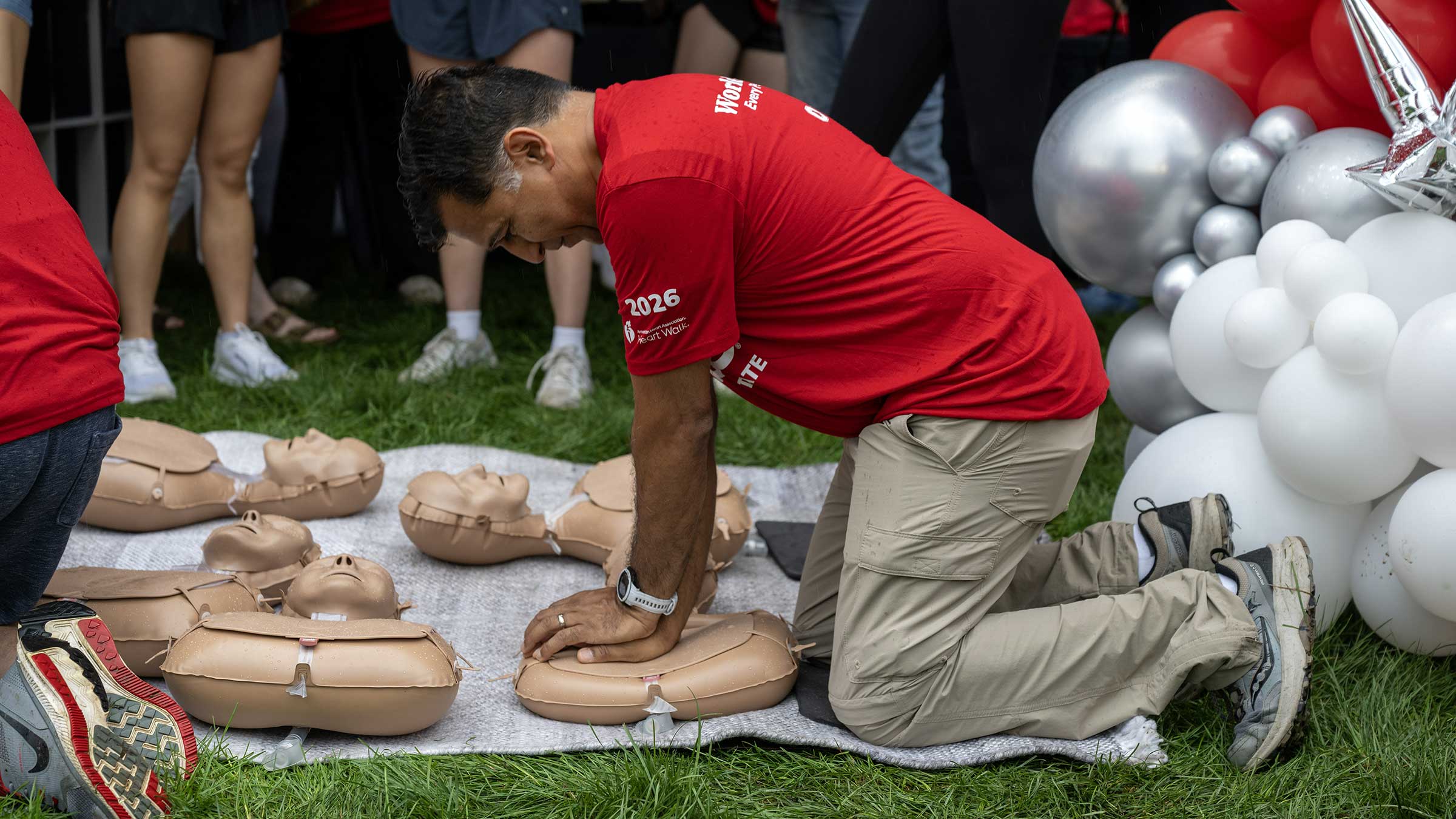
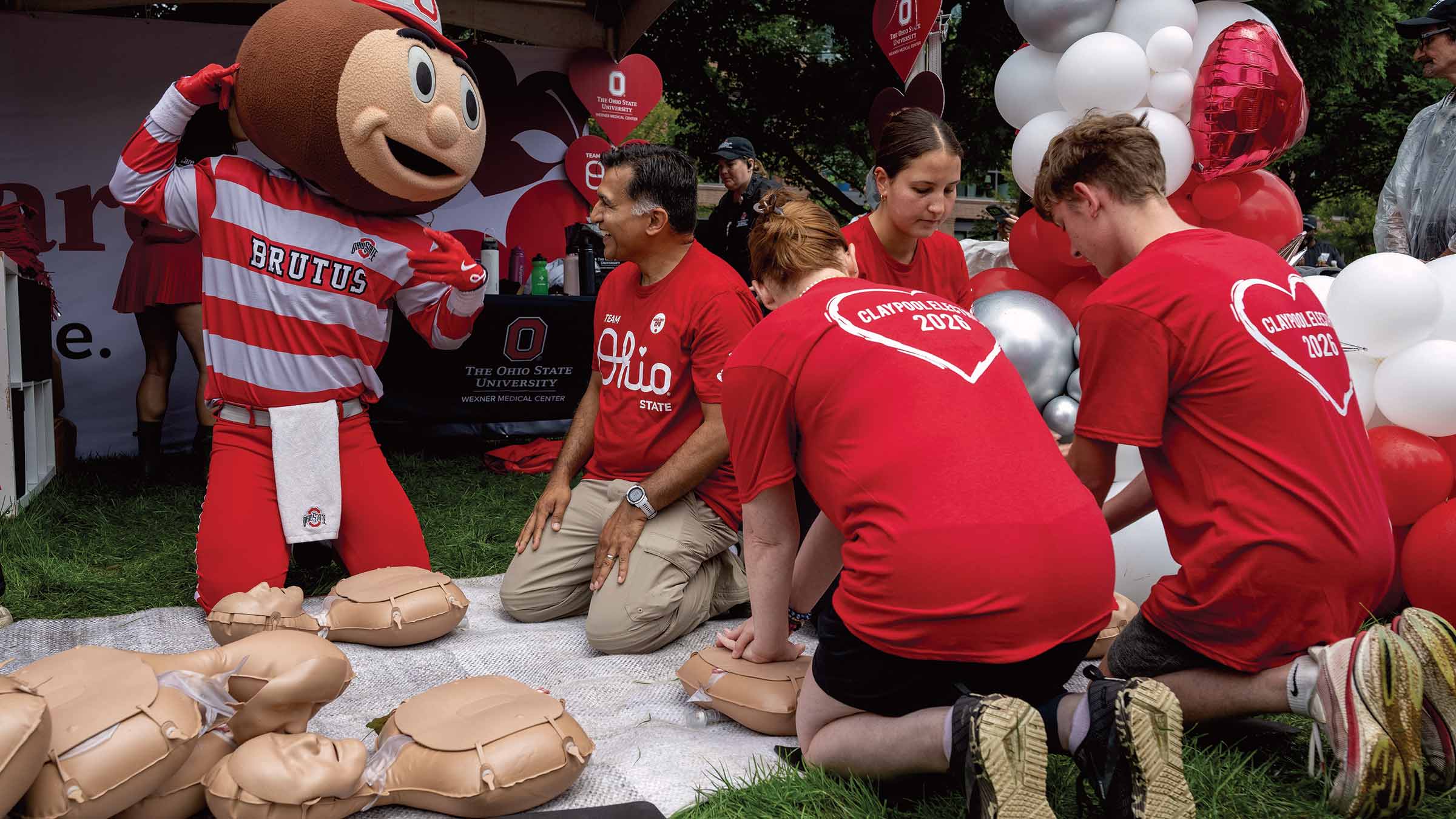
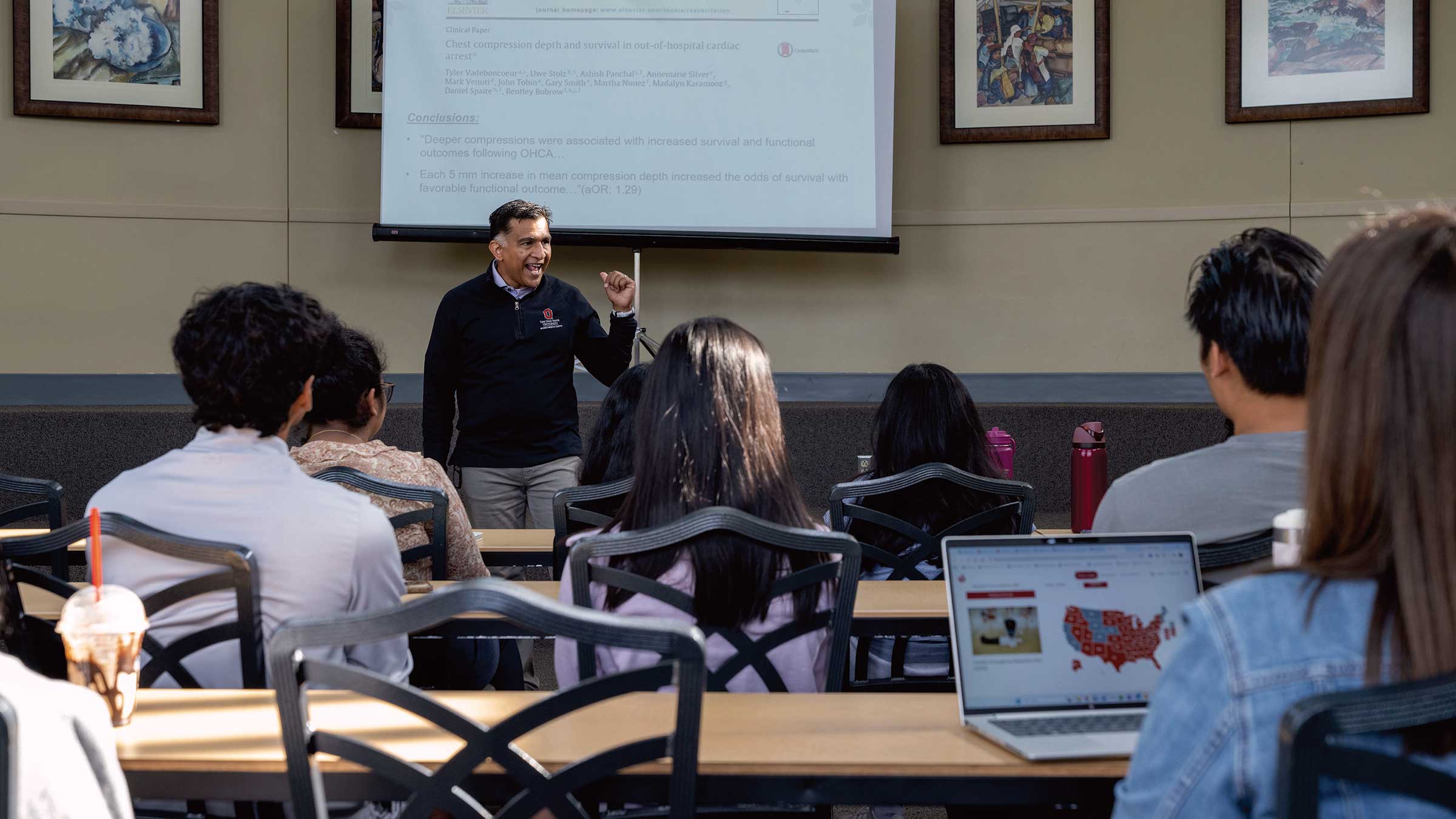
To train more people in CPR, Dr. Panchal created a program to teach students and send them into the community as lifesaving ambassadors. Dr. Panchal launched the Hands-Only CPR internship program at The Ohio State University in 2014, in partnership with the American Heart Association.
Through the program, he’s helped train thousands of people to recognize medical emergencies, perform CPR and step into situations where hesitation can mean the difference between life and death.
“His patience, enthusiasm and passion for research make him an especially effective mentor. His excitement in research endeavors is infectious.”Michelle Nassal, MD, PhD, an emergency medicine physician at the Ohio State Wexner Medical Center who has worked in the internship program with Dr. Panchal.
Students master hands-only CPR, learn about different aspects of care and hear from survivors of cardiac arrest. They have an opportunity to shadow healthcare workers in the Emergency Department, as well as paramedics.
“They get a longitudinal experience over this year of understanding resuscitation, understanding their part in the larger framework and more importantly, they understand how to teach people about how to save lives,” Dr. Panchal says.
The program, which has a minimum of 20 interns, has a ripple effect with as many as 5,000 people learning hands-only CPR at community events taught by the them every year.
“The amount of people they touch throughout the community is unbelievable. It just feeds itself,” Dr. Panchal says.
Bringing resuscitation science to the real world
Colleagues say Dr. Panchal has a talent for bridging methodical science with the realities of clinical practice.
“He understands that generating evidence is only the beginning; meaningful impact comes from translating that evidence into approaches that can be implemented by frontline providers and healthcare systems,” says Henry Wang, MD, an emergency medicine physician at the Ohio State Wexner Medical Center and vice chair of Research for the Department of Emergency Medicine. “Few people are as effective at connecting scientific discovery, operational realities and patient care.”
Dr. Panchal’s research examines the emergency medical services (EMS) workforce, first responder education and clinical outcomes.
“My research has always been around resuscitation of cardiac arrest. So much of it has been what factors can we enhance in a system to improve outcomes,” Dr. Panchal says.
Dr. Panchal is the volunteer chair of the American Heart Association’s Emergency Cardiovascular Care Science Committee, which helped craft the 2025 American Heart Association Guidelines for CPR and Emergency Cardiovascular Care (ECC).
He’s written more than 20 guidelines and scientific statements to identify the best way to improve outcomes after cardiac arrest.
“His career has blended rigorous evaluation of current practice, education of clinicians (EMS and physicians alike) and guideline development and implementation to ensure every patient suffering a cardiac emergency receives the best possible care,” says Alexander Ulintz, MD, an emergency medicine physician at the Ohio State Wexner Medical Center.
That work has helped people perform better CPR and get those in cardiac arrest to the care they need.
“Through my work, I recognize that we affect millions and millions of people every single year. It’s crazy, because you’ll make one little change and there will be a downstream effect where people actually learn it and are able to save lives through it,” Dr. Panchal says. “It’s been an exciting part of my career to be part of that team.”
Every researcher has a ‘why’
Dr. Panchal began his career as a researcher after completing a PhD in cardiovascular physiology.
He then enrolled in medical school at the Ohio State College of Medicine with the goal of using his research background to improve emergency care.
“If you want to ask questions about something, you’ve got to have a strong attachment to it, or it’s just a question. For me, the passion came from my clinical practice,” he says.
While Dr. Panchal was in medical school, his father needed a triple bypass.
“At that point, it really drove me to think about emergency care and how we can improve it in those situations,” he says.
Dr. Panchal was later recruited by the University of Arizona, where hands-only CPR was first pioneered. He learned to be a resuscitationist – someone who expertly revives those who are in cardiac arrest – and began exploring what happens during prehospital care.
“We call ourselves resuscitationists because our job is to identify the problem, stabilize the patient and bring in the expertise needed to support the best possible outcome,” Dr. Panchal says.
Dr. Panchal has spent his career looking at how to improve outcomes.
After his residency, he started working with first responders.
“These people change the world every single day. They’re out there on the front lines, and we need to sing their praises,” Dr. Panchal says.
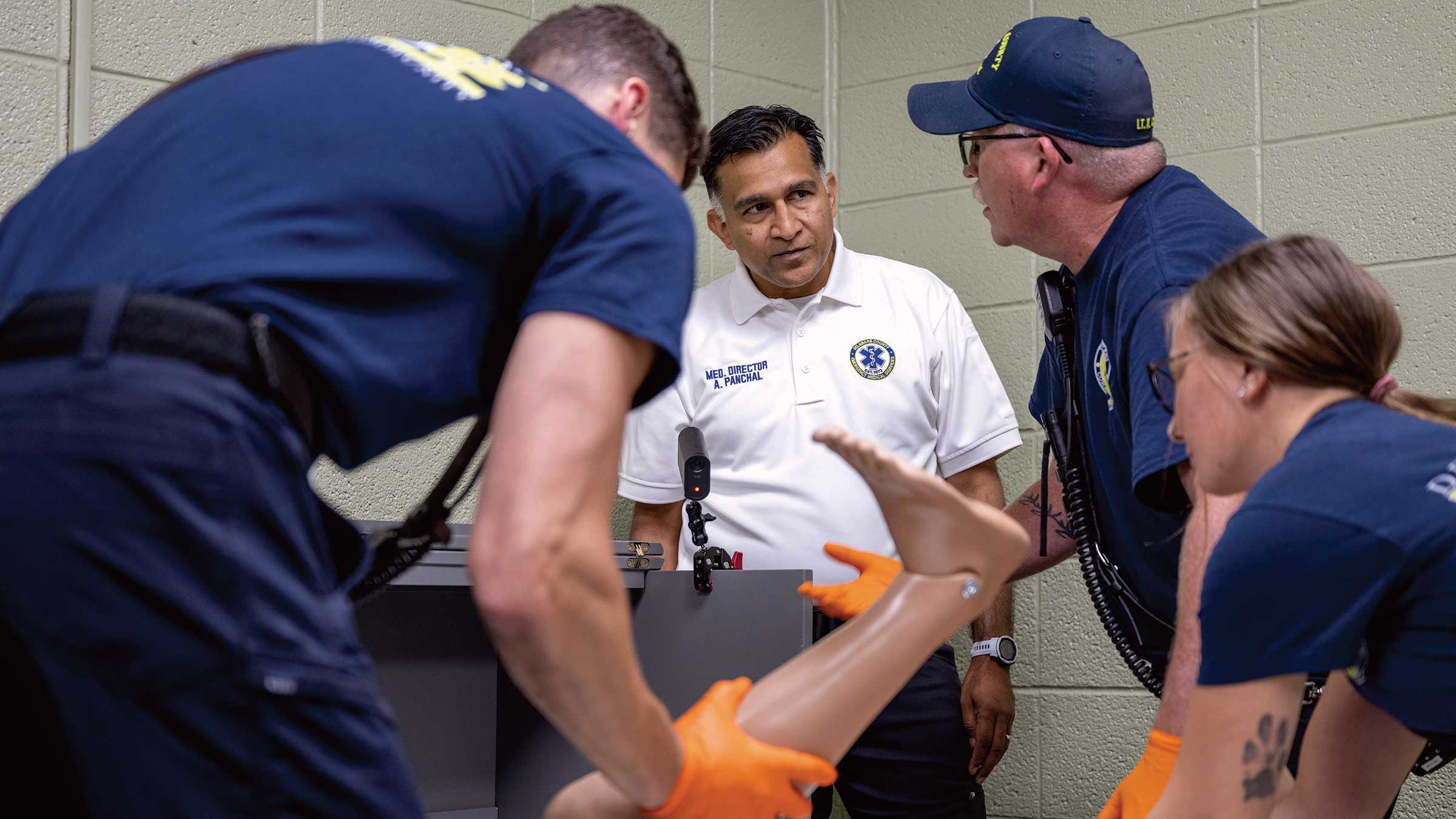
Dr. Panchal serves as the medical director for Delaware County Emergency Medical Services and Delaware County Emergency Communications. He oversees treatment protocols, training and overall care of patients when paramedics respond to cardiac arrests and other medical emergencies. He evaluates the quality of prehospital care and survival outcomes.
“My work spans the entire emergency care journey, from dispatch to EMS to the emergency department. It’s team science and team medicine. I may manage the first part and see patients in the emergency department, but I rely on my cardiology colleagues to carry the patient’s care forward,” Dr. Panchal says.
Over the years, Dr. Panchal’s view of resuscitation has evolved beyond medical procedures and hospital care. Today, he sees survival as a community effort, one that depends on neighbors, family members, dispatchers and first responders working together.
“He challenges us to think bigger, ask better questions and constantly look for new ways to improve patient outcomes,” Dr. Wang says.
It’s in the hands of ordinary people willing to step forward when someone needs help the most.
“We need to be realistic about what we need to do as a community for all the people who need help,” Dr. Panchal says. “But I think the more we engage, the more we work together to find these solutions, the better our lives are all going to be overall.”

When an emergency strikes, turn to The Ohio State University Wexner Medical Center’s full-service, state-of-the-art emergency departments
Our facilities are equipped to handle any medical emergency.
Find a location near youTopics
- Community Health
- Health
- Health and Society
- Heart and Vascular
- Teaching & Learning
- Teaching Advancements