Think about what you would do if your family member has just stumbled and collapsed.
He’s stopped breathing. Everyone around him stares in shock, and someone reaches for the phone and calls 911.
Meanwhile, his heart isn’t beating, and his brain has already begun to suffer from a lack of oxygen.
The scenario playing out can be one of the worst days of your life. But you don’t have to wait until paramedics arrive to help keep oxygen flowing.
You don’t have to be formally trained in cardiopulmonary resuscitation (CPR) to make a difference. Studies have shown that hands-only CPR keeps oxygenated blood flowing to the brain and vital organs, giving someone the best chance possible for survival.
Most cardiac arrests happen at home or in public settings, and 90% of people who experience one outside a hospital do not survive, according to the American Heart Association.
But when a bystander steps in to perform CPR, survival rates can double or even triple.
There are two simple steps to saving a life:
- Call 911.
- Push hard and fast in the center of the person’s chest until help arrives.
Even if you’re untrained, you have the power to save lives.
What is cardiac arrest?
Cardiac arrest is when the heart suddenly stops beating, usually caused by an electrical problem that makes the heart beat irregularly. This remains one of the most time-sensitive medical emergencies, often unfolding far from doctors, nurses and hospitals. That’s because sudden cardiac arrests happen in the home about 70% of the time.
Why every second matters during cardiac arrest
When the heart stops pumping, it can’t send blood to the brain, lungs and other vital organs. If someone experiencing this doesn’t get help right away, they can die.
For every minute CPR is delayed, a person’s chance of survival decreases by 10%. Acting quickly can help protect brain function, preserving your loved one’s ability to spend time with family, return to work and enjoy life.
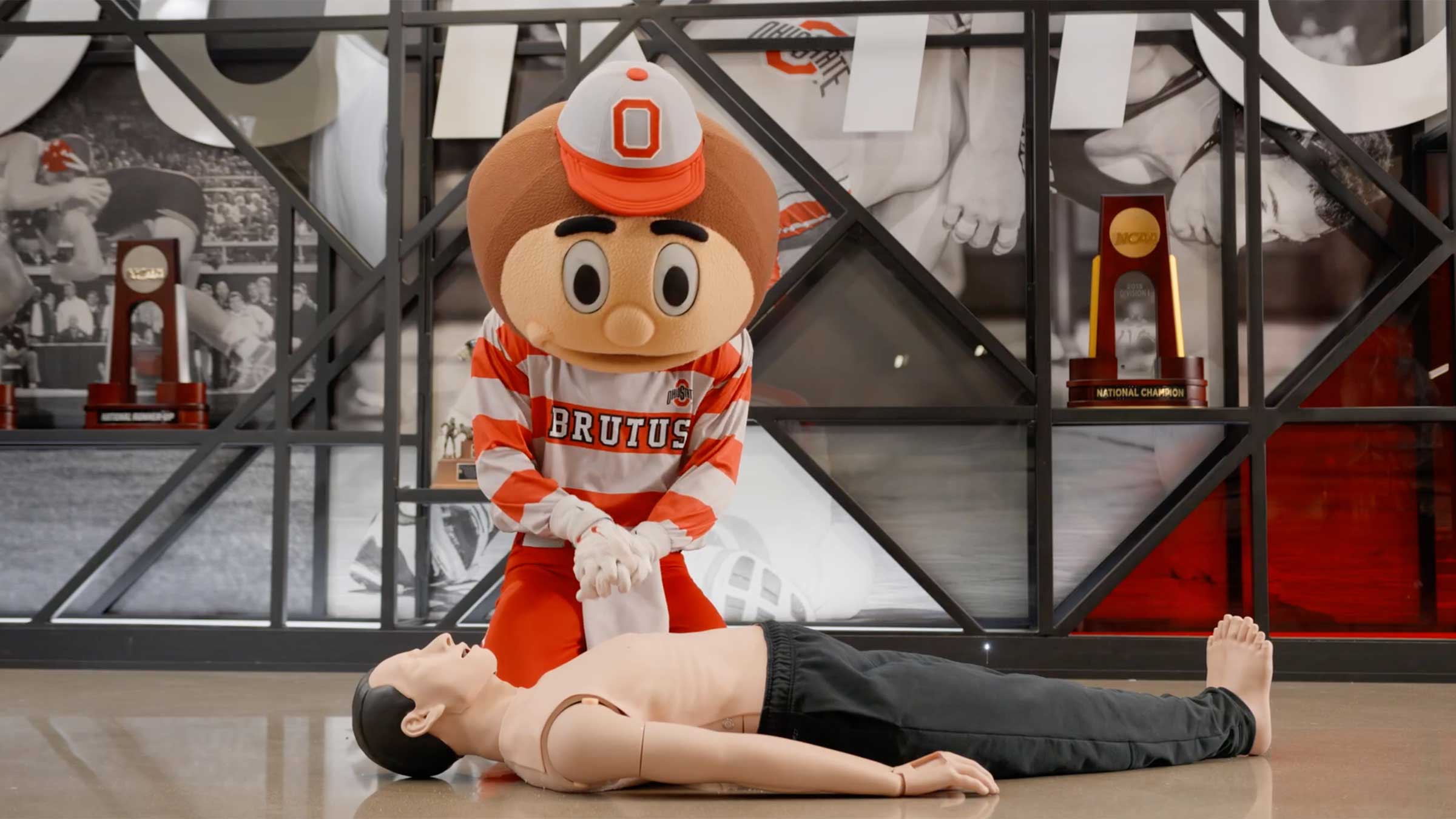
How hands-only CPR helps save a life
Chest compressions keep oxygen-rich blood flowing to the brain and body. This is your moment to save a life.
The first step is to call 911.
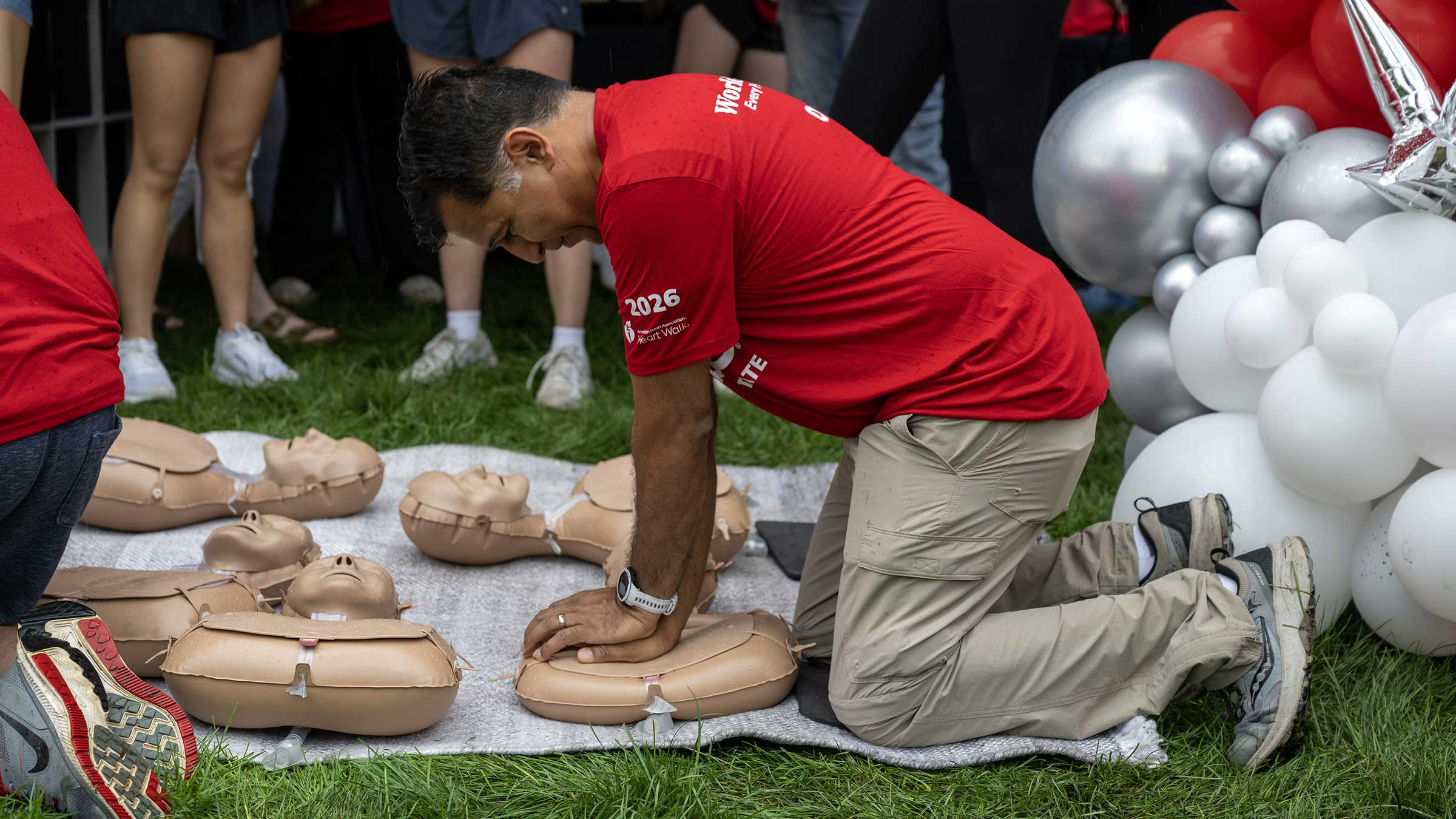
Next, put the heel of one hand in the center of the chest and put your other hand on top of the first. Then, push hard and fast in the center of the chest until help arrives. In this moment, your hands become their heart.
For adults, press about two inches deep with a compression rate between 100 presses to 120 presses per minute.
A 911 dispatcher can assist you, coaching you through every step and action. They can answer questions, help talk you through everything and support you, even if it’s hard.
Why you should do hands-only CPR without training
You don’t need formal training to save a life. What’s required is some knowledge, courage and the readiness to act. Hands-only CPR has been shown to be as effective in the first few minutes as conventional CPR for cardiac arrest at home, at work or in public.
Find a CPR class through the American Heart Association
Here are some common reasons people hesitate with reasons why you should help anyway.
What if I make the situation worse? What if I break their ribs or hurt them in some way?
Focus on the goal: keeping someone alive. Your hands are doing the work their heart can’t do. Let that purpose help you push past any hesitation and continue until emergency responders arrive. If someone’s heart isn’t beating, the greatest risk isn’t a broken rib – it’s death.
What if I don’t know the person? Should I still put my hands on their chest and start CPR?
It can feel uncomfortable to press on someone’s chest, especially if you’re not trained. But at that moment, they need you to act. Hands-only CPR can be their lifeline until help arrives.
Overcoming the fear of performing hands-only CPR
When someone nearby starts hands-only CPR during cardiac arrest, that person has a better chance of surviving with a good neurological outcome.
Remember, it’s two simple steps. Call 911 and start chest compressions.
Bystanders are often the critical link. Without the person who steps in right away, we can’t get the outcomes we want.
The best way to move past fear is knowledge. When people understand that pushing on the chest helps move blood to the brain, something changes. They realize that doing nothing may mean the person dies, but doing something gives them a chance.
And, often, that’s all the motivation someone needs to act.

When an emergency strikes, turn to The Ohio State University Wexner Medical Center’s full-service, state-of-the-art emergency departments
Our facilities are equipped to handle any medical emergency.
Find a location near you