Stopping the ‘ticking clock’ of psychosis before it gets worse
Early treatment can change the course of psychosis; intervention from a specialized Ohio State team creates lasting healing for many.
Sarah remembers being on vacation when her son insisted someone had put broken glass in the bed he was to sleep in.
He saw faces in the trash can, in the pattern of the bedspread, in the woods.
She had stopped trying to convince him that there was nothing there, nothing to worry about. That only made Matt all the more certain he was right.
He was 16 at the time, an honor-roll high school student and member of the track team who looked out the windows of their home in the Columbus suburbs. He’d watch for cars. He’d watch for people who might be following him.
“It was the most terrifying time of our lives. My husband and I didn’t know if he was going to get stuck in this scared, paranoid place,” Sarah says.
Matt and Sarah (not their real names) agreed to share his experience with psychosis and how he began healing through the Early Psychosis Intervention Center (EPICENTER), an outpatient program at The Ohio State University Wexner Medical Center for young people who have psychosis or are at risk of having it.
Neither wants to use their real names, to protect him from stereotypes about psychosis and the people who deal with it. People who hear, see, feel or even smell something that others don’t, who cling to false ideas, such as they’re being targeted or they have special powers, are at times considered frightening or assumed to be dangerous.

Why early psychosis treatment matters
Psychosis can hijack the mind, stealing someone’s ability to tell what’s real and what isn’t. Drug use or extreme stress can cause psychosis, and it can be temporary. Or psychosis can come and go for years, a symptom of a mental health disorder such as schizophrenia, schizoaffective disorder, major depression or bipolar disorder.
Whatever the cause, it’s important to treat psychosis soon after the symptoms begin, says Nick Breitborde, PhD, a psychologist and director of EPICENTER.
Despite the benefits of early intervention, on average, people typically deal with psychosis for two years – many for much longer – before getting treated for it.
“The clock is ticking,” says Dr. Breitborde, also a psychologist and professor of Psychiatry and Behavioral Health in The Ohio State University College of Medicine.
“The longer you go without treatment, the worse your symptoms are going to be and the longer they’re going to stay,” Dr. Breitborde says.
Giving young people with psychosis a strong start
Since 2016, when EPICENTER opened, it has offered what the National Institutes of Health considers to be the gold standard for treating early psychosis.
Participants meet regularly with a psychiatrist for medication and with a therapist for one-on-one and group therapy. They also get help with finding a job or returning to school. Family members can gain support and are taught about psychosis to better understand their child’s symptoms and how to respond.
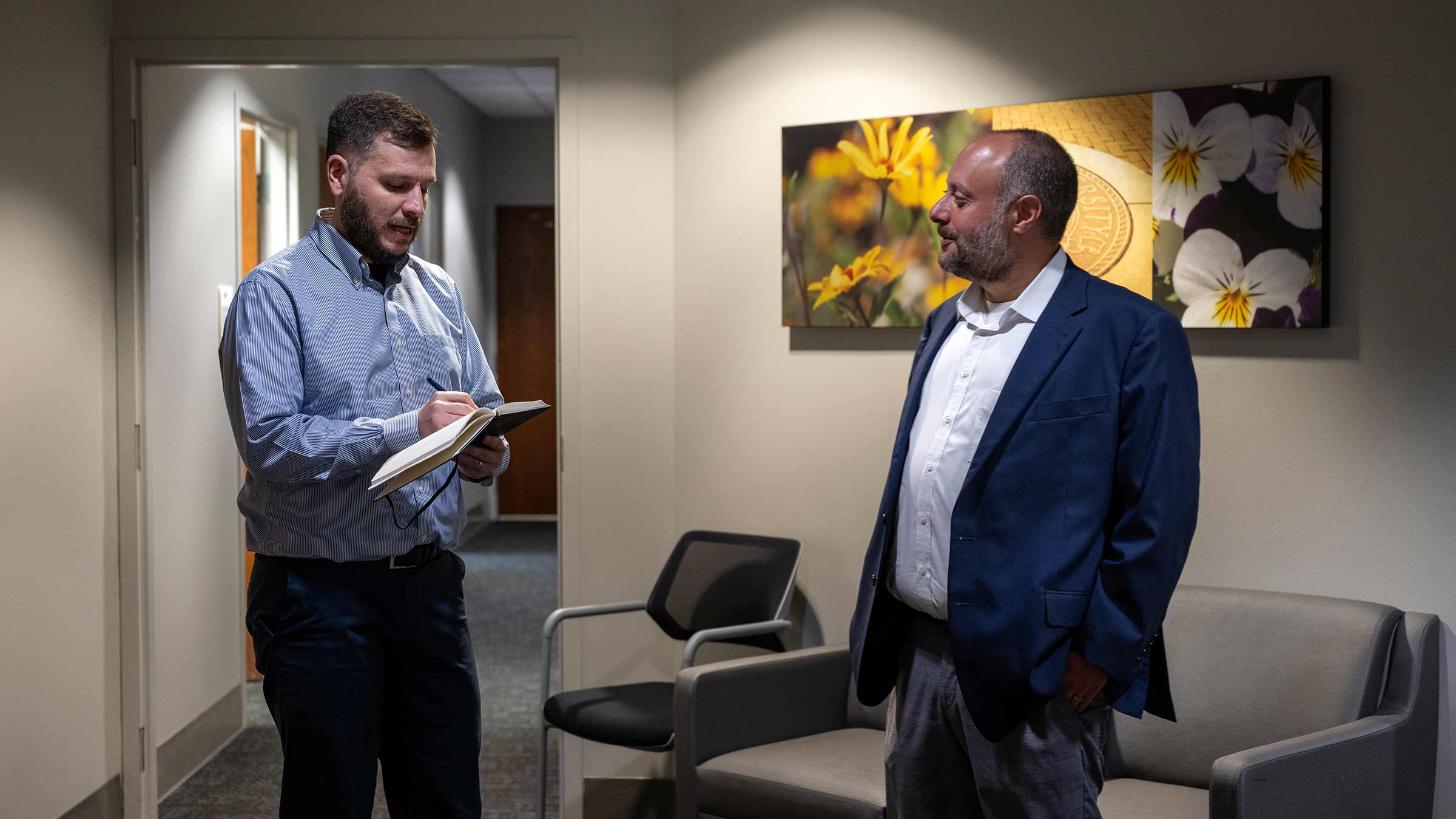
“The people who come to EPICENTER, on average, walk out the door with meaningful improvements in their mental health, with less distress,” Dr. Breitborde says. “And they’re doing more of the things that they care about.”
A turning point with early psychosis
In the summer of 2019, just before he would start his senior year in high school, Matt thought about taking his life.
“He kept getting worse. We didn’t know if he was ever going to get better,” Sarah says.
She’d researched programs online and found EPICENTER. Matt was willing to go.
Within a day of Sarah calling EPICENTER, she and her son were on the first floor of the Ohio State Wexner Medical Center Harding Hospital, talking to EPICENTER staff about his symptoms. In floors above them, people were hospitalized for their mental health treatment.
“I worried I was going to be institutionalized, that I was going to stay there and not go home,” he says.
That never happened. After a detailed assessment that day, the staff psychiatrist prescribed Matt an antipsychotic medication – a different type and higher dose than a psychiatrist in the community had already prescribed him. Within two days, the psychosis ended.
That was a relief. It was also just the beginning.

Voices, fears, false beliefs
Mental disorders that come with psychosis surface at what’s often a turbulent time in the late teens to early 20s, just as people are going off to college or to jobs and figuring out life on their own.
Even earlier, in high school, warning signs for psychosis can appear.
Someone may face a sudden, severe and unexplained slump at school or at work. They might withdraw from friends and family or see shadows moving in their peripheral vision.
Only 30 to 40% of young adults who have psychosis go on to develop a psychotic disorder such as schizophrenia, schizoaffective disorder, major depression with psychosis or bipolar disorder with psychosis, Dr. Breitborde says.
That offers hope to young adults and their parents.
“People coming here sometimes think ‘My life is over,” he says. “But one of the first things I tell everyone is, know that the majority of people who have these experiences don’t go on to develop a psychotic disorder. We can offer you treatments at EPICENTER that can help reduce your risk.”
On the path to healing from psychosis
About a year and a half after he started the EPICENTER program, Matt was in college at The Ohio State University and living in an on-campus dormitory. At times, he couldn’t sleep much more than a few hours a night.
“I felt isolated,” he says. “And it was very hard to get things done.”
A psychiatrist at EPICENTER diagnosed him with bipolar disorder. He did well on new medication prescribed for him, and he continued to take an antipsychotic medicine that kept him from having psychosis for years.
But in the summer of 2025, after he graduated from college, he feared the government was tracking him.
He’d just stopped using cannabis, with the help of an EPICENTER support group created for that purpose. The stress of no longer having the drug after years of using it may have triggered the psychosis to return, Sarah says.
His psychiatrist increased his antipsychotic medication dose, and the psychosis went away and hasn’t come back in the nine months he’s been off cannabis.
How drug use can raise the stakes
Having so many participants in EPICENTER who use or have used cannabis, EPICENTER’s staff members started a support group to help people stop or cut back.
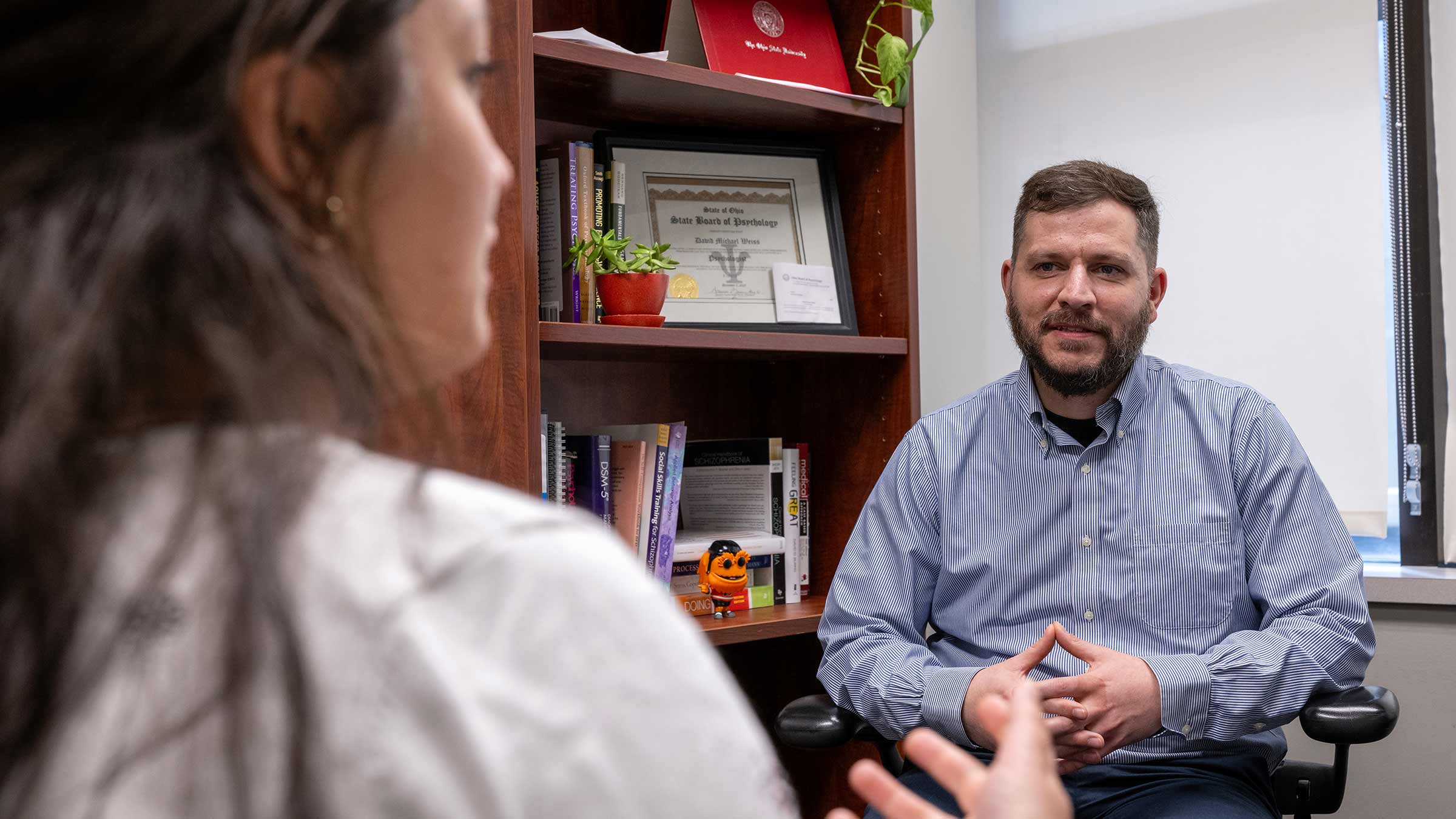
Cannabis, methamphetamines or hallucinogenic drugs can increase a young person’s risk for psychosis, says David Weiss, PhD, a psychologist at EPICENTER and an assistant clinical professor of Psychiatry and Behavioral Health in the Ohio State College of Medicine.
“Any drug that’s mind-altering can add to the risk of developing psychosis,” Dr. Weiss says.
“Someone can have a substance-induced psychotic episode and that’s it. For other people, it kick-starts the process and it doesn’t go away.”

Always bouncing back
Since coming to EPICENTER in that fall 2019 as a high school senior, Matt has had times when he’s felt stable — and others when depression pulled him off course.
His sophomore year in college, he did really well. Senior year, he moved back home because of depression. After graduating from college with honors, he had a period when panic attacks and anxiety kept him from leaving the house.
As Matt and his parents found out, the path to feeling better wasn’t a straight line. But during each setback, he sought the help of EPICENTER’s clinicians and the support of other participants struggling with similar problems.
He’s never refused to take his medications. He’s never quit or even threatened to quit going to EPICENTER for support. He trusts his psychiatrist.
As it is for many, Matt’s mental health isn’t a puzzle that can be solved once the last piece fits into place. It’s more like a Rubik’s Cube, Sarah says. It can go out of alignment sometimes and needs a few adjustments before all the colored squares settle into the right spot again.
“We’re going to keep working the Rubik’s Cube and find where we need to be,” she says. “We may have to pick it up and try it again, but we’re going to get there.”
Matt is just as confident. Even if things slip out of alignment, he knows he won’t be alone in getting them back into place.