Taking maternity care from design to delivery
Maternity Care at Ohio State’s new University Hospital delivers comfort, convenience and expert care.
Spending the last four weeks of pregnancy in the hospital was never the plan when Madelyn Staten was pregnant with her first child. What got her through those lonely, vulnerable days in a high-risk pregnancy room at The Ohio State University Wexner Medical Center in December 2023 was the staff. “The nurses always took the time to listen and even crack jokes with me to cheer me up. To this day, we keep in touch,” Staten says.
Staten had planned to give birth close to home in Chillicothe, Ohio. Instead, she was diagnosed with preeclampsia at her 30-week checkup and was sent in an ambulance to the Ohio State Wexner Medical Center.
While she knew from the start that she was in the right place to get the best care for herself and her baby, that didn’t make it easy. Recalling how difficult it was to be in the hospital during that most vulnerable season of her life is the reason Staten is particularly excited about the Ohio State Wexner Medical Center’s new, 26-story University Hospital.
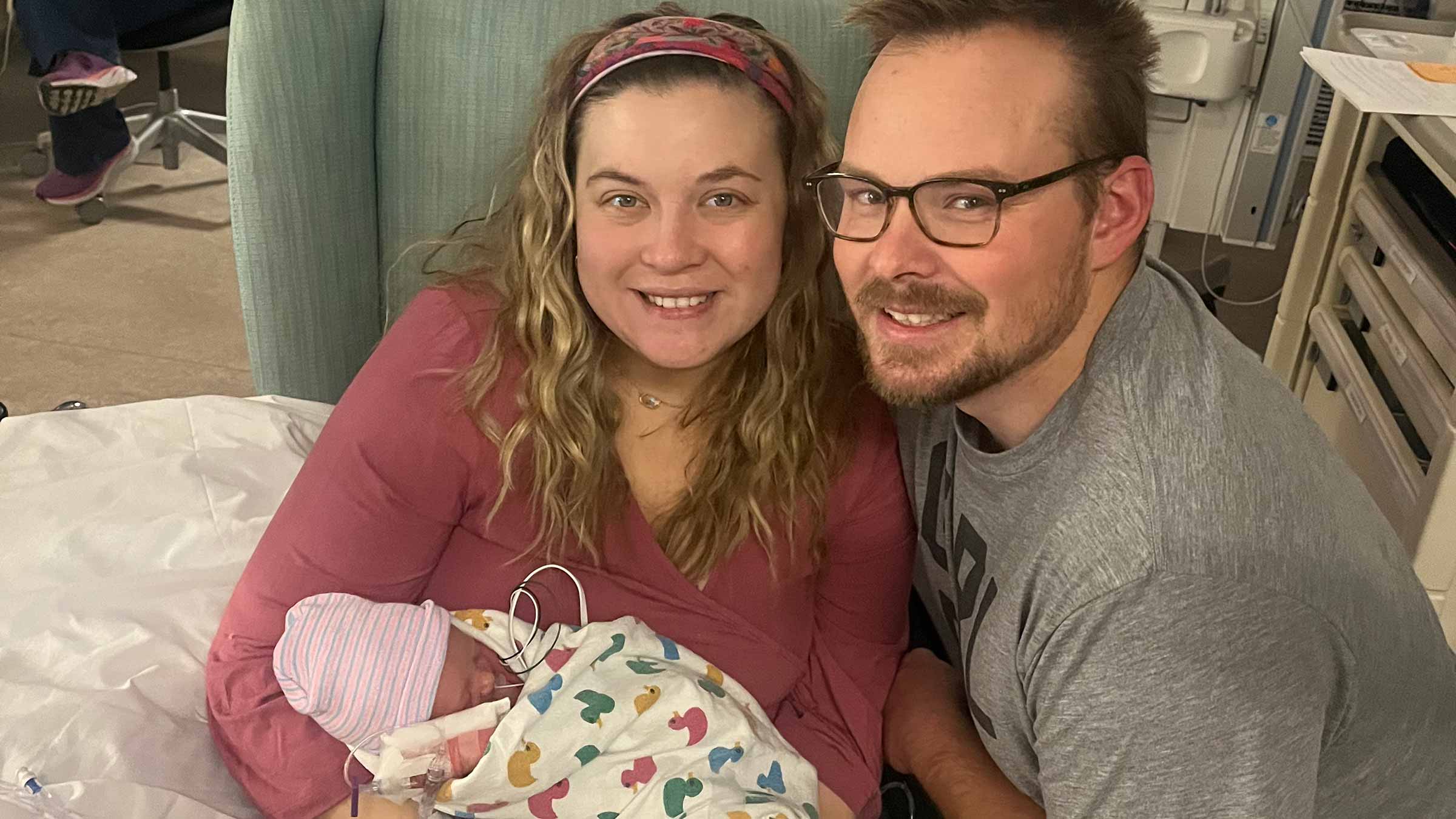
“I always felt like I was in the best hands, but now there will be a space to match the excellence that is Ohio State,” Staten says.
Building a magnificent new space to give birth
Ohio State University Hospital, opening February 22, 2026, is a premier space for childbirth. From nine-foot windows that fill each private room with natural light, to thoughtfully designed furniture, valet service and convenience features like ordering coffee from your phone, every detail is designed to be convenient and restorative.

Nearly a decade ago, leaders from the Ohio State Wexner Medical Center sat down to imagine what they would build if they could create a completely patient-focused hospital. The result is one of the most advanced hospital facilities in the nation.
With every detail of the new hospital designed to support expert care and comfort, creating a magnificent space for childbirth is a key component.
“We have a big campus, and we needed to find a way to make maternity care feel personal. We put a lot of thought into how to perfect parents’ experience from the moment they arrive, through the birth and postpartum,” says Mark Landon, MD, chair of the Department of Obstetrics and Gynecology at The Ohio State University College of Medicine.

Maternity care designed to support a growing population
Central Ohio is growing – with a more than 15% increase over the last decade. By 2050, another 1 million people are expected to call Columbus home. Increasing space in maternity care is not only a luxury, it’s a necessity.
Around 5,500 babies are born each year at Ohio State. The new hospital increases this capacity to 7,000 babies.
Bright, beautiful spaces for birthing families
The current Ohio State Maternity Care was built when dual-occupancy rooms were a standard of care. Today, the personal and clinical benefits of private spaces for healing are well-known. For Staten, sharing a hospital room was one of the most challenging parts of her stay. “This sounds so dramatic now, but I thought sharing a room was the end of the world,” Staten says.



Rooms at the new Ohio State University Hospital are all private, including maternal special care rooms (before birth) and even the neonatal intensive care unit (NICU) rooms, which will be managed in partnership with Nationwide Children’s Hospital.
“The goal is to provide parents with a beautiful, convenient, comfortable and safe space to welcome their little ones into the world.”John Stiles, director of Space Planning
Convenience starts with making it easy to reach the Labor and Delivery department by offering free valet parking for anyone in labor and 24-hour access to the front door. Patient representatives are available to escort labor and delivery patients to the express elevator to the maternity floors.
Prepared for anything with Level IV maternity care
While no one can control the force that is childbirth, the team at Ohio State is ready for every possibility – from typical births to the most medically complex cases. “We receive transfers from all over the region because of the level of care we provide. No matter how low- or high-risk, we take great care of you,” says Tracy Buder, MSN, RNC, director of Nursing – Women and Infants.
Ohio State holds the only Level IV maternity care designation in central Ohio, which reflects the ability to support medical and surgical care for the most complex conditions and critically ill pregnant people and fetuses through every stage of pregnancy and postpartum care.
- The obstetrics emergency department (OB-ED) is staffed 24/7, ensuring patients are evaluated quickly and appropriately to determine if they need to stay or can return home safely.
- It’s one of only a few OB-EDs nationwide with an OB critical care attending physician who is dual-certified in maternal-fetal medicine and critical care.
- Maternal special care rooms are equipped for delivery in case there’s no time to transfer someone to Labor and Delivery.

Personalized approach to maternity care
Families at Maternity Care can expect personalized, expert care that reflects the caliber of the new facility. Using a team birth model, parents have more ownership over the overall birth experience. In the team birth model, the patient and their support people lead the team.
Within the first hours of admission, the care team introduces the team birth model and discusses the plan of care, including preferences and any concerns.
“Our goal is to develop a care plan with the patient, so they feel everything is best for them,” Buder says.
The method has shown increased patient satisfaction and better clinical outcomes, including decreased cesarean birth rates.
What matters most to parents and clinicians alike is achieving the healthiest, best possible outcome. Having a beautiful space for expecting and new parents contributes to that goal.
Research shows that people heal faster and experience better outcomes in spaces that are thoughtfully designed. Sunlight, in particular, plays a powerful role. “It lifts the mood, supports better sleep and creates a calm, welcoming environment. That’s exactly what new parents and babies need during such a special time in their lives,” Buder says.
The new hospital has no shortage of rejuvenating spaces. The glass lobby flooded with light, the stunning 360-degree views of campus and downtown Columbus, a hospitality-style aesthetic and spacious rooms all combine to make the new hospital as attractive as it is clinically advanced.
Prioritizing comfort and safety for labor and delivery
For everyone, including many people with high-risk pregnancies, the goal is to make a family’s experience as comfortable and safe as possible.
Consider someone whose blood pressure is severely elevated after delivery. In many hospitals, the patient would need to go to the intensive care unit, possibly without their newborn. The new hospital has the space and critical care expertise to keep families together.
“When the parent needs intensive care, the baby is still there with the family, and they can continue to see both of them at the same time instead of going back and forth between the nursery and the patient room,” says Buder.
Added touches, like a family space for larger gatherings, and dine-on-demand options, enhance the patient’s experience. All rooms have fold-out couches for an overnight guest. Advisory council members even tested and offered suggestions on how to improve the furniture, guiding the manufacturer to revise the design.
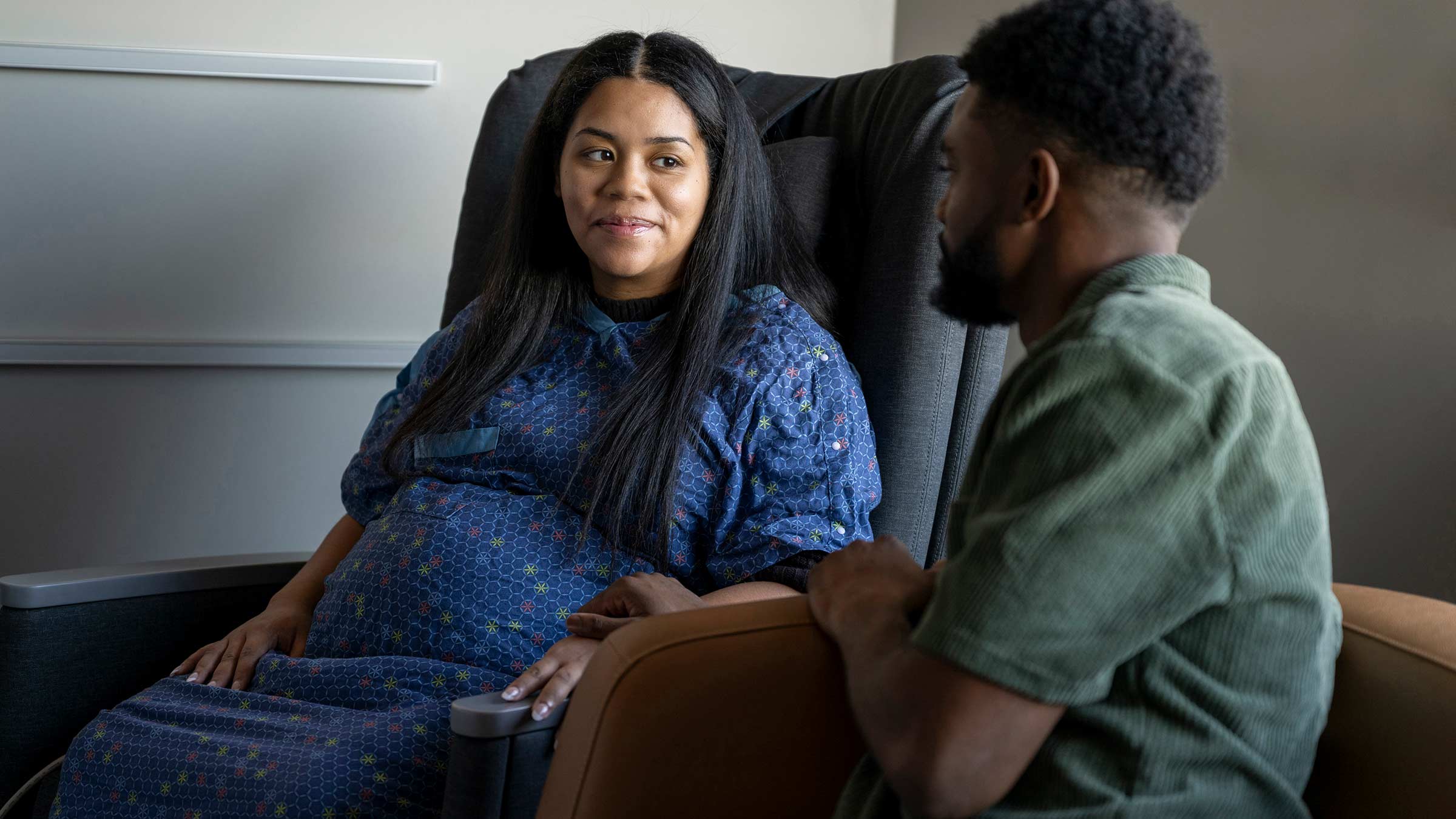
Maternity Care also includes two rooms for parents who experience adverse outcomes, providing a respectful, quiet respite space for them to heal and grieve away from the more public areas.
“We heard feedback from our advisory council members who had lost a baby on how challenging it was to hear other families on the floor, so we made sure to plan for these secluded rooms,” says Sharon Cross, program director for Patient/Family Centered Care.
A culture of collaboration
Just as in the current building, the new hospital will support co-managed care for individuals seeking a midwife for OB/GYN care. Even those with higher risk factors in pregnancy, such as gestational diabetes, can access care from a certified nurse-midwife and a maternal fetal medicine doctor working in tandem.
“Ohio State has really risen to the occasion of giving patients continuity with the person they’ve known for a long time by facilitating ways for us as maternal-fetal medicine physicians to help guide clinical decision-making. That’s a huge strength,” says Bethany Stetson, MD, a maternal-fetal medicine physician and director of clinical operations for the Department of Obstetrics and Gynecology.
Easing parents’ journeys in the NICU
As the only academic medical center in the city, the NICU at Ohio State delivers the highest level of care and life-changing research for the smallest and most premature babies.
The new space includes 49 postpartum rooms and 51 NICU bassinets. Staying near their newborn in the NICU helps parents and babies bond and even improves outcomes. “There’s good data from the NICU that kangaroo care on a mom’s or dad’s chest is associated with better outcomes and even decreases the length of stay,” says Michael Stenger, MD, a neonatologist at Nationwide Children’s Hospital.
The opportunity to stay on-site with their baby makes an especially big difference for families from areas as far away as Kentucky, West Virginia and southeastern Ohio.
“Our goal is to make it easier for parents to be more involved in their baby’s care from day one,” Dr. Stenger says.
The new, private NICU rooms are spacious enough to comfortably accommodate multiples, as well as additional visiting family members. This ability to stay with their baby in the NICU eases families’ transitions to home. “The more time they’re here, the more opportunities they have to participate in the care, which gives them more comfort as they go home,” Dr. Stenger says.
When asked what they look forward to most about the new hospital, staff offered the same sentiment that Dr. Stetson says best: “It’s really exciting to be a part of a move to a large hospital tower of this magnitude and share it with the community. The people of Columbus deserve this beautiful space.”

Join the family of Buckeye Babies at the New Ohio State University Hospital
Central Ohio's most experienced team is getting a new home.
Get started