Learn why it’s critical to maintain core muscle strength, function and balance as we age.
You’ve probably heard about the importance of maintaining – and maybe even improving – your heart health or your mental health. But what about improving your abdominal core health?
Your abdominal core is made up of the muscles and supporting structures in your front, sides and back, along with your diaphragm above and pelvic muscles below. These all play a crucial role in how well you feel and function in your daily life. Without a strong core, you may struggle to walk along the beach, compete in a triathlon or pick up your children or grandchildren.
At The Ohio State University Wexner Medical Center, our Center for Abdominal Core Health focuses on maximizing your core muscle strength to prevent injury, improve posture, reduce lower back pain and improve breathing.
Why is strengthening your abdominal muscles so important?
We are now understanding that the components of the abdominal core are related and work together. This sounds pretty simple and natural, but the way our healthcare system is set up forces you to see different specialists in each area. This can lead to fragmented and delayed care. Core strength, function and balance are critical for all of us to maintain, especially as we age. An article in JAMA Surgery outlines this idea.
Two things are really unique about the abdominal core health concept: First, it focuses on maintaining your health instead of dwelling on diseases and interventions.
Second, it breaks down the barriers we’ve artificially created in medicine, in which one group of experts may focus on the front part of the core, and a different group focuses on another part.
We’re finally understanding that all these areas are related, and you need a team of experts working together to improve your abdominal core health.
What causes abdominal core problems?
The most common problems affecting the abdominal core include hernias, pain and even tumors. Problems affecting the diaphragm can have an impact on your breathing or swallowing. When there are issues with your pelvic floor, you can have prolapse (protrusion) of organs that cause difficulty with daily functions.
How can you strengthen your abdominal core?
A careful evaluation is needed to see what would benefit you the most. If you’re already healthy, we offer personal training, nutritional expertise and physical therapy to maintain your core health. If you have a structural problem like a hernia, minimally invasive surgery or more extensive abdominal wall reconstruction may improve your quality of life. We also incorporate alternative therapies, including therapeutic yoga, mindfulness and acupuncture, in partnership with our Integrative Health colleagues.
Here are three exercises our Sports Medicine team recommends to help strengthen your abdominal core:
1 Plank
Lying on your stomach, begin with a modified plank by bending knees, bringing feet off the ground. Place forearms under shoulders, in a parallel position. Try not to grasp hands together. Press up onto forearms, keeping abdominal muscles braced and butt muscles tight to keep a flat back. Tuck pelvis under to prevent you from arching your back. Keep body in a straight line the entire time. Hold this position as long as possible. Then progress to a full plank in which you’re on the balls of your feet instead of on your knees.
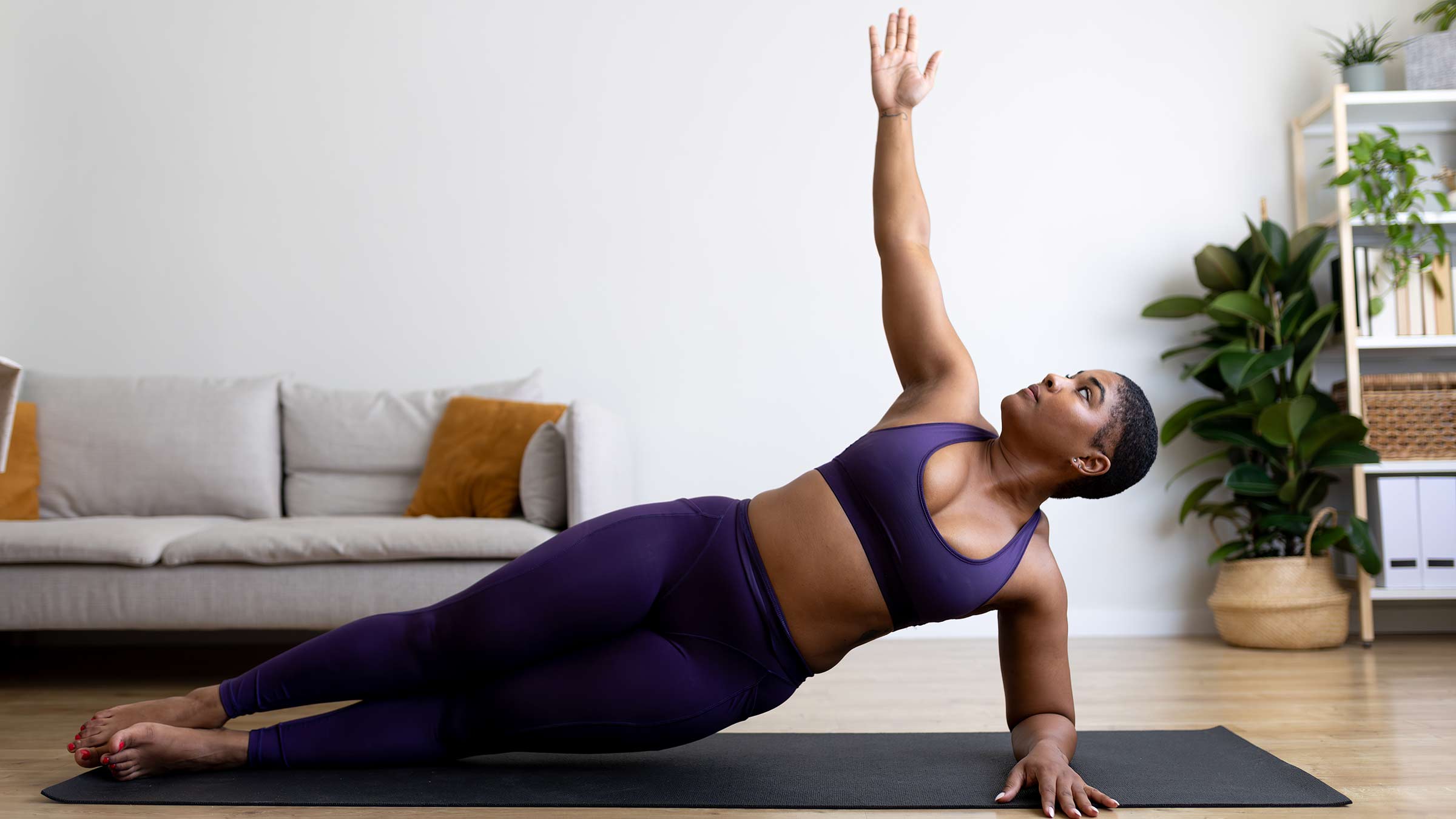
2 Side plank
Lying on one side, bend knees so your feet are behind you to start with a modified side plank. Raise up onto one forearm, with the forearm directly in line with the shoulder. Lift hips off the ground and keep both hips pointed forward, so you don’t rotate. Hold this position as long as possible. You can then progress to a full side plank, in which you’re on the side of your foot with your feet stack on top of each other, versus on your knees with the modified side plank.
3 Bridges
Lying on your back with knees bent and your feet on the ground, tighten your glute and abdominal muscles. Slowly raise hips off the ground, using your glute muscles to lift you. Keep your back in a straight line and knees pointed out over your toes the entire time. Hold at the top for five seconds. Slowly lower back to starting position. You can then progress to a single-leg bridge, in which one leg is lifted up, but make sure to keep hips level the entire time. Don’t let your hip drop down on a lifted leg during the single-leg bridge.
When should you seek help for your abdominal core health?
Seek care to treat problems of the abdominal core, including hernia, diastasis of the abdominal wall (when the abdominal muscles separate during pregnancy), growths and tumors that affect the core, pelvic floor and diaphragm, as well as problems and chronic pain related to operations of the core.
Our team of specialists, including general and gastrointestinal surgery, plastic surgery, colorectal surgery, trauma surgery, critical care, physical therapy and rehabilitation, and integrative health, is here to help.

Leaders in core health
The Center for Abdominal Core Health offers a team of experts and innovative care for both simple and complex issues.
Get started