Swinging back after hand surgery
After three previous surgeries, a college golfer turned to an Ohio State surgeon to finally eliminate her pain.
Once a golfer with a powerful swing, Hailey Stegemann could barely use her right hand.
She’d had three surgeries to try to fix it, and yet even turning a doorknob or pouring milk into a bowl was a struggle.
“I couldn’t do anything by myself,” she says.
Stegemann began playing golf at the age of 6, guided by her dad’s training. But as a sophomore on the women’s golf team at Tennessee Tech University, she wasn’t able to hit many golf balls. Stabbing pain in her hand stopped her. And off the greens, she felt incomplete.
“It was hard for me to find joy in anything else because my whole life has been golf,” she says.
The problem started in high school when she was injured playing basketball. Just after she took a shot, her opponent tried to block the ball and hit Stegemann’s hand, tearing her triangular fibrocartilage complex (TFCC), a network of ligaments and cartilage that help stabilize the wrist.
Over the next five years, she’d have three surgeries. After each, pain eased for a while but always came back.
‘Almost giving up’
During the summer of 2023, Stegemann and her parents searched for a new surgeon in the Cincinnati area where she grew up. One doctor told her what she had feared: She might have to quit golf.
“We were reaching a point where we were almost giving up,” she says.
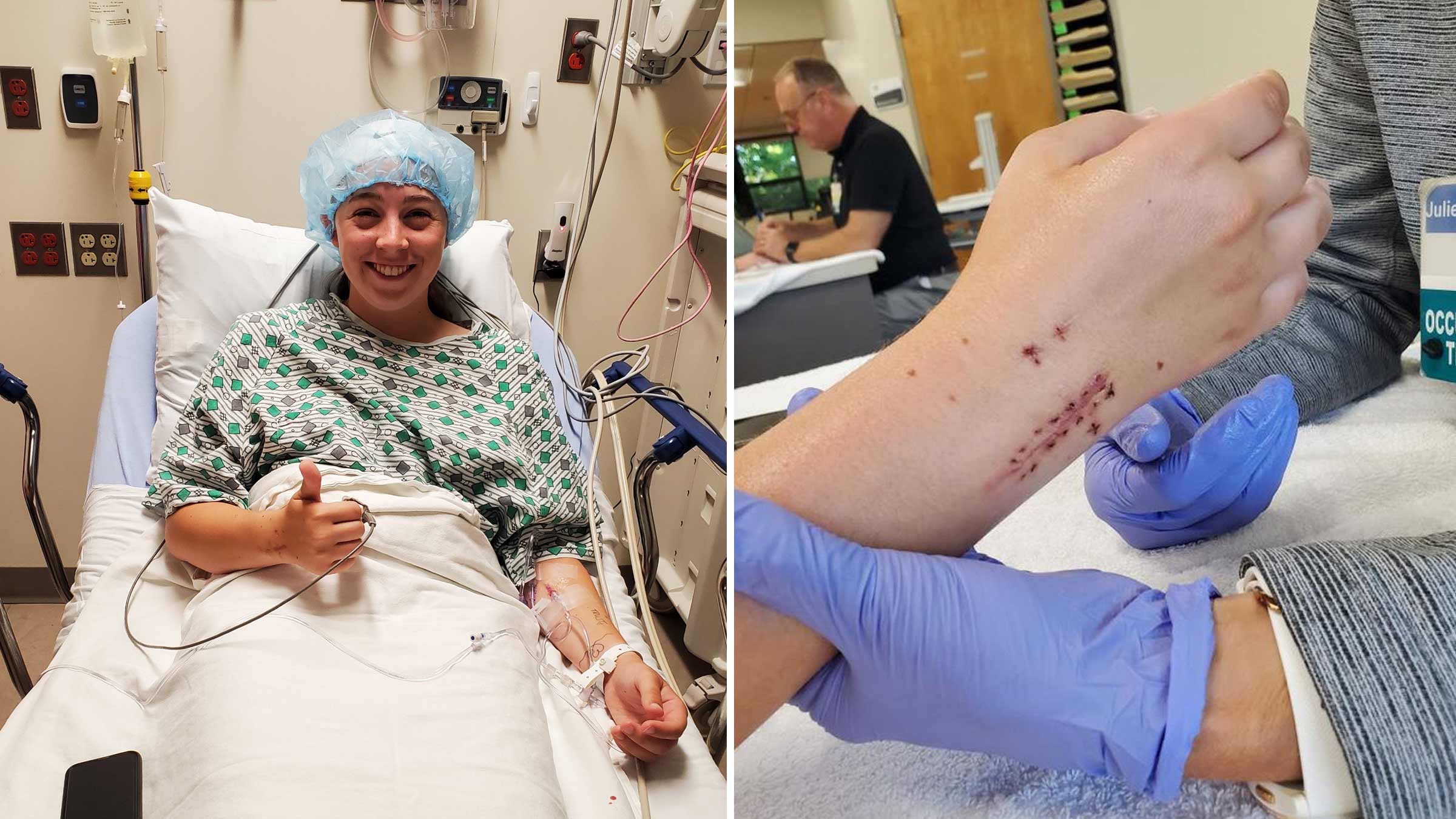
A friend recommended The Ohio State Wexner Medical Center Hand and Upper Extremity Center. Stegemann and her parents made the two-hour drive to meet with Hisham Awan, MD, director of the center.
“We looked at every possible source of her pain,” says Dr. Awan, an orthopedic surgeon who treats hand, wrist, elbow and shoulder injuries.
Then he proposed a surgery that differed from the other three she’d already had.
Alternatives to traditional hand surgery
When someone injures their hand, their life can be altered in many ways, as they may have difficulty typing, driving or eating.
“People’s hands are so important to them,” says Dr. Awan, a clinical professor of Orthopaedics at The Ohio State University College of Medicine.
“I enjoy giving them back their ability to use their hands, giving them back their sport, their occupation,” Dr. Awan says.
At Ohio State’s Hand and Upper Extremity Center, Dr. Awan and a team of surgeons repair hands, wrists and elbows after accidents, sports injuries, arthritis and falls.
He specializes in minimally invasive surgeries to restore what an injury or arthritis has taken away. Through a narrow cut, Dr. Awan can insert a tube with a fiber optic camera called an arthroscope. That allows him to see into the joint without making a wide cut, so people recover faster. Dr. Awan can then repair the bone, tendon or nerve.
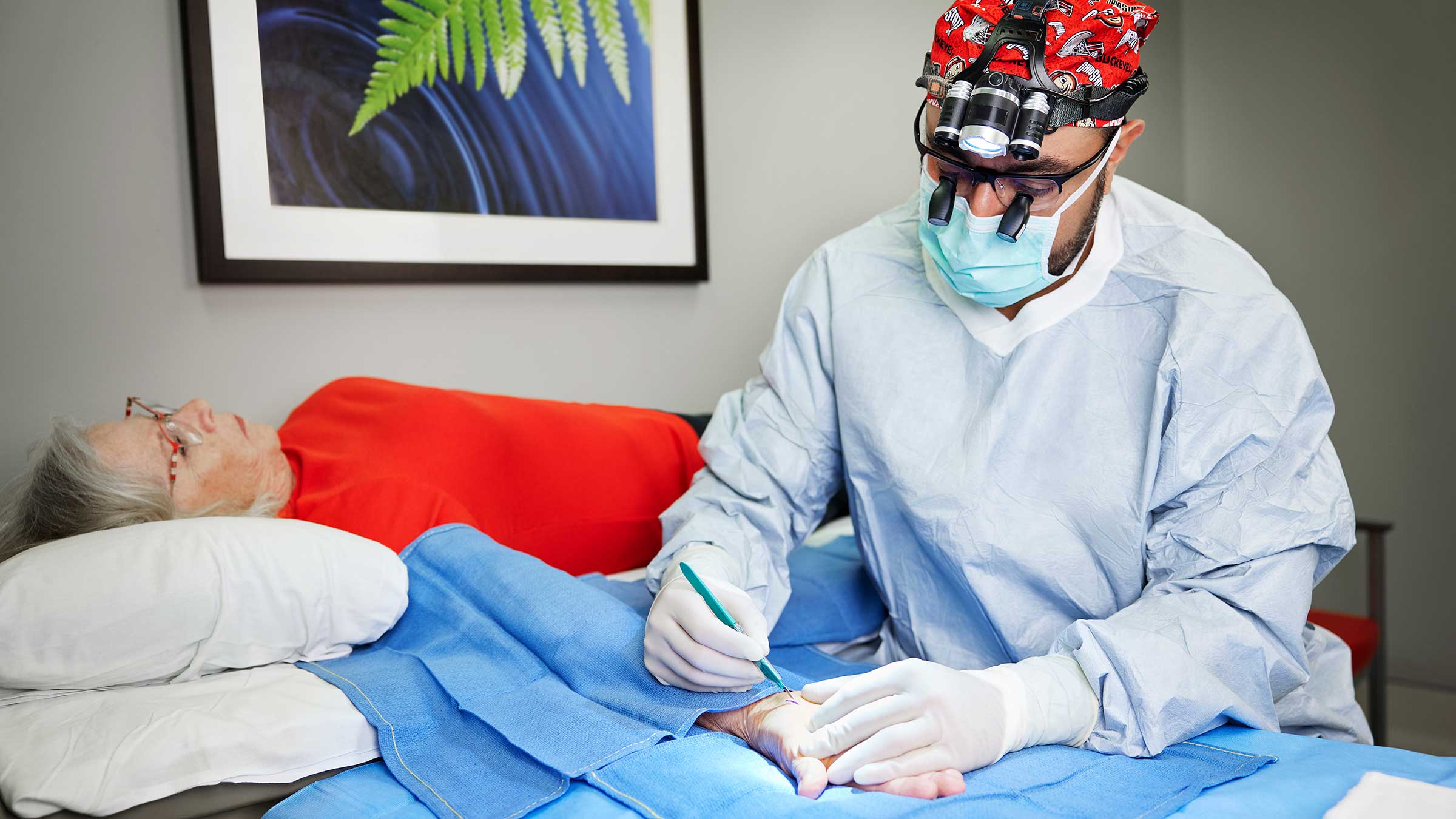
In 2017, Dr. Awan and surgeons at Ohio State’s Hand and Upper Extremity Center were among the first in central Ohio to offer hand surgeries on a patient who was wide awake.
Without general anesthesia, people don’t have to deal with the grogginess and nausea that anesthesia can cause. They don’t have to fast before the surgery, and during the procedure, a patient can move their hand and tendons while they’re being repaired. That gives surgeons a better idea if their technique is working.
Whether a surgery can be done with local anesthesia depends on how complex the surgery is, but many hand surgeries can be done that way.
“We can do some pretty complex surgeries with the patient completely awake,” Dr. Awan says.
Using only local anesthesia, Dr. Awan has repaired a number of injuries including carpal tunnel syndrome and trigger finger, when a finger gets stuck in a bent position and can’t easily be straightened. Some procedures he does in an office setting instead of an operating room.
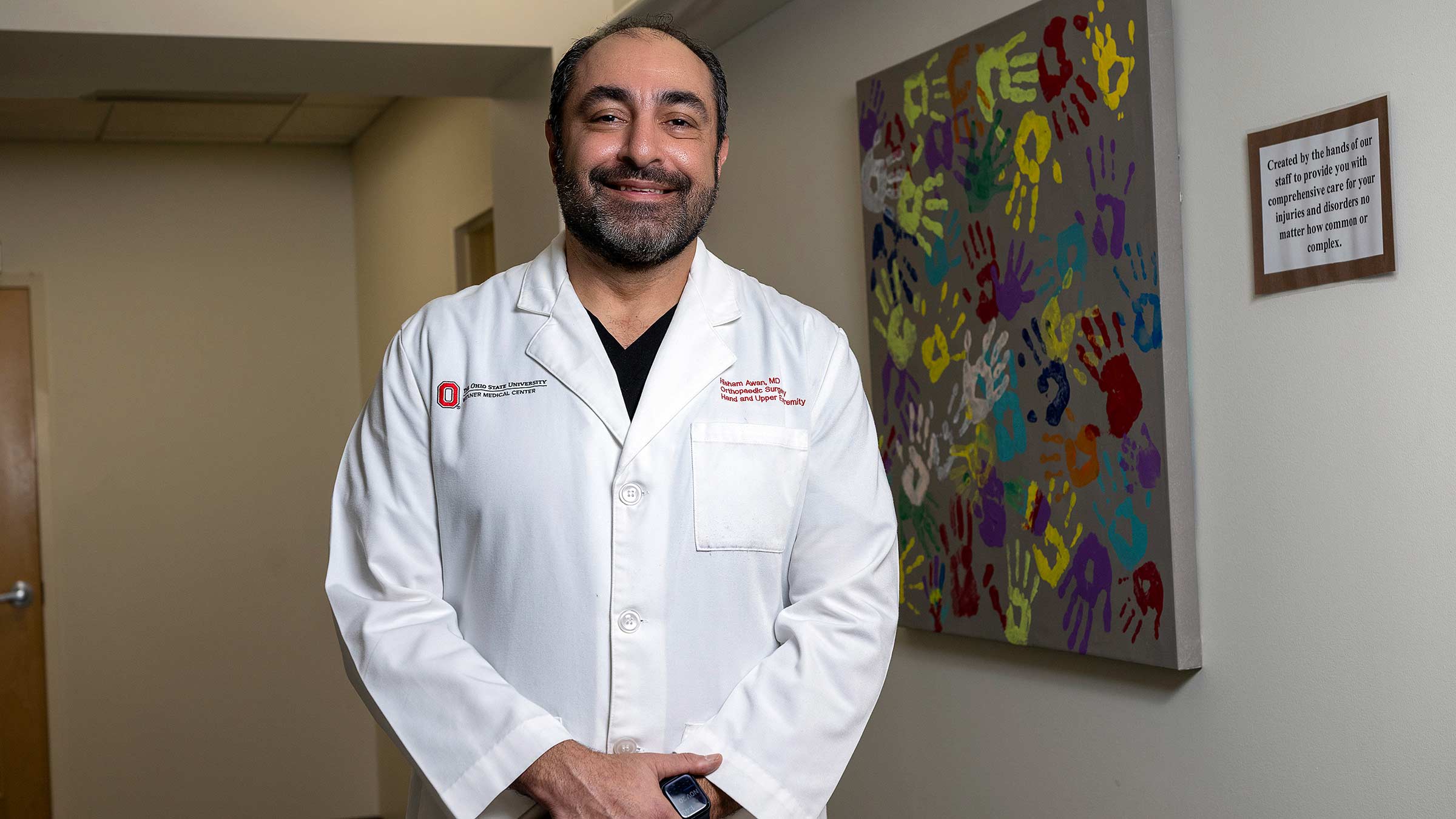
After surgery, people can work with certified hand therapists at Ohio State’s Hand and Upper Extremity Center to learn to use their hands again.
Restoring hope in playing golf again
Meeting Dr. Awan for the first time in the summer of 2023, Stegemann and her parents were encouraged by his surgery plan, even if he couldn’t promise her return to golf.
“I could tell he genuinely understood I was mentally struggling not playing golf,” Stegemann says. “I was going on a year without golf. He knew golf was everything for me.”
In surgery, Dr. Awan repaired the TFCC, taking out a few of Stegemann’s wrist nerves. He also stabilized a tendon on the pinky side of her wrist. After the surgery, he recommended physical therapy and a treatment that uses electrical stimulation to deliver medication through the skin. Her wrist pain disappeared.
“In my position, I see a lot of people who have done surgeries elsewhere and have been told ‘There’s nothing more we can do for you.’ I enjoy the challenge,” Dr. Awan says.
Interest in sports medicine
As an early teen growing up in the Detroit area, Dr. Awan became interested in medicine while working in the billing department of his father’s medical practice. His father was a physical medicine and rehabilitation doctor. He helped people recover from disabilities after an accident or a sudden health crisis, such as a stroke.
“People would say to me, ‘Your dad is a lifesaver. He did so much for me.’”
And Dr. Awan knew how hard his father worked to become a doctor. The path was far from easy.
“I saw where he grew up in Pakistan, in a poor village with barely running water and electricity. I felt privileged growing up. I felt like if he could do that, I could do anything.”
Sports medicine drew him, at first, before he specialized in orthopedic surgery. As the hand surgery consultant for The Ohio State University Department of Athletics, sports injuries are part of his medical practice.
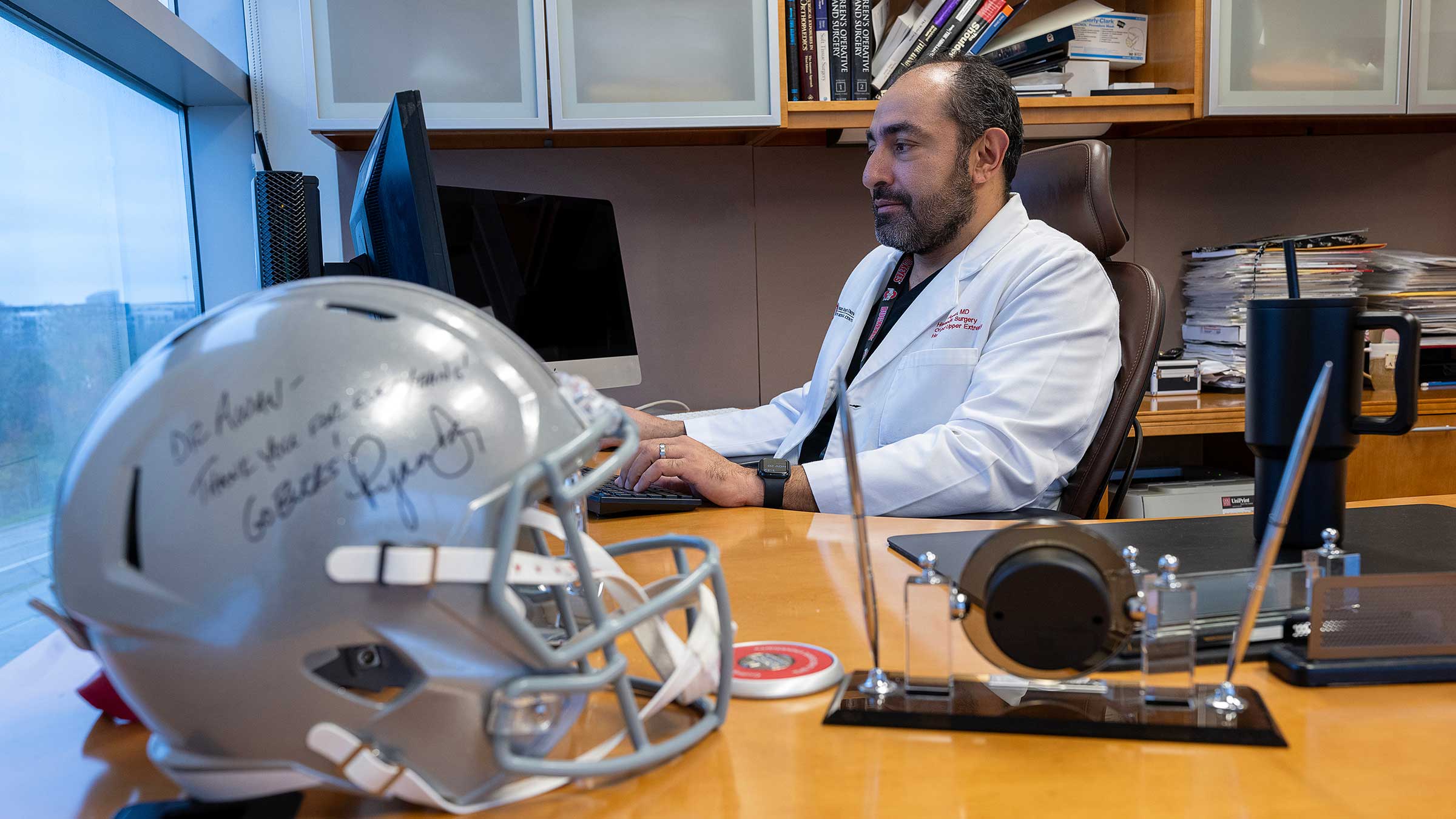
Players in a range of sports – including basketball, football, soccer and lacrosse – come to him with jammed fingers and broken bones in their hands, most often the metacarpal bones between the wrist and the finger bones.
“If a player tears a ligament in their thumb or if they break their hand in the game, I enjoy the opportunity to get them back to playing,” Dr. Awan says.
Dr. Awan’s patients and colleagues benefit from his calm demeanor regardless of the circumstances, says Teresa DiMeo, APRN-CNP, MS, a nurse practitioner who works with Dr. Awan.
He also has an “uncanny” skill for recalling patients’ names, details about their injuries and even medical record numbers, DiMeo says.
“His ability to remember even the smallest details and recall pertinent information about every patient, every operation and clinic visit is amazing.”
When the pain stopped for good
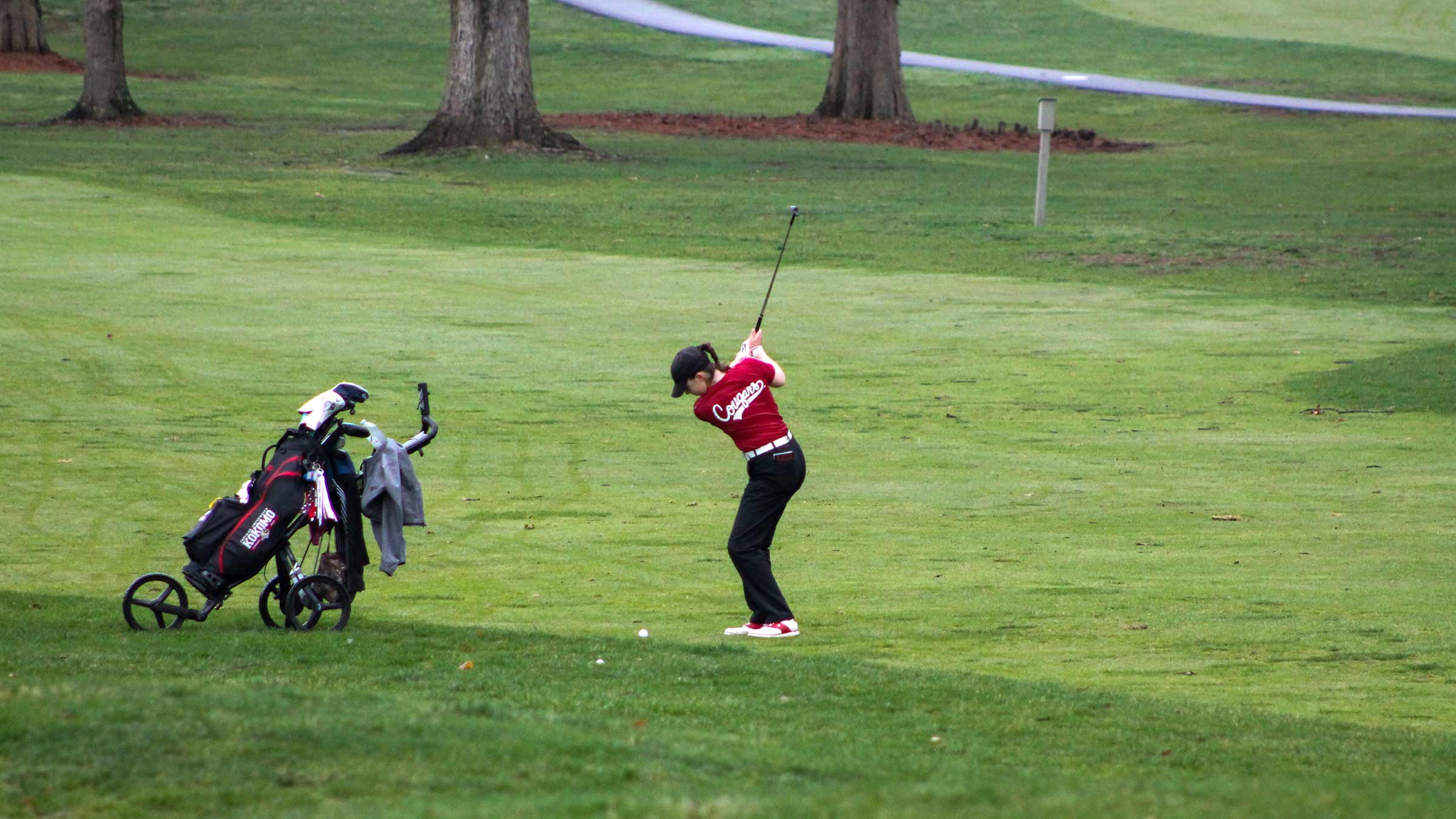
A couple of years after Dr. Awan repaired Stegemann’s wrist and many golf swings later, she was in pain again, this time in her forearm. A nerve in her forearm became compressed from swinging a golf club over and over.
Dr. Awan successfully released that nerve during a second surgery on her in August 2025. A couple of weeks later, she began practicing again. An athletic trainer is now working with her to prevent the pain from returning. Stegemann transferred to Indiana University at Kokomo, where she’s a senior and a member of the women’s golf team.
Back on a winning streak, Stegemann clinched her first college golf tournament in the spring of 2025. Every time she places in a tournament, she sends a photo to DiMeo to share with Dr. Awan and a text thanking them for her recovery.
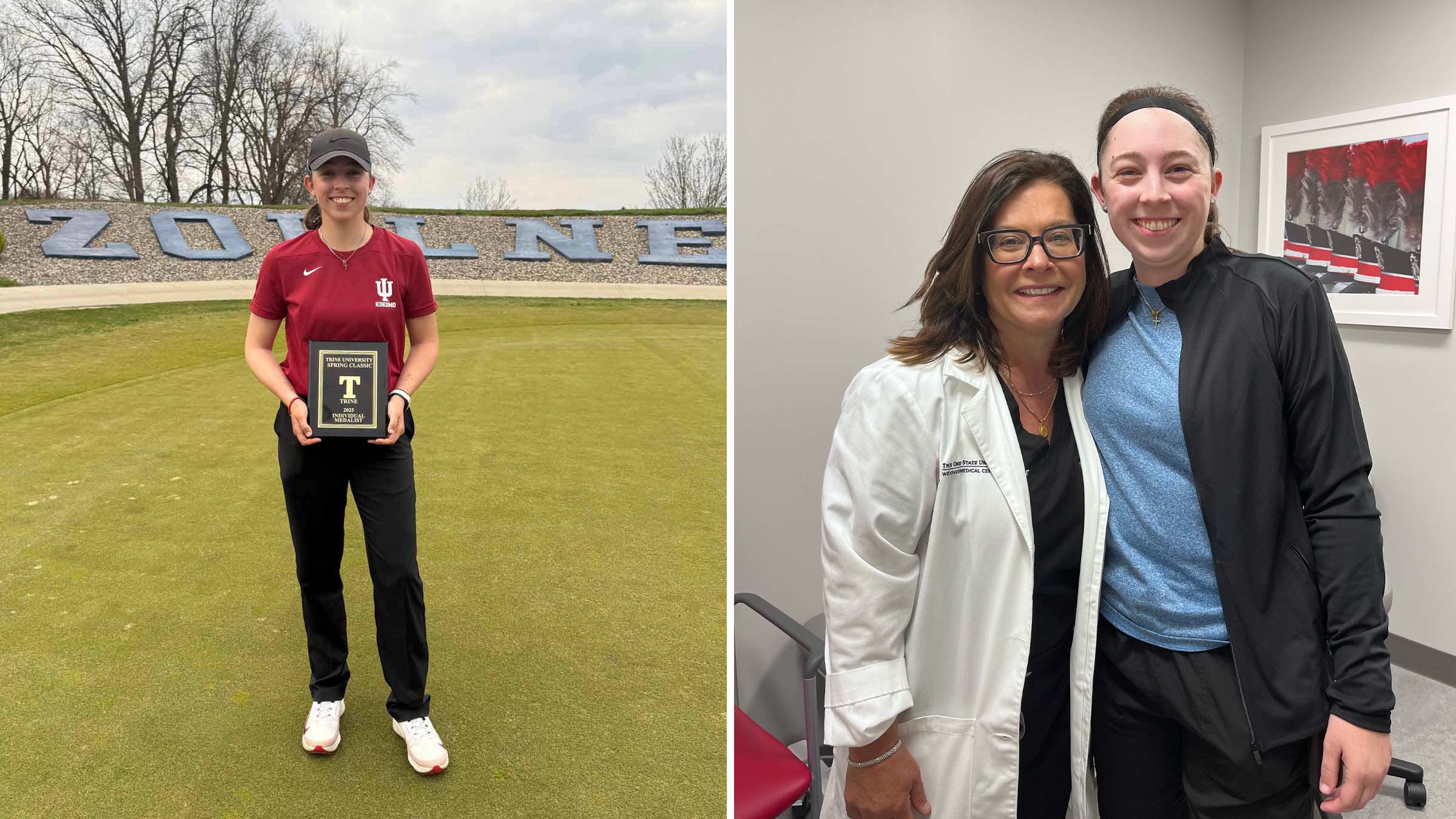
“I probably owe him everything,” Stegemann says. “We were close to giving up hope. He kind of gave that back to us. He gave me my life back and my golf career back.”
And yet, getting back to the golf course wasn’t her biggest concern when she met Dr. Awan. She wanted to be able to wash her hair on her own, type with her right hand and be pain-free. Playing golf again would be a bonus.

Pain or injury in your hand, wrist, elbow or arm?
Ohio State’s experts can help!
Schedule online or call today
Support future advancements in medicine
Your gift makes work like this possible every single day.
Give today