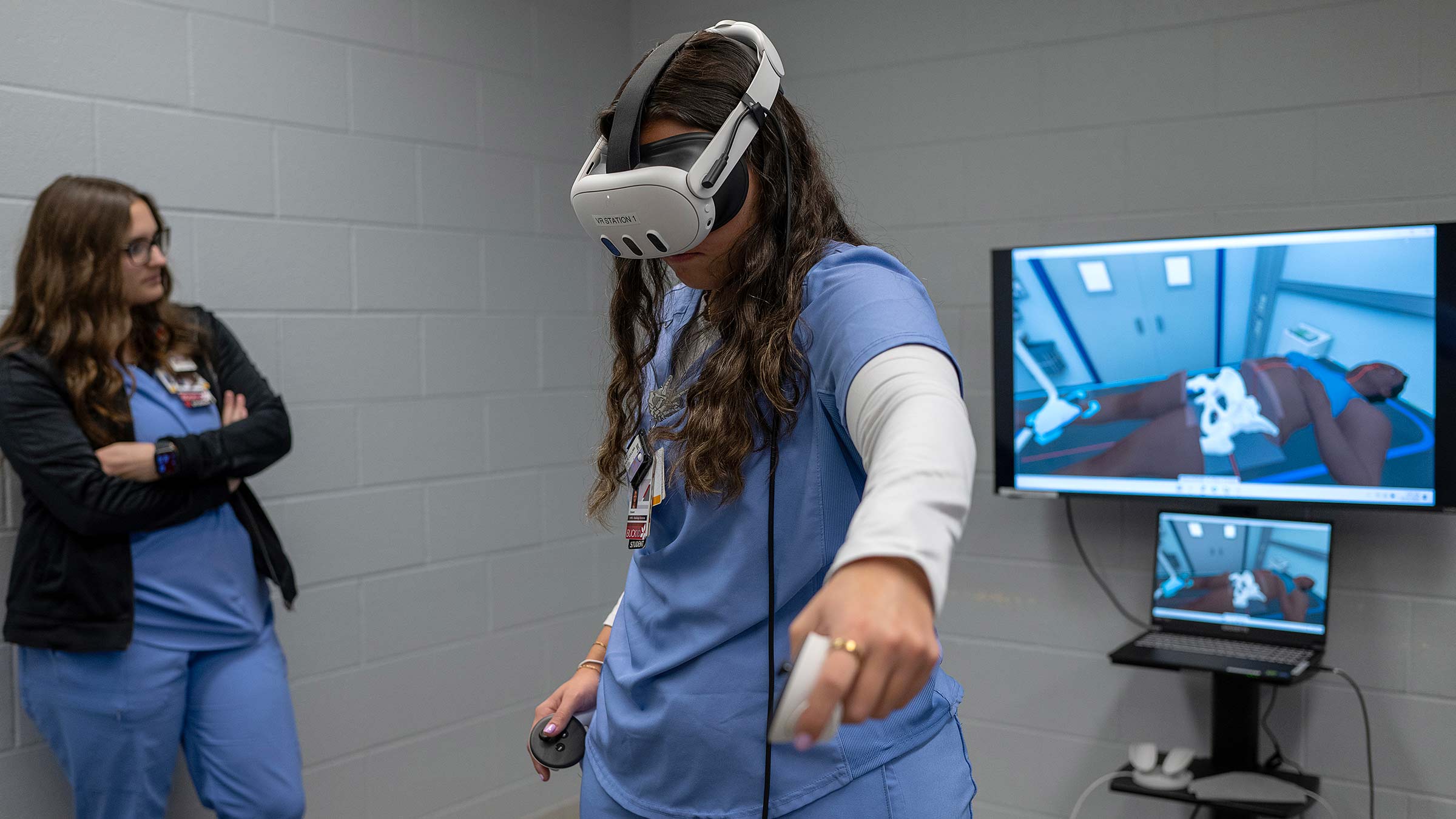
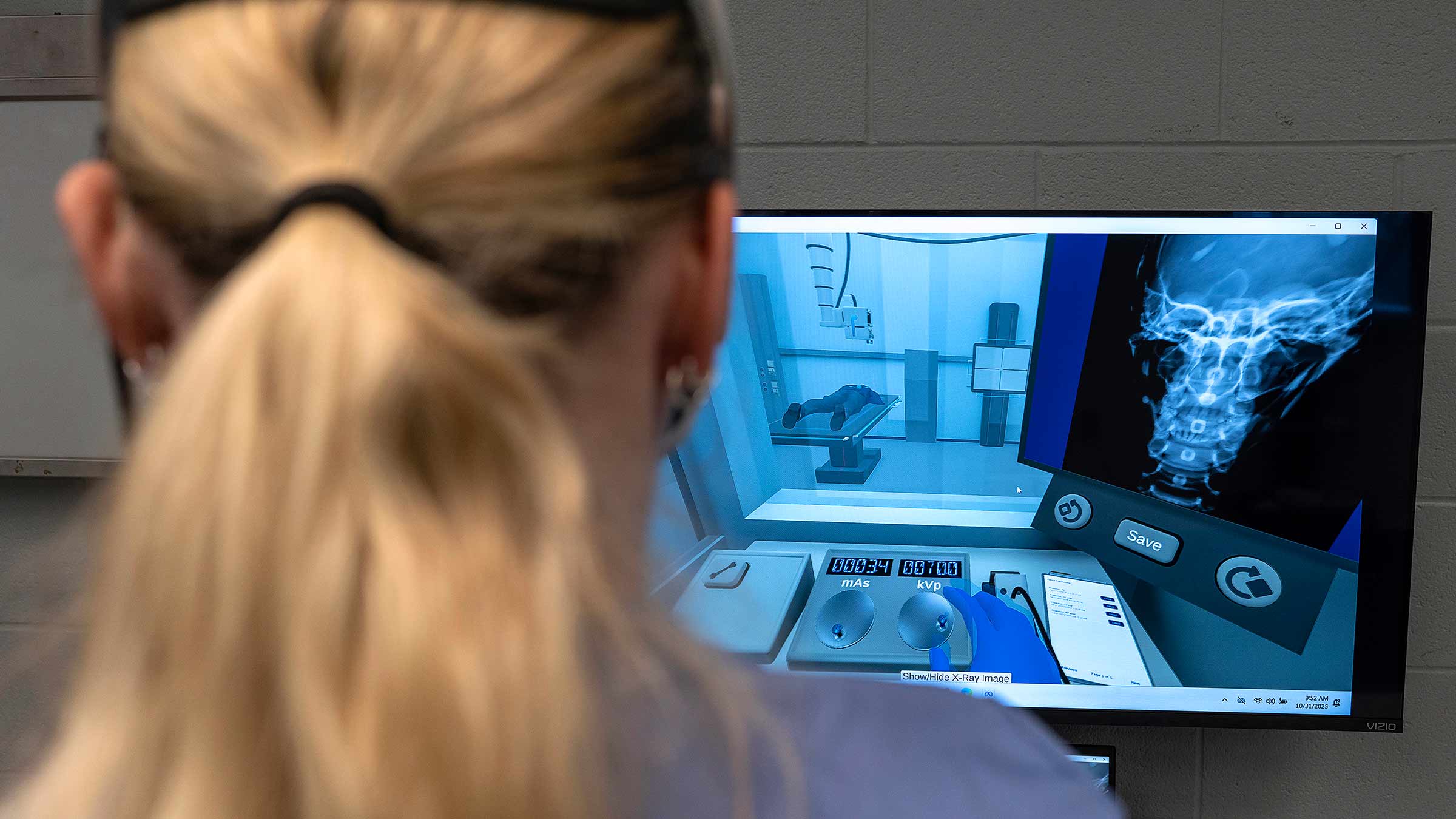
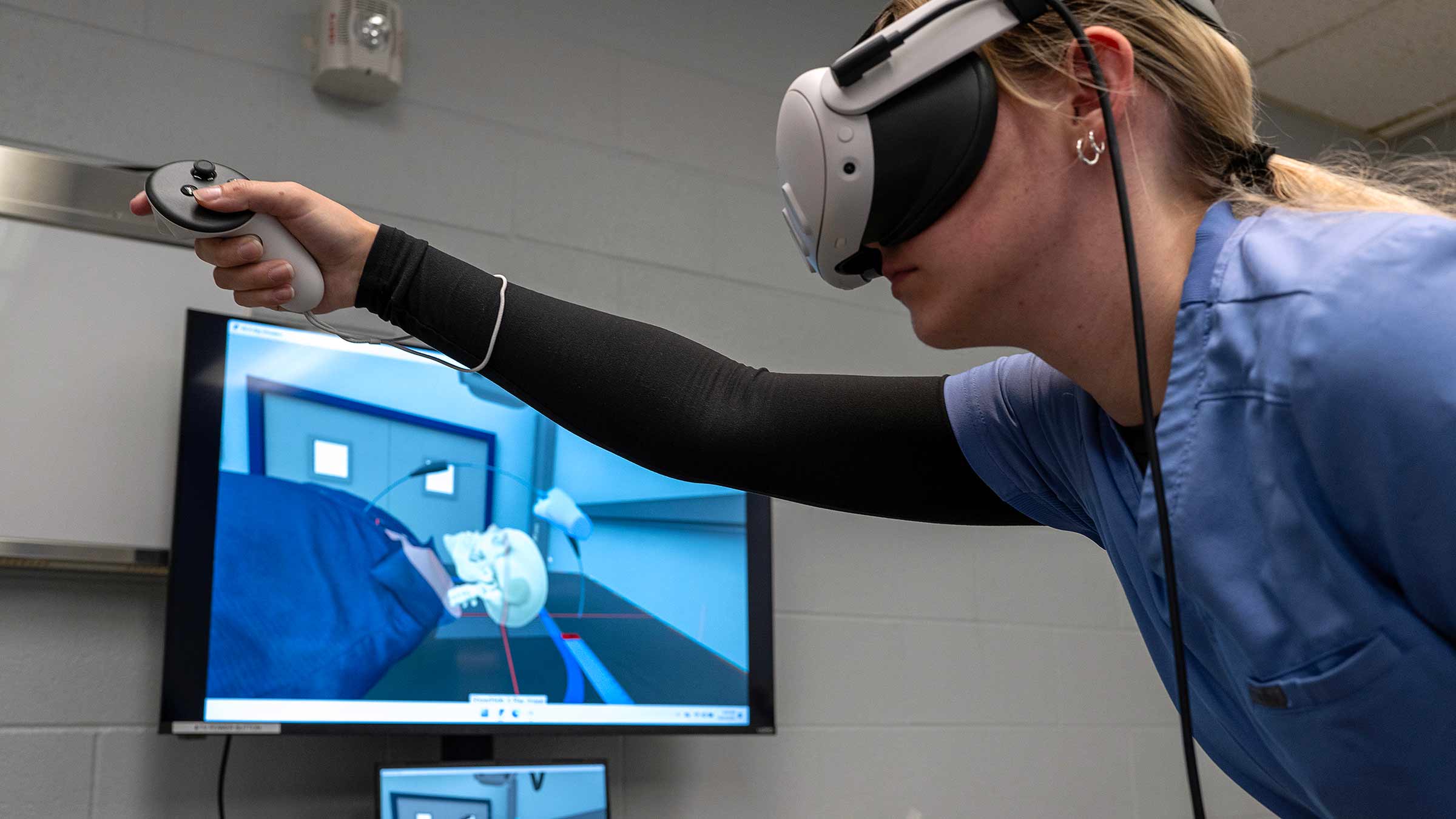
Preston Clayman, a second-year radiography student from Novelty, Ohio, is wearing a virtual reality (VR) headset in a new lab at The Ohio State University School of Health and Rehabilitation Sciences (HRS). Holding a controller in each hand, she enters a virtual X-ray clinic where a patient with an ankle injury is waiting to get an image taken.
Clayman’s first step is exactly the same as in a real X-ray room: She walks to the sink, washes her hands, dries them with a paper towel, and puts on exam gloves. She even places the used towel in a virtual trash can.
“This is the coolest thing I’ve ever done in my life,” she says. This is her first time using this new virtual reality technology, and she was glad the headset fit over her glasses.
“It feels like being at the eye doctor,” she says.
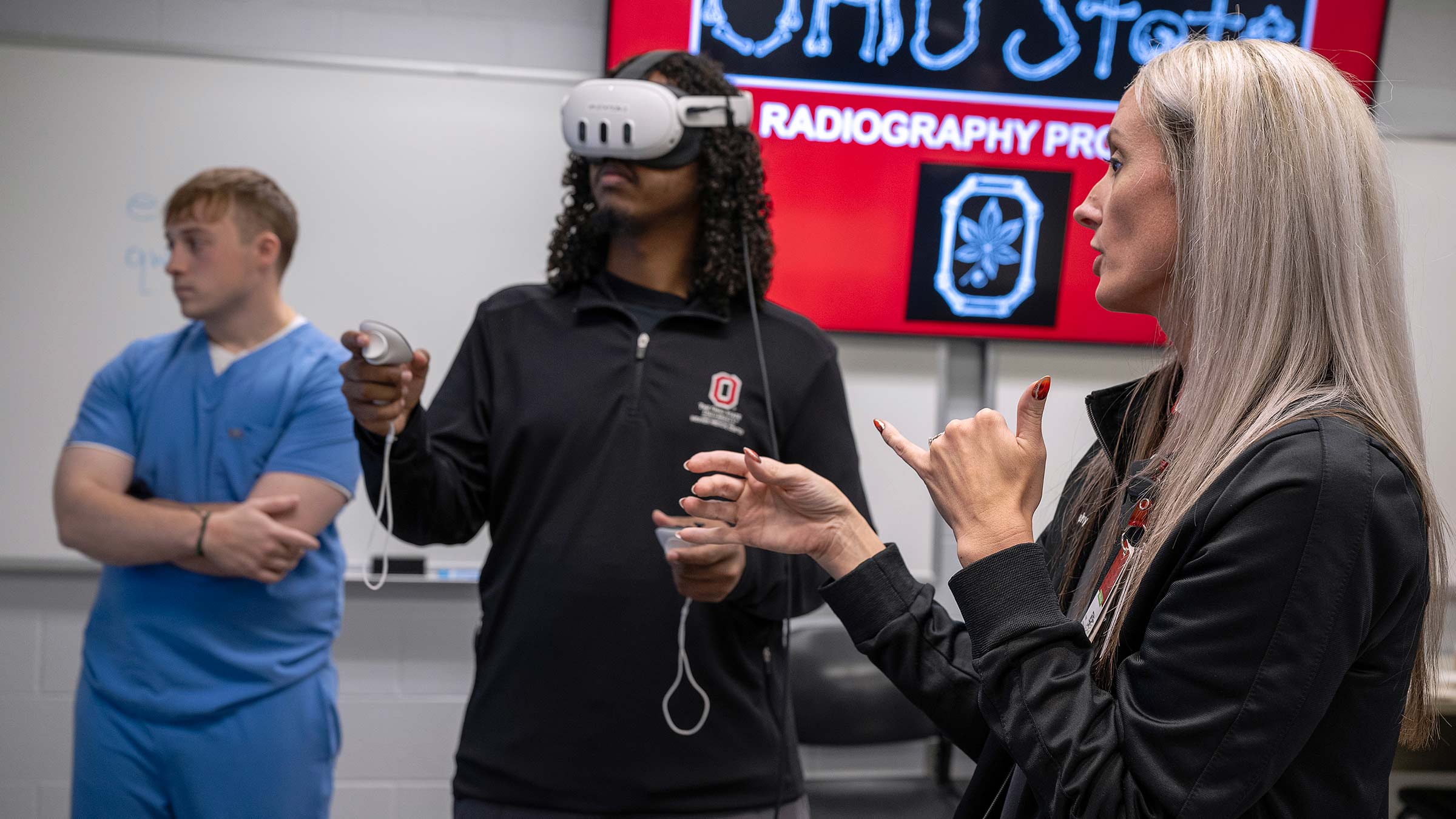
The lab was installed in August in Atwell Hall, home to the HRS Division of Radiologic Sciences and Therapy at The Ohio State University College of Medicine.
All three virtual reality headset stations feature a large monitor for observers to see exactly what the wearer of the VR headset sees, and wide, cushioned flooring pads to help the students know where they are in actual space while they’re also working in the virtual space.
Allison Stokes, BSRT(R), program director of Radiography, says the most difficult part of using the headsets can be after students take them off.
“It feels weird coming back to actual reality.”
Stokes supervised the installation of the lab and is redesigning some of the courses in the curriculum to allow more students to take advantage of it.
“The virtual technology is amazing. Students can practice in a low-stakes, safe environment without emitting ionizing radiation,” Stokes says.
“They can work on problem-solving skills and further their understanding of the many complicated aspects of medical imaging, such as setting appropriate technical factors and positioning the patient for a quality image. They can apply all the skills they learn in the classroom,” Stokes says.
The lab is currently part of the first-year coursework, and Stokes provides opportunities for second-year students to take advantage of it as well. Students can use the headsets for practice between classes.
“Radiography is the foundation of medical imaging,” she says. Students at Ohio State have the opportunity to specialize in MRI, CT, mammography and even vascular interventional radiology, which helps treat conditions such as pulmonary embolisms and aneurysms, and can help with surgical procedures like stent placements.
Virtual reality enables radiography program expansion
Stokes believes imaging professionals are “unsung heroes” in healthcare.
“Our job is so important,” she says. “Most patients have medical imaging [as part of diagnostic testing].”
Like many other healthcare fields, radiography careers are in high demand. While this offers great opportunities for people who want to enter the field, some programs are limited in size. The radiography program at Ohio State has a five-year strategic plan with a big goal: a 100% increase in student enrollment.
“The plan is contingent on getting the technology, staffing and clinical support we need,” Stokes says. “We won’t compromise our quality of education.”
Last year, at the national conference for the Association of Educators in Imaging and Radiologic Sciences, Stokes saw virtual reality (VR) headsets in use. She realized this new technology could help the program expand the class size and allow students to practice psychomotor skills before they enter their clinical practice.
Healthcare partnerships support advancements in radiography training and recruitment
Following the conference, Stokes spoke with Amy Gallatin, director of Imaging Services at The Ohio State University Wexner Medical Center.
“We’re lucky to have such a great relationship with Imaging Services,” Stokes says.
Gallatin has multiple reasons for staying connected with HRS and supporting students. Besides being an alumna of the program, she appreciates the quality of the graduates who can fill openings in the hospital.
“We want to help enhance the program and provide resources to expand training,” Gallatin says. She noted that using a VR headset at recruitment events also appeals to students seeking a career in healthcare.
“After all, we don’t print X-rays anymore,” Gallatin says.
The HRS program has already added more students to the first-year cohort.