Aging on the inside: Understanding how aging affects the lungs and lung disease
Research pioneers change the scientific world’s understanding of aging’s role in lung disease.
Aging is a relatively new phenomenon for humans. For most of human history, life expectancy at birth was about 30 years. “Until relatively recently, thanks to advances in public health and medicine, a longevity revolution began with a rapid increase in life expectancy,” says Mauricio Rojas, MD.
Today, with the increase in lifespan worldwide, aging is a crucial research field that involves studying how aging occurs at the cellular level, its effects on disease and therapies that could extend people’s health span. In pulmonary research, the study of aging – pioneered by Dr. Rojas and Ana Mora, MD – is only about a quarter-century old.
A match made in the medical lab
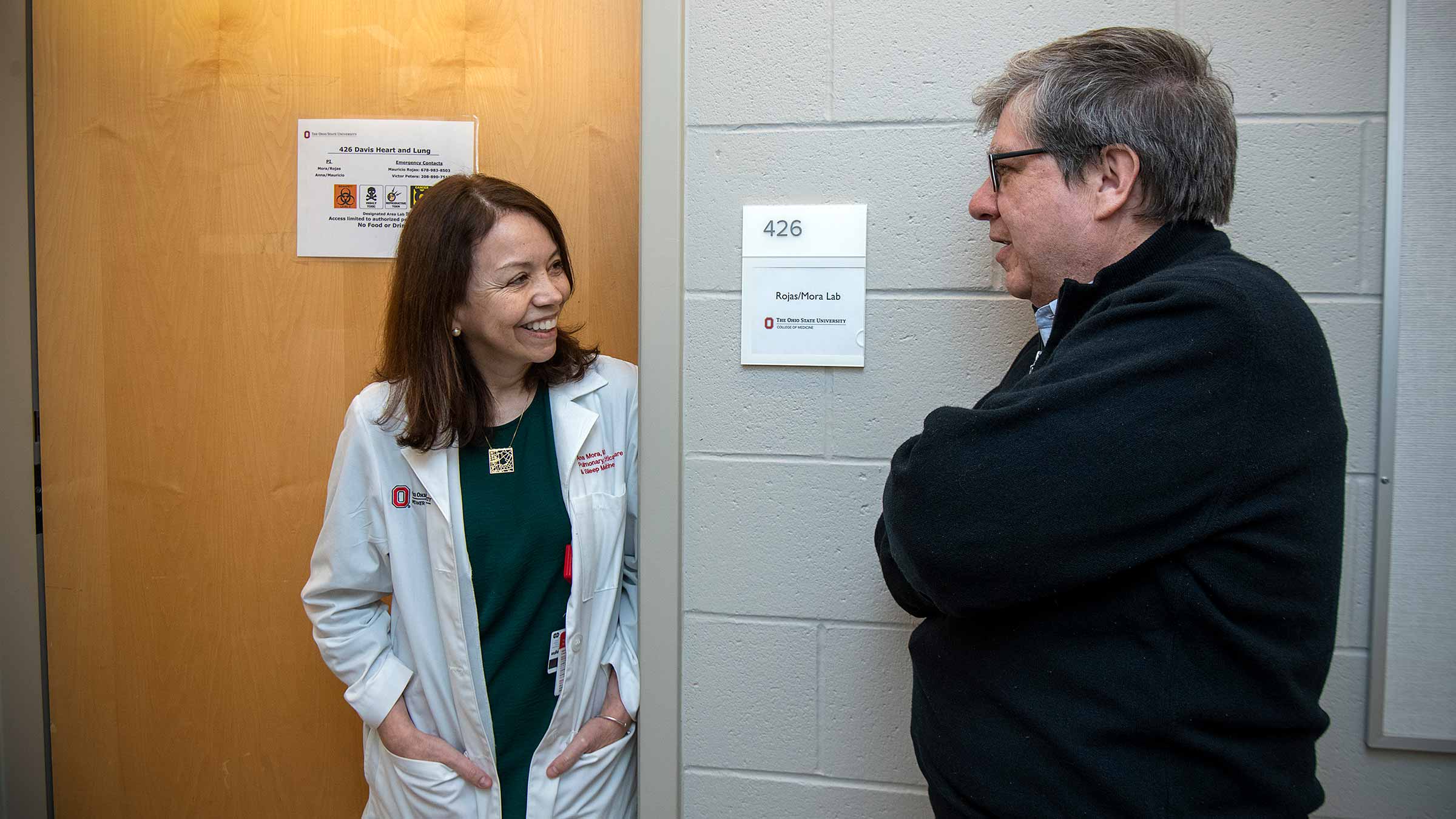
Drs. Mora and Rojas met during their first year of college, and since then, throughout different phases of their careers, have completed decades of complementary and intertwined research. Today, they can see that their most significant work relates to aging, particularly lung aging.
Combined, their decades of research as colleagues, lab partners and spouses have made waves not just in pulmonary medicine but in the entire field of aging research.
Since medical school, Dr. Mora and Dr. Rojas have complemented each other’s work and character. “In the early days as medical school students, we spent hours late at night working on research projects that were ungraded and not related to our coursework. Our only motivation was to gain a better understanding of human physiology," Dr. Rojas says.
Today, even after years of research and publications, the two remain driven by a deep passion for helping their patients and a sheer curiosity to see where science takes them.
Opening up the field of lung aging
Dr. Rojas and Dr. Mora trained as immunologists, studying how the immune system helps to repair organs, and through today, they apply their knowledge to the pulmonary field, chronic lung disease and aging. During training, they defined fundamental aspects of lung immunology and stem cell therapies.
Today, age is widely recognized as a significant contributing factor to lung disease. However, when Dr. Rojas published early studies examining the impact of cellular aging on lung injury and repair responses, the field was limited in exploration. Meanwhile, other age-related diseases, like cardiovascular diseases and cancer, were well known.
Today, aging research focused on the lung has an expanding community of scientists and grants that will help improve understanding and the development of new treatments for aging-related lung diseases.
Age-related pulmonary research milestones
Together and separately, Dr. Mora and Dr. Rojas have investigated why aging makes the lungs more susceptible to diseases like pulmonary fibrosis, chronic obstructive pulmonary disease (COPD) and lung cancer.
“Now, we understand there’s biological aging and chronological aging, and you can modify certain aspects to accelerate or prevent biological aging,” Dr. Mora says.
Smoking, for example, accelerates biological aging. Exercise and a healthy diet can slow it down.
They focus on two main culprits inside cells: mitochondrial dysfunction and senescence, which are recognized as the two main hallmarks of cellular aging.
In 2015, Dr. Mora discovered that mitochondrial dysfunction is a primary driver of aging and disease in pulmonary fibrosis. Changes in the mitochondria function have been associated with other age-related diseases. When damaged mitochondria accumulate, cells don’t respond well to stress, contributing to injury, disrepair and finally disease.
Dr. Rojas discovered how cellular senescence affects aging in the lungs. Senescence occurs when cells stop dividing and become tired – cells age but don’t die. They instead release harmful signals that can cause inflammation and scarring and make nearby healthy cells act abnormally. Today, Dr. Rojas and Dr. Mora are part of a consortium of institutions around the world studying the effects of cellular senescence on organs like the heart, brain, liver, kidneys and more.
Senescence and the role of mitochondria in aging are now common areas of pulmonary research, but that wasn’t always the case. “Now, you go to any conference on pulmonary fibrosis, and everybody is talking about senescence and mitochondrial dysfunction,” Dr. Rojas says.
Idiopathic pulmonary fibrosis as a microcosm for lung disease
Dr. Mora and Dr. Rojas were pioneers in questioning the role of aging lung cells in idiopathic pulmonary fibrosis (IPF), an age-related lung disease where scar tissue accumulates in the lungs, making breathing difficult. For some, this is caused by smoking, but for others, there’s no known reason, which is the meaning of idiopathic.
It was a novel idea in pulmonary medicine at the time and was met with some skepticism. “Today, we can say that we were correct,” Dr. Rojas says.
“Changes in lung structure, cell composition and immune response associated with aging affect the lung’s ability to repair itself,” Dr. Rojas says.
With IPF, there’s an accumulation of damaged cells that aren't functioning correctly, leading to disease progression. “We’re researching IPF as a model to understand how lung diseases are affected by aging as a whole,” says Zachary Miller, a PhD student in Dr. Mora’s lab.
Building a lung research lab
The Dorothy M. Davis Heart and Lung Research Institute, where Dr. Mora and Dr. Rojas conduct research, brings together researchers from multiple disciplines and points of view on how to approach organ dysfunction. “The best research comes from interacting with people of all different backgrounds, diversity in thinking and knowledge,” Dr. Mora says.
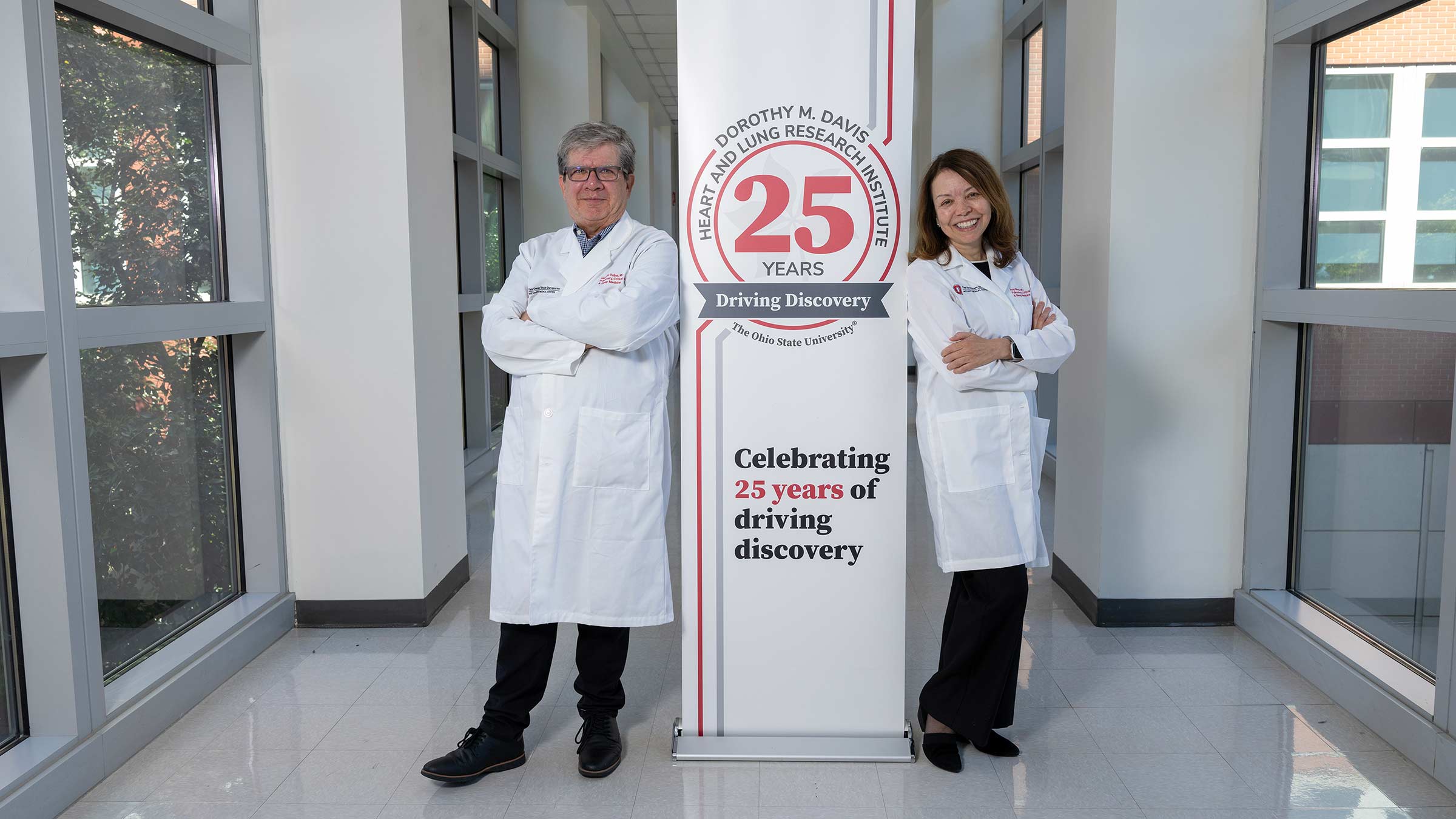
Collaboration with computational biologist Qin Ma, PhD, began on day one when Dr. Mora and Dr. Rojas joined the faculty at the Ohio State Davis Heart and Lung Research Institute in 2021. They knew they wanted to maximize artificial intelligence’s innovative research capabilities, and it’s been a mutually productive and healthy collaboration ever since. “We wrote a huge NIH [National Institutes of Health] grant on senescence together and won it on the first try. I haven’t had a better start with any other collaborators,” Dr. Ma says.
While Dr. Ma’s research covers many areas of computational biology and biomedical informatics, his pulmonary and senescence research is particularly meaningful.
“Trying to understand the mechanism of aging in lung diseases helps us better understand human health overall because most diseases are affected by the aging process,” Dr. Ma says.
“We’re going to make aspects of aging treatable,” Dr. Ma says.
Lorena Rosas, PhD, senior research associate, found Drs. Mora and Rojas’ lab after completing her doctoral studies in Mexico. She’s contributing to the team’s study of treatment for pulmonary fibrosis and other age-related lung diseases. So far, they have some strong candidates to move to clinical trials. “As an early-career scientist, it’s a really nice environment of curiosity and learning here. The collaborative team we’ve built – including research assistants, bioinformaticians, post-doctoral scholars, students and PIs – inspires me every day to try to do my best in the lab,” Dr. Rosas says.
Dr. Mora is also the co-leader of a large NIH-funded training program, Biology of Aging and Lung Diseases, which trains physician-scientists and biomedical researchers in the field with the hope that they will become new leaders in this important work.
For Dr. Mora and Dr. Rojas, inspiring the next generation of pulmonary researchers isn’t just meaningful; it’s necessary to benefit patients. Over the years, helping patients has been what keeps the pair motivated through rigorous research – even on topics that weren’t popular. “Our research argument was always, are you working for the patients or to have papers?” says Dr. Rojas.
Although they both love the lab, being part of the team that helps patients keeps Dr. Mora and Dr. Rojas focused on the larger goal of finding a treatment for pulmonary diseases.
Each day in the lab, as Dr. Mora and Dr. Rojas finish each other’s sentences and support each other’s research, they take one step closer to their goal of improving pulmonary patients’ quality of life – and maybe even improving life for everyone who ages.

Take charge of your lung health
Ohio State offers comprehensive treatments for lung conditions that help you breathe easier.
Learn more