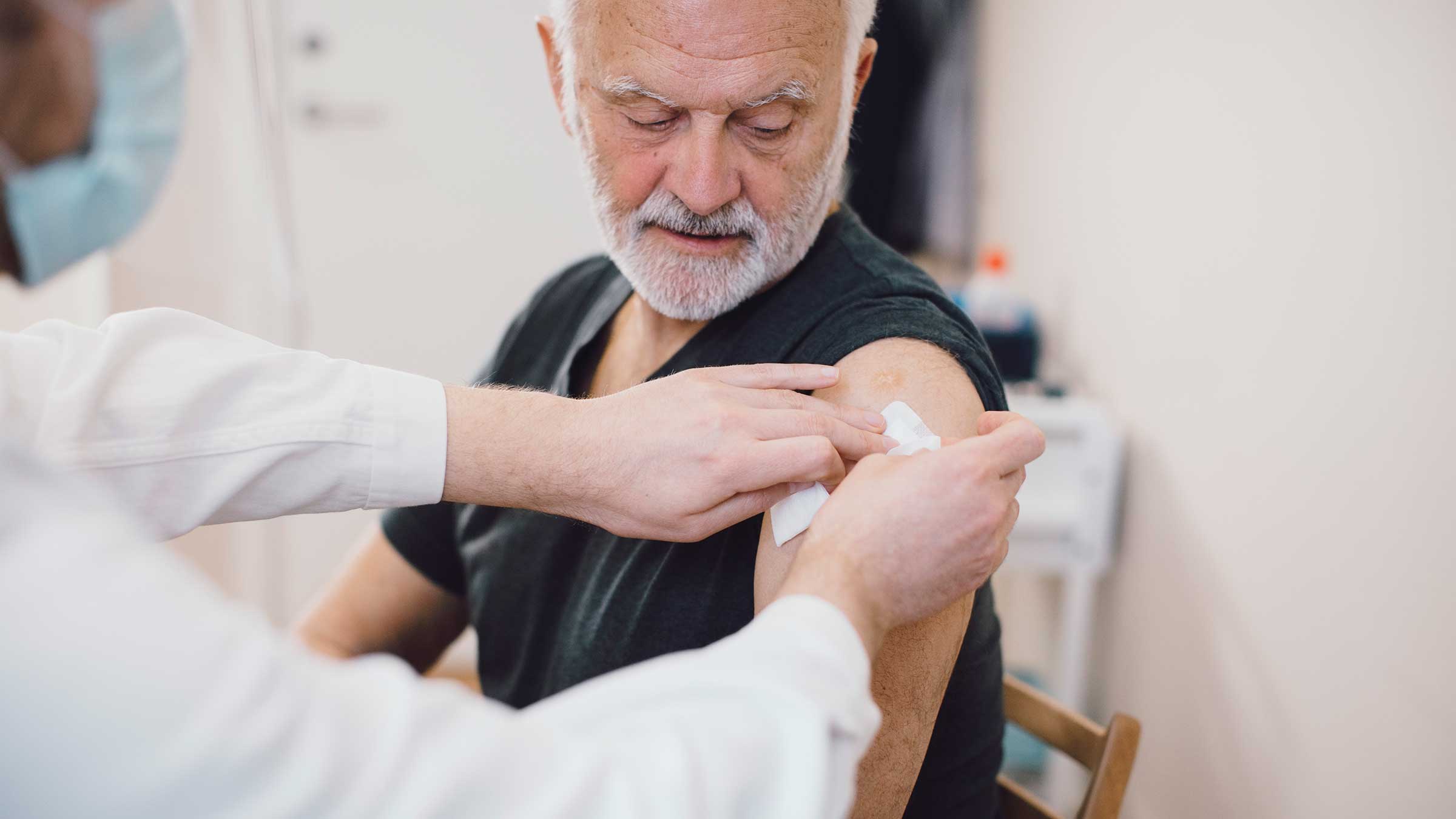
Vaccination is a safe and effective way to protect you and those around you from infectious diseases. That’s because vaccines cause your body to produce antibodies to recognize and fight off illnesses. And, depending on the type of vaccine, the upper arm is generally the preferred location to optimize your body’s immune response.
Why vaccine shots are given in muscular parts of the body
Injecting vaccines into muscle increases their ability to prompt the body’s production of antibodies. It also minimizes adverse reactions at the injection site.
Muscles, such as those in the upper arm, the buttocks and the side of the thigh, have an abundant blood supply. This allows B cells and T cells in the body to reach the injected vaccine antigen faster to build an immune response.
Also, muscles have fewer pain fibers compared with skin or the tissue just under the skin, so injections into muscle are generally less painful than in other areas.
Why vaccine shots aren’t given in other areas of the body
Fat just under the skin has less blood than muscles, so it takes longer for B cells and T cells of the immune system to circulate into the area, recognize the injected vaccine antigen and start producing an immune response.
Injections into the fat just beneath the skin also are more likely to cause irritation, inflammation or areas of infection.
Why the injection site might be sore after receiving a vaccine
An injection triggers a temporary inflammatory response and the production of chemicals called cytokines. These act as signals for the immune system to become activated.
This response causes some pain and swelling around the injection site that may last for a day or two.
Other methods for giving vaccines
Oral vaccines
Some vaccines can be given orally, such as the oral polio, rotavirus and cholera vaccines. This is very convenient for mass vaccination campaigns, especially when administering vaccines to children. These vaccines start an immune response in the body’s mucus membranes by producing a type of antibody called IgA, which is particularly useful in preventing infections that are transmitted orally.
Protein vaccines, such as recombinant hepatitis B vaccines and the acellular pertussis vaccine, can’t be given orally. This is because they could be broken down while traveling through the gastrointestinal system before they’re absorbed.
Nasal vaccines
Nasal vaccines are useful in producing antibody responses in the upper airway mucus membranes. However, they’re not likely to induce an immune response in other regions of the body, such as the gut.
One such vaccine is the FluMist flu vaccine, which has been approved in the United States for use in people ages 2 to 49 who aren’t pregnant.
Intravenous immunization
Although vaccines aren’t usually given intravenously, IV infusions of monoclonal antibodies can be given to provide temporary protection for people who are severely immunocompromised and are unlikely to develop an adequate immune response to a vaccines.
For example, as of February 2026, the monoclonal antibody pemivibart (brand name Pemgarda) is active against currently circulating variants of the SARS-CoV-2 virus, and it can be administered by IV to help prevent COVID-19 in people with moderate to severe immune compromise.
Subcutaneous vaccinations
Some vaccines are injected into the fatty layer found below the skin and above the muscle tissue. This is recommended for some vaccines that need to be absorbed more slowly to produce a more robust immune response. Also, some vaccines have components that degrade more rapidly in muscle tissue. Examples of vaccines administered subcutaneously include the MMR, varicella, Mpox and yellow fever vaccines.
When to call a doctor about symptoms after a vaccine
Signs and symptoms of a possible severe allergic reaction to a vaccine include:
- difficulty breathing
- swelling of the face or throat
- fast heartbeat
- widespread rash all over the body
- dizziness and weakness
If you experience these symptoms, go to the emergency department or call a doctor. Fortunately, severe reactions to vaccines are quite rare.

The first step in the journey to your best health begins with a primary care provider who cares
Get started today