A mentor’s kindness, commitment creates a path to medical school
A recent medical school graduate’s unexpected mentor teaches the art and science of medicine.
Before his mentor placed the ceremonial hooded robe on his shoulders at his medical school graduation (known as Convocation), signifying his entrance into medicine, Jacob Lesinski’s expression mirrored his mentor’s – equal parts pride, joy and excitement. Lesinski accepted the ceremonial hood from the man who helped him get there.
“I couldn’t have had anyone else greet me into the profession except for Ray (Bignall),” Jacob Lesinski, MD, says today.
“As my mentor, he provided me with the worldview, the inspiration, the model and the encouragement to become a doctor,” Dr. Lesinski says.
It was a chance meeting in a hallway 15 years earlier – a moment of simple compassion from a stranger – that would bring them together and create a bond for life.
Moment of kindness transforms future medical student’s life
In 2011, Ray Bignall, MD, FAAP, FASN, was beginning his medical residency at Cincinnati Children’s Hospital Medical Center. Much younger back then, Jacob Lesinski was also at Cincinnati Children’s – where his 5-year-old sister, Emily Wrather, was undergoing treatment for multiple congenital heart defects.
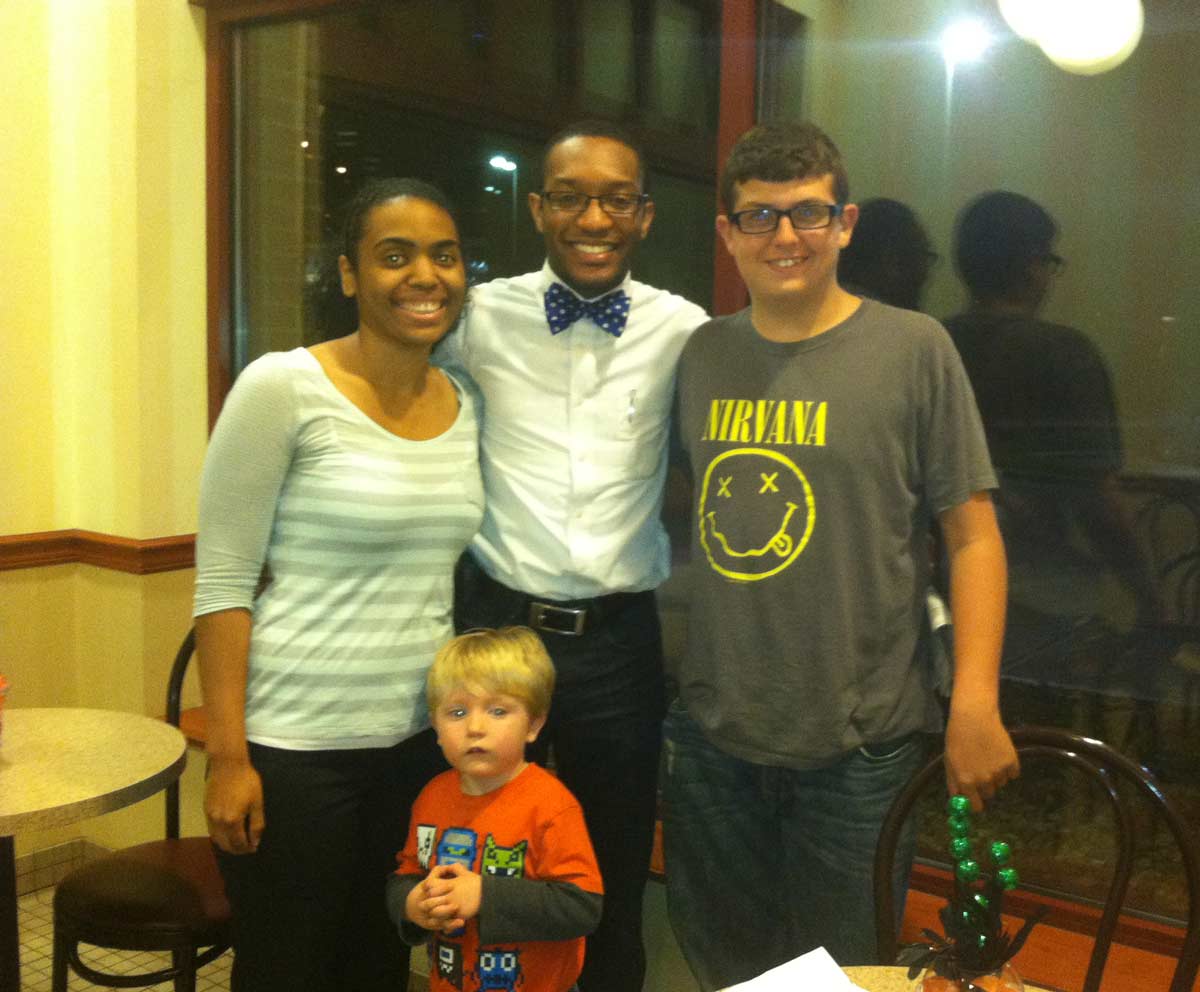 They met by chance when Dr. Bignall was giving his own family a tour of the facility, and they encountered Jacob’s mother in the hallway – she was in tears, distressed about a sudden turn in her daughter’s condition. The Bignall family stopped, offering comfort, and followed her to Emily’s room, where young Jacob was keeping watch.
After what was supposed to be the last of multiple surgeries, sepsis, a life-threatening response to infection, ravaged Emily’s body – and her family prepared for the worst. Each day, Dr. Bignall showed up for the family, and especially for Jacob, who at 13 years old was shocked, grappling with the idea of losing his little sister.
“Instead of running off, he took that challenge head-on,” Jacob, now Dr. Lesinski, says today. “He went out of his way for us, and it was one of the first signs that I knew that I wanted to be like him and be a doctor.”
A mentor who leads by example
Dr. Bignall says their ongoing relationship didn’t begin the way most mentorship relationships begin, but it progressed naturally over the months that Emily was in the hospital. Amid the long hours and demands of being a medical resident at the time, Dr. Bignall took the time to build rapport with the family during their time of great need. His guidance, frequent check-ins and connections over lunch gave Jacob the chance to process the unfairness of the rollercoaster of his sister’s illness and, ultimately, her death.
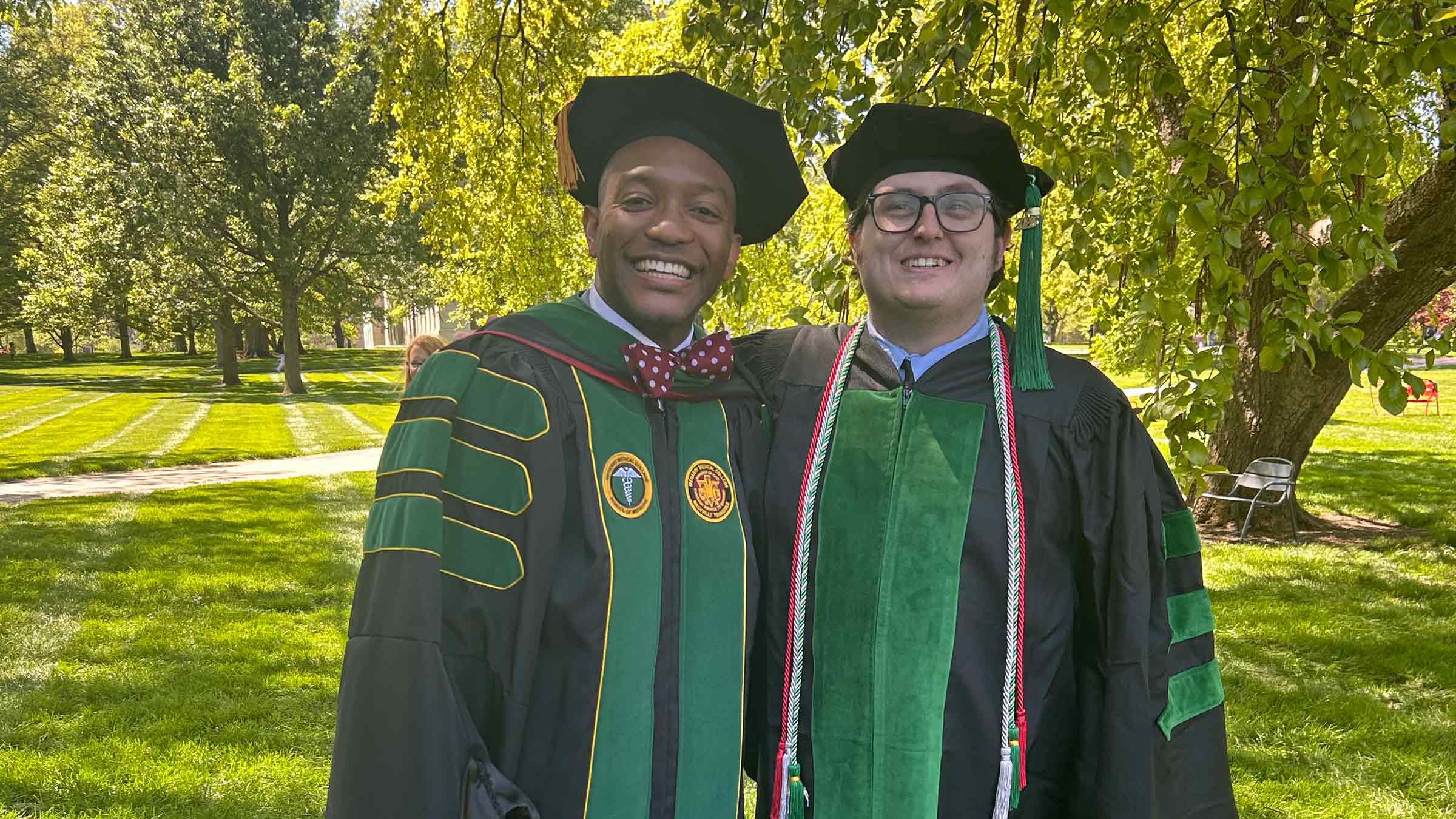
During high school and college, Jacob modeled his preparations for medical school on what he learned Dr. Bignall had done. He would often reach out to his mentor for advice, and his tenacity ensured that they stayed connected. Dr. Bignall now splits his time between teaching and serving as director of Kidney Health Advocacy and Community Engagement in the Division of Nephrology and Hypertension at Nationwide Children’s Hospital, and he’s also their chief health equity officer.
Jacob Lesinski studied hard and made choices that advanced his skills. While in college, Dr. Bignall helped him deepen his study skills to prepare for exams and wrote letters so that Lesinski could volunteer at his local children’s hospital. Dr. Bignall says Lesinski’s warmth, passion and charismatic personality matched his approach to mentoring and made his job easy.
“I wanted to give him the tools he needed to be successful. I walked him through lining up letters of recommendation for his medical school applications,” Dr. Bignall says.
Dr. Bignall sent Lesinski the personal statement he created when he was applying, so that he could reference it as he wrote his own. Dr. Lesinski now shares his statement with others, to help them frame their statements.
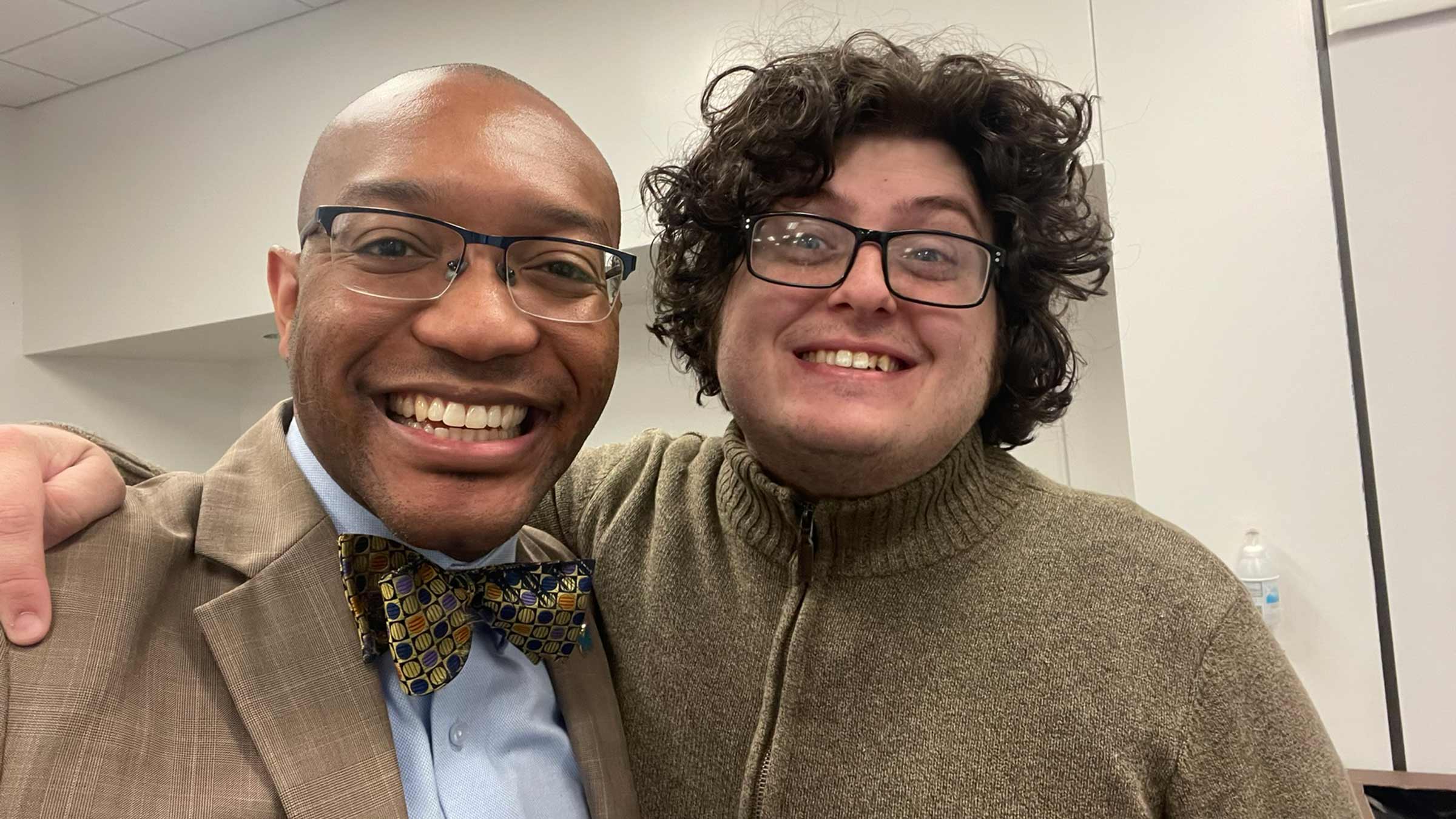
Lesinski applied to many schools, but when he got into The Ohio State University College of Medicine, he couldn’t wait to tell Dr. Bignall the incredible news.
“He was the first non-family person I called,” he says. “I was so grateful that his mentorship gave me the chance to come full circle and access the innovative education at Ohio State, where he teaches.”
Paying forward the gift of mentorship
Throughout medical school, Lesinski looked for ways to give back to others, applying the support he’d received to guide other learners in decisions during clinical rotations, medical board exams and when connecting with research mentors. He says he has vivid memories of Dr. Bignall not sugarcoating reality but instead stepping in to make sure he stayed positive and focused on success.
“Knowing that somebody is looking out for you really matters,” Dr. Lesinski says.
“I think more than anything, I’ve just always appreciated the positive reinforcement that my mentor has always given me,” he says.
“Jacob has demonstrated his capacity to mentor across differences through all of his interactions,” Dr. Bignall says. “I cannot wait to see him take his passion for mentorship and share it with as many people as he can.”
Today, Dr. Lesinski wants to further his residency training in an academic medicine setting so that he can also help medical students develop the hard and soft skills he learned.
His experience as a young teenager with his little sister, Emily, all those years ago inspired his focus area in medicine – today, he plans to specialize simultaneously in congenital heart defects and palliative care, a specialized approach to providing patients and families with relief from the symptoms and stress of serious illness.
“The palliative care doctors treating my sister and my family had the ability to not just talk to us but tailor those conversations to best help us in the moment,” Dr. Lesinski says.
And now that he and his wife have moved east so he can begin his residency at the University of North Carolina at Chapel Hill School of Medicine, he’ll continue sharing with others the skills he learned at The Ohio State University Wexner Medical Center and through collaborating with Dr. Bignall.
“He will bring his own personal story to bear,” Dr. Bignall says. “This is a testament to humanism in medicine and showing that being a doctor is more than just treating patients.”

Discover programs designed to produce the finest physicians and researchers in the world.
Explore our programs