Changing the course of aggressive blood cancers
Ohio State physician-scientist contributes to groundbreaking advances against acute myeloid leukemia (AML).
Judith Moyer was over 3,000 miles from her Ohio home when she was diagnosed in 2015 with acute myeloid leukemia (AML), an aggressive blood cancer that can be fatal if not quickly treated.
Despite that distance and the severity of her illness, she wanted to be treated at The Ohio State University Comprehensive Cancer Center – Arthur G. James Cancer Hospital and Richard J. Solove Research Institute (OSUCCC – James). Her insistence led to a rigorous journey that paid off through the lifesaving care she has received from an expert team that includes Alice Mims, MD, MSCR, her primary oncologist for the past decade.
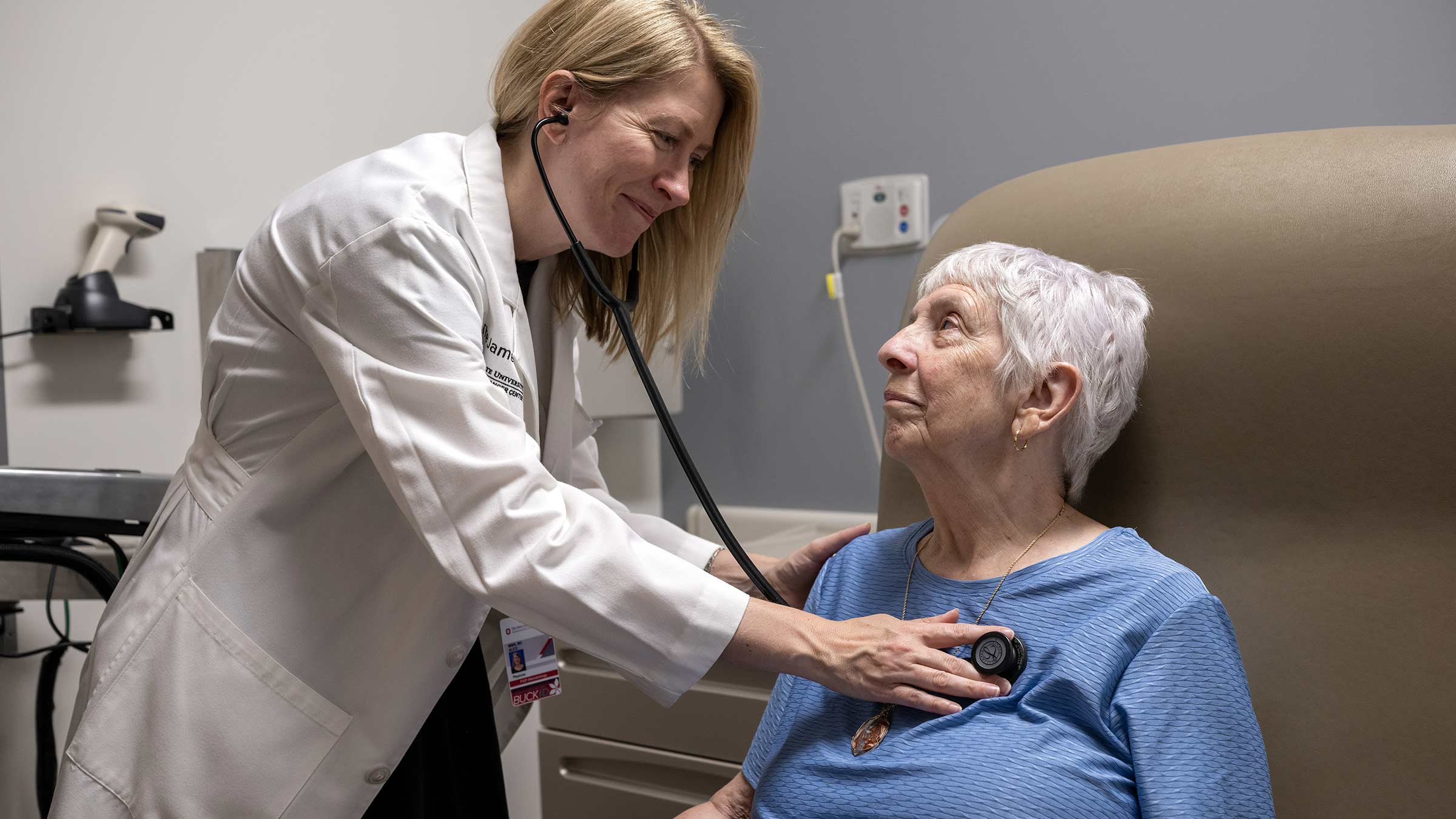
Moyer’s medical journey began with extreme fatigue and gingivitis (gum swelling) while vacationing in a motor home with her husband, Bruce, in the town of Soldotna, Alaska. A clinic doctor said her white blood cell count was 159,000 – the highest he’d ever seen. Suspecting leukemia, he suggested she be flown to the Fred Hutch Cancer Center, an affiliate of UW Medicine in Washington state for immediate treatment.
“I said if I had to be shipped anywhere, I wanted to be shipped to Ohio State, because when you live in Ohio that’s where you go, and specifically to The James,” Moyer recalls.
When the doctor initiated a phone conversation with oncologists at UW and at the OSUCCC – James, all agreed she should go first to UW to become healthy enough for a trip to Columbus.
When Moyer eventually was flown to the Ohio State Wexner Medical Center, a trek interrupted by two stops for emergency treatment in South Dakota, she received chemotherapy followed by a bone marrow transplant (BMT) and enrollment in a clinical trial at the OSUCCC – James.
She’s glad she made it there.

“They were waiting for me,” Moyer says. “They gave me only a 20% chance of making it through chemo, but within days I was walking the halls. I also had several bone marrow tests. When the last one came back clean, that was the first time I cried. I figured I deserved it by then.”
Dr. Mims, who had joined Ohio State’s faculty that year, cared for Moyer during her post-remission therapy and then took over as her post-BMT oncologist, putting her on a clinical trial testing medication to help prevent graft-versus-host disease (GVHD) in patients who had received transplants from donors.
Dr. Mims says Moyer has been off all anticancer medication since 2016 and is considered cured, only returning to the OSUCCC – James for annual check-ups.
“Judith is an inspiration for all that she went through with her initial therapy and now to be 10 years out from her BMT and doing well,” Dr. Mims says.
“By participating in a clinical trial, she helped advance our knowledge of how to better treat patients and decrease their risk of post-transplant GVHD,” she adds.
“Dr. Mims is so kind and knowledgeable,” Moyer says. “Everybody at The James did exactly what they were supposed to and exactly how they were supposed to do it, or I wouldn’t be here.”
Attacking AML with urgency
A specialist in acute leukemias and myeloid malignancies, Dr. Mims knows the importance of quickly treating patients with AML, which rapidly worsens without therapy.
“AML occurs when stem cells, or ‘factories’ in your bone marrow that make your different blood cell types, start making cancer cells,” she says. “These cells overtake the bone marrow, leading to low platelet count, anemia, high or low white blood cell count with low immune function, and a high risk of infection. If untreated, patients have a survival time of typically months.”
Until recently, Dr. Mims says, treatment for AML and its subtypes had been relatively the same for decades: intensive chemotherapy for qualifying patients, or less intensive palliative (non-curative) chemotherapy for patients who didn’t qualify for intensive treatment.
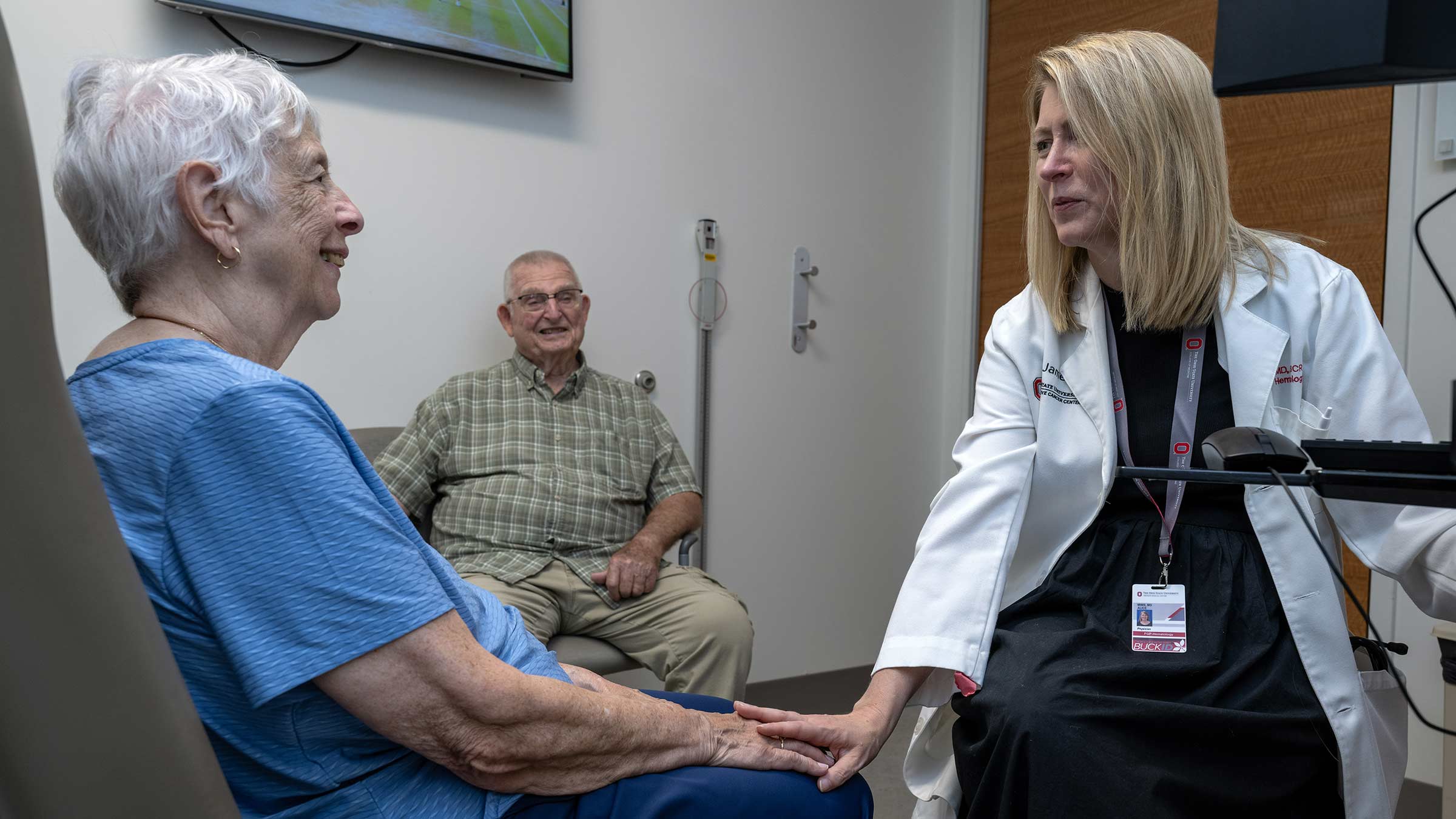
But she and her colleagues in the OSUCCC – James’ Leukemia and Hematologic Malignancies (LHM) Program, which she co-leads, have participated in a global effort to develop therapies with more precise targets and fewer side effects.
Studies have yielded important advances in treating blood cancers
Their work has paid off: Within the past decade, the Food and Drug Administration (FDA) has approved more than 10 new drugs for treating AML.
“Our Division of Hematology has helped develop many of those drugs, which have improved outcomes and survival for patients,” says Dr. Mims, who has been the Ohio State leader for several AML clinical trials that have resulted in clinical advances.
Trials have led to approval of two IDH gene inhibitor drugs: ivosidenib (for patients with IDH1-mutated AML and IDH1-mutated myelodysplastic syndrome) and enasidenib (for patients with IDH2-mutated AML). Dr. Mims says the IDH gene produces an enzyme that plays a big role in cellular metabolism. “When mutations occur in IDH, it creates a protein that causes abnormal cells to grow and not shut off,” she says. “The new targeted drugs turn off the signal that’s telling the abnormal cells to grow.”
Her team also helped gain FDA approval of the targeted drug revumenib for patients with treatment-resistant AML distinguished by mutations in the NPM1 gene. “We’re also looking at this drug in combination regimens for patients with this AML subtype,” Dr. Mims says.
In addition, her team is increasing its involvement in clinical trials for myelodysplastic syndrome – a rare blood disorder that occurs when bone marrow makes abnormal blood cells that can lead to AML – and for myeloproliferative neoplasms, which are caused by bone marrow overproduction of blood cells. “We’ve had a long history of being focused on AML,” she says, “so we’re trying to improve outcomes for patients with these related diseases as well.”
Anticipation builds for study of new drug against deadly AML subtype
Dr. Mims and her colleague Christopher Coss, PhD, of Ohio State’s College of Pharmacy, are the OSUCCC – James co-leaders of a multicenter, phase I clinical trial for treating certain AML patients with an oral anticancer drug called JBZ-001 that was created and developed entirely at Ohio State.
This trial is supported by a $3.4 million grant that the National Cancer Institute awarded to principal investigator John C. Byrd, MD, of the University of Pittsburgh Medical Center, which is involved in the study along with the University of Cincinnati and the OSUCCC – James.
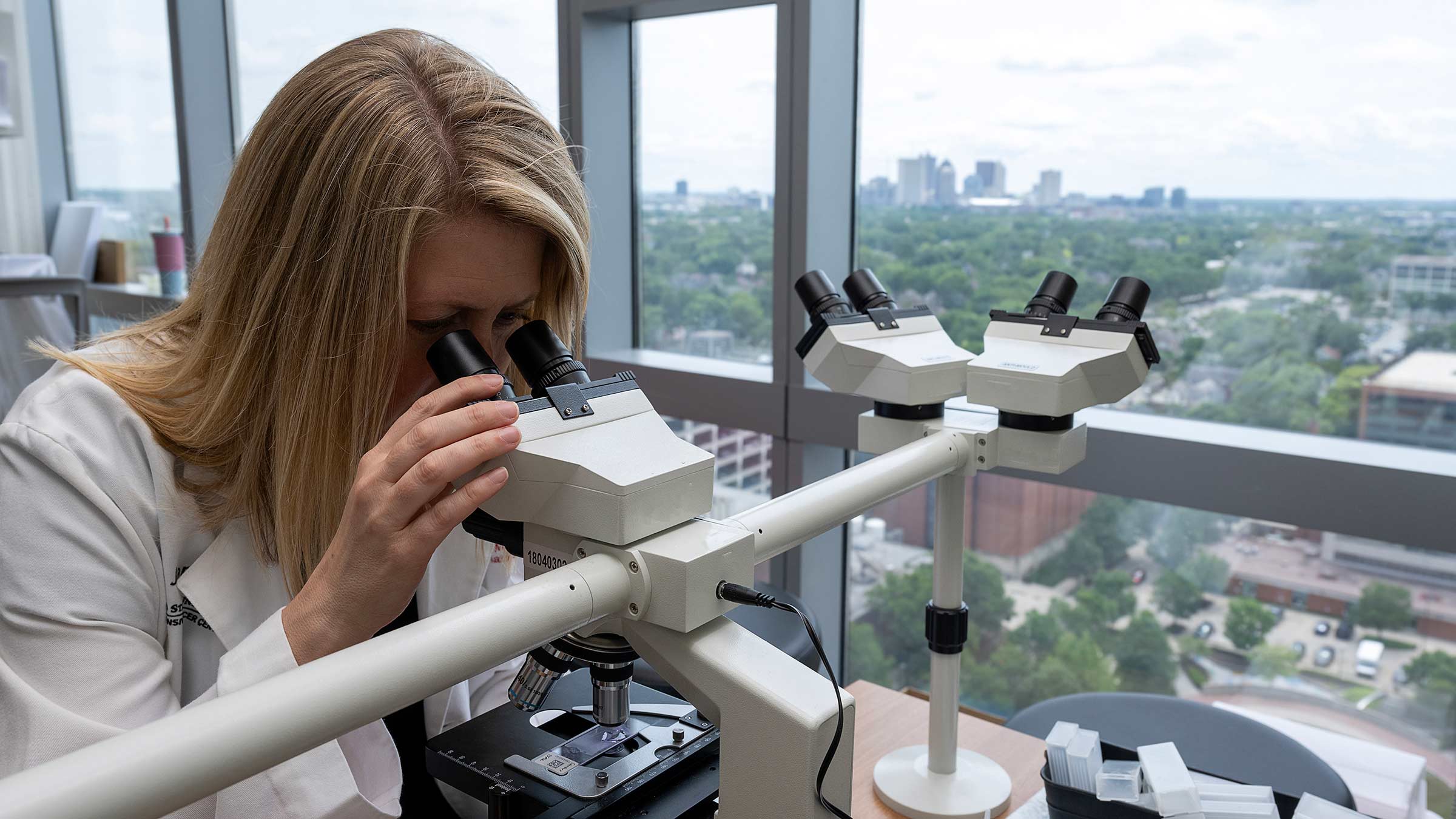
JBZ-001 is already being studied at Ohio State in a first-in-human phase I clinical trial for treating patients with any solid tumor or non-Hodgkin lymphoma; now it will be tested for the first time in patients with AML characterized by mutations in the TP53 gene.
“We’re excited about this because it involves a lethal subtype of AML that doesn’t respond to any of our standard-of-care treatments,” Dr. Mims says. “The new drug will target a different pathway, or a way to kill cancer cells, called ferroptosis (a form of naturally programmed cell death) that’s been studied in other cancers but not AML to a large extent. We hope targeting this pathway can help patients overcome drug resistance in TP53-mutated AML.”
Nurturing a love of research-based patient care
After growing up in a small town in South Carolina as one of three children of medically oriented parents – her father is a retired family practitioner and her mother is a pharmacist – Dr. Mims earned a degree in biology and chemistry at the University of South Carolina and then her medical degree at the Medical University of South Carolina (MUSC).
“I then started my medical residency at Wake Forest University on a primary care track and wanted to pursue women’s health,” she recalls, “but when I rounded on the inpatient service that cared for patients with acute leukemias, I really enjoyed working with my mentor, Dr. Bayard Powell, and his research in clinical trials. These patients were in the hospital for a while, so we got to know them very well, and I also took part in research involving new drugs that improved their outcomes.”
Propelled by her new interests, she completed her fellowship training in Hematology and Oncology at Ohio State and the OSUCCC – James, and then joined the faculty at MUSC for three years before being recruited back to Columbus, a chance she jumped at. “There’s a lot more clinical and translational research here that I’m excited to be a part of,” she says.
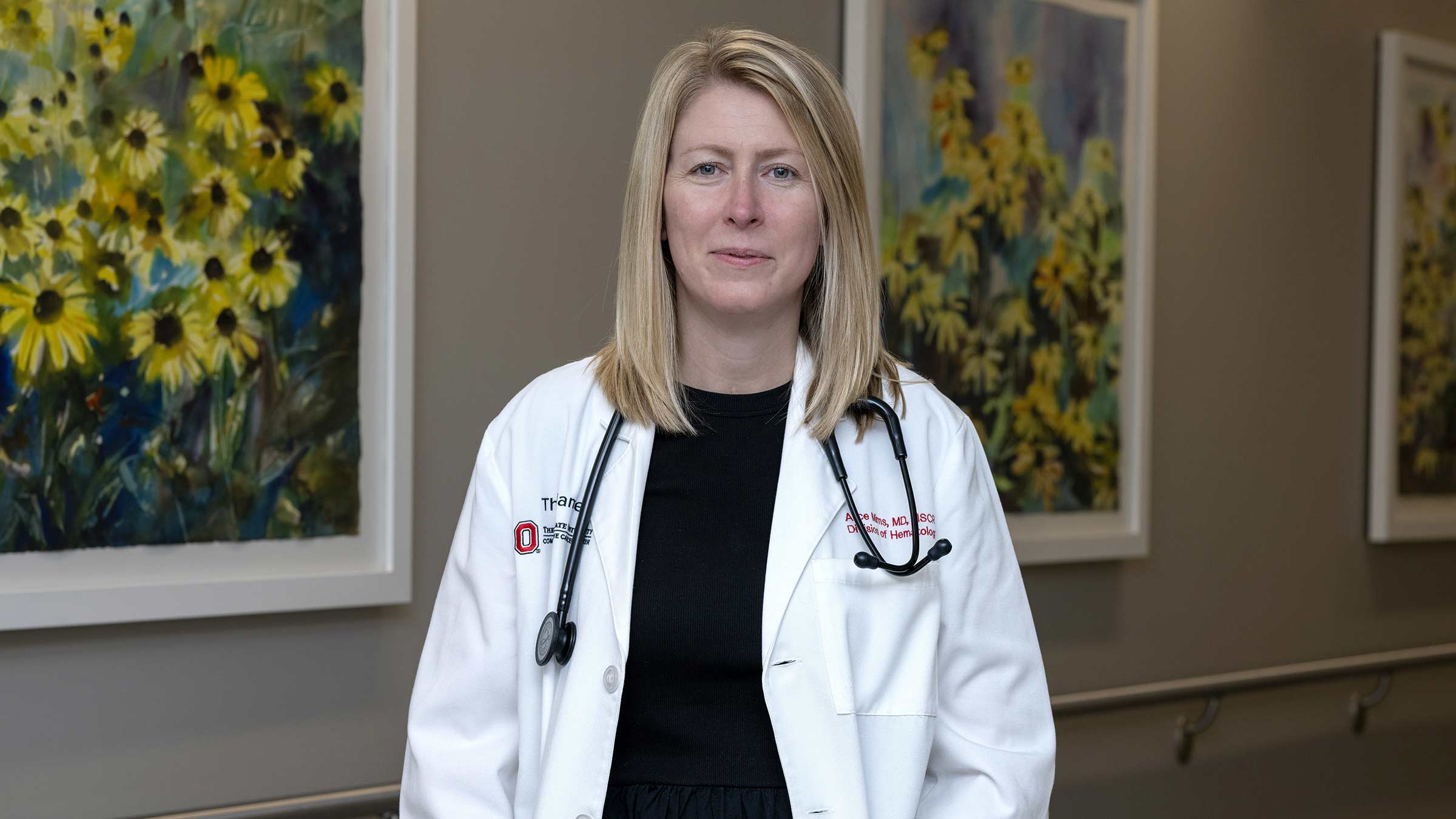
Dr. Mims is also inspired by the strong community support the cancer program receives from movements like Pelotonia, the annual cycling event series that raises millions of dollars for cancer research at the OSUCCC – James.
During her fellowship training, she received a Pelotonia Postdoctoral Scholarship Award that helped her gain experience and skills for becoming an independent physician-scientist.
“Pelotonia is an incredible community. The science it has supported has helped advance care in multiple cancer types across the board. I’m glad to be part of it,” Dr. Mims says.
She and her husband, Jeffrey Rose, MD, an oncologist at Adena Cancer Center in Chillicothe, Ohio, reside in Bexley with their 6-year-old daughter, Parker. Balancing her busy professional and personal life, Dr. Mims is fueled by fascination for her work.
“It’s exciting to work with amazing people who have such great ideas and are just as enthusiastic about helping patients as I am,” she says. “Knowing there are still many patients for whom we can do better always motivates me.”

Pioneers in blood diseases and blood cancers
Experts at the OSUCCC – James are world-renowned leaders in blood disorders and cancers.
Learn more