Game-changing prosthetic implant gets equestrian amputee back in the saddle
After years of pain and frustration, a revolutionary prosthetic approach helped a Michigan woman ride again.
Stacey Finley was angry, frustrated and on the verge of hopelessness.
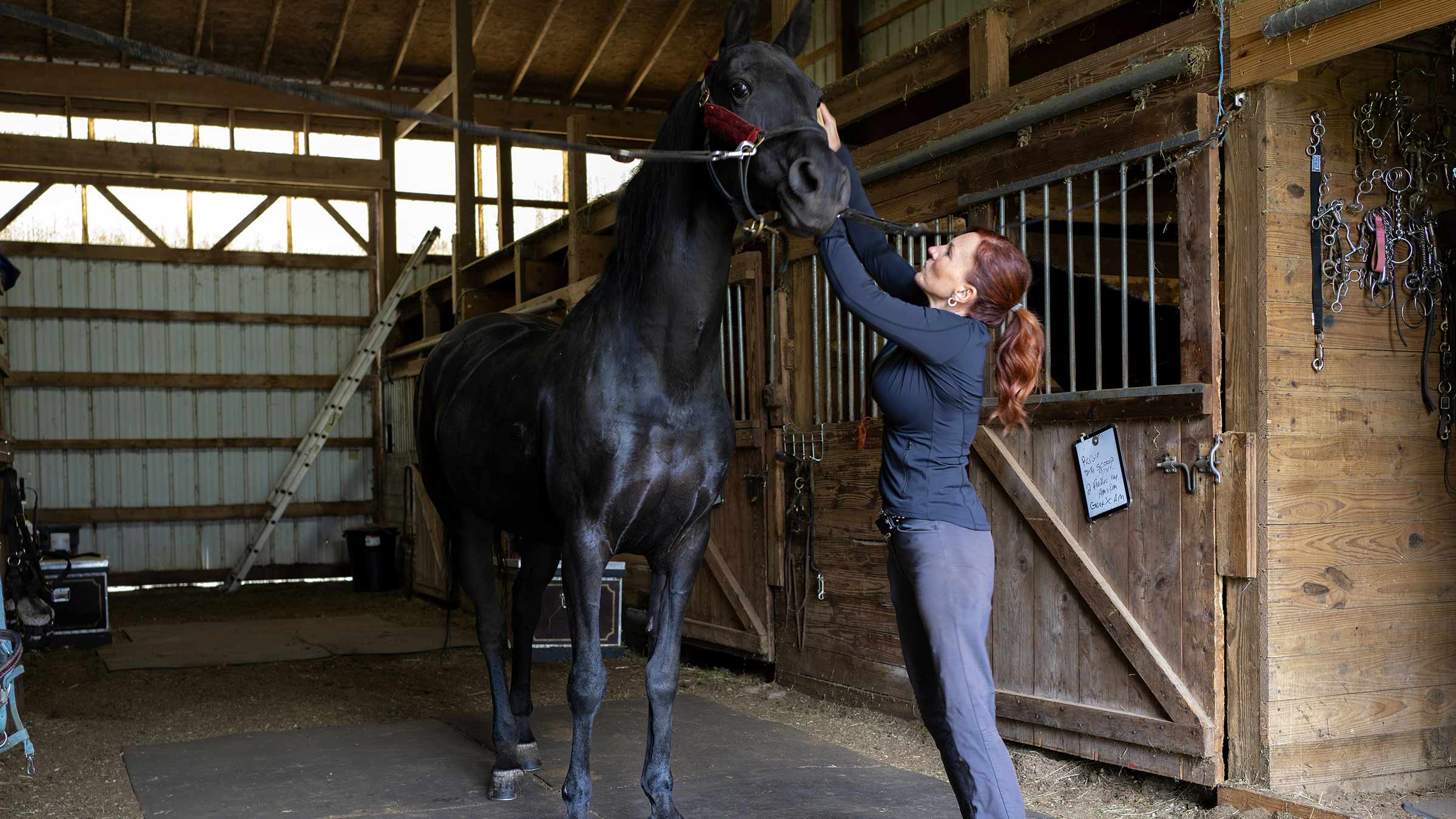
Visiting the stables where she had always loved training horses had become torture.
For nearly two decades, Finley had fought to save her left leg, which was slowly being destroyed by a disease that damaged her bones and joints.
But she’d run out of options. The leg had been amputated, and Finley was struggling to ride horses – and to face life – with the standard socket-based prosthetic leg on which she had pinned her hopes.
It was a dark time, and she feared she’d have to give up her life’s passion.
But thanks to a fellow amputee’s encouragement and advice, Finley would eventually find an avenue to reclaim everything she had lost.
Osseointegration offers an alternative to socket-based prosthetic legs
That encouragement led Finley to Jason Souza, MD, at The Ohio State University Wexner Medical Center.
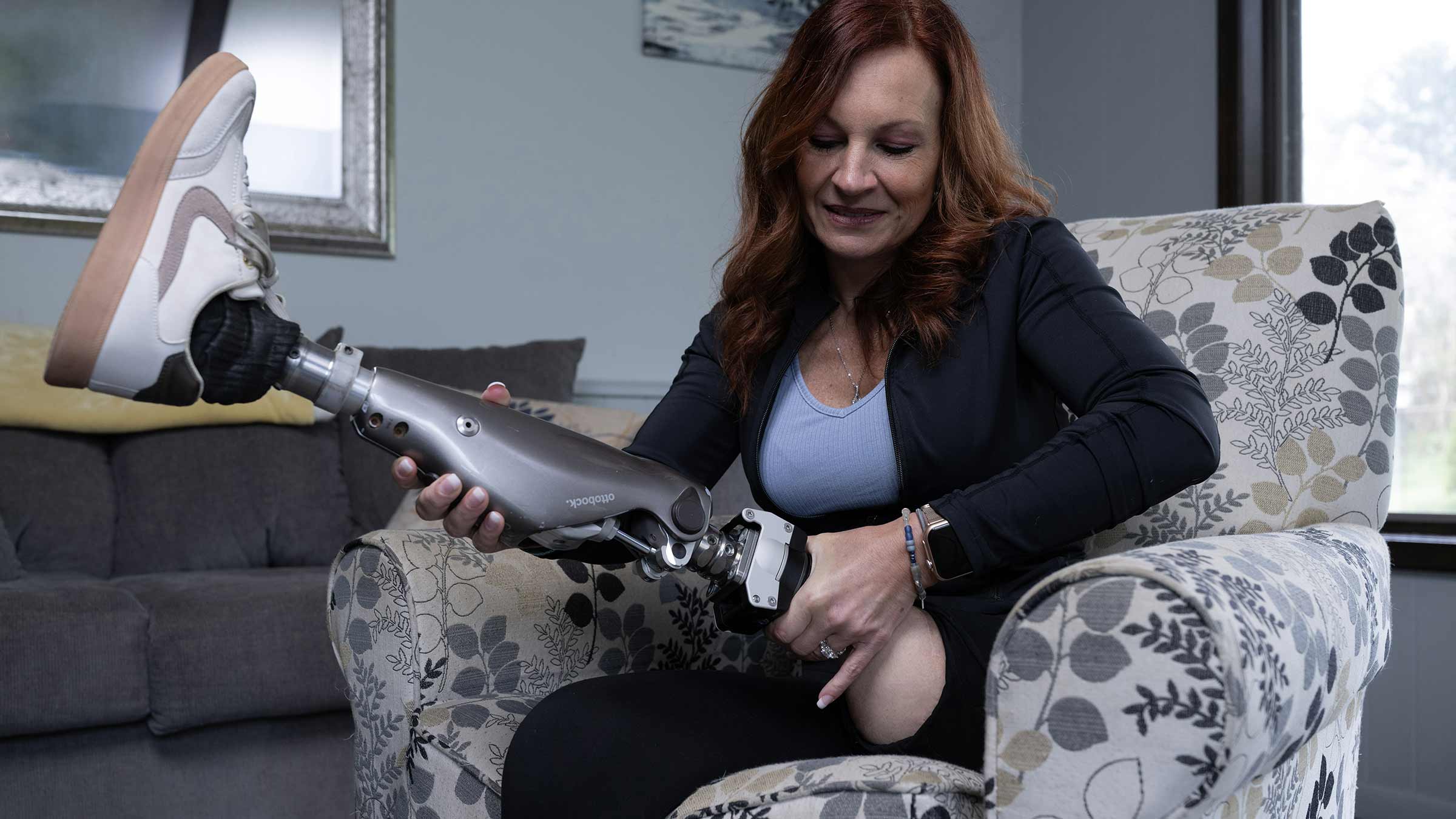
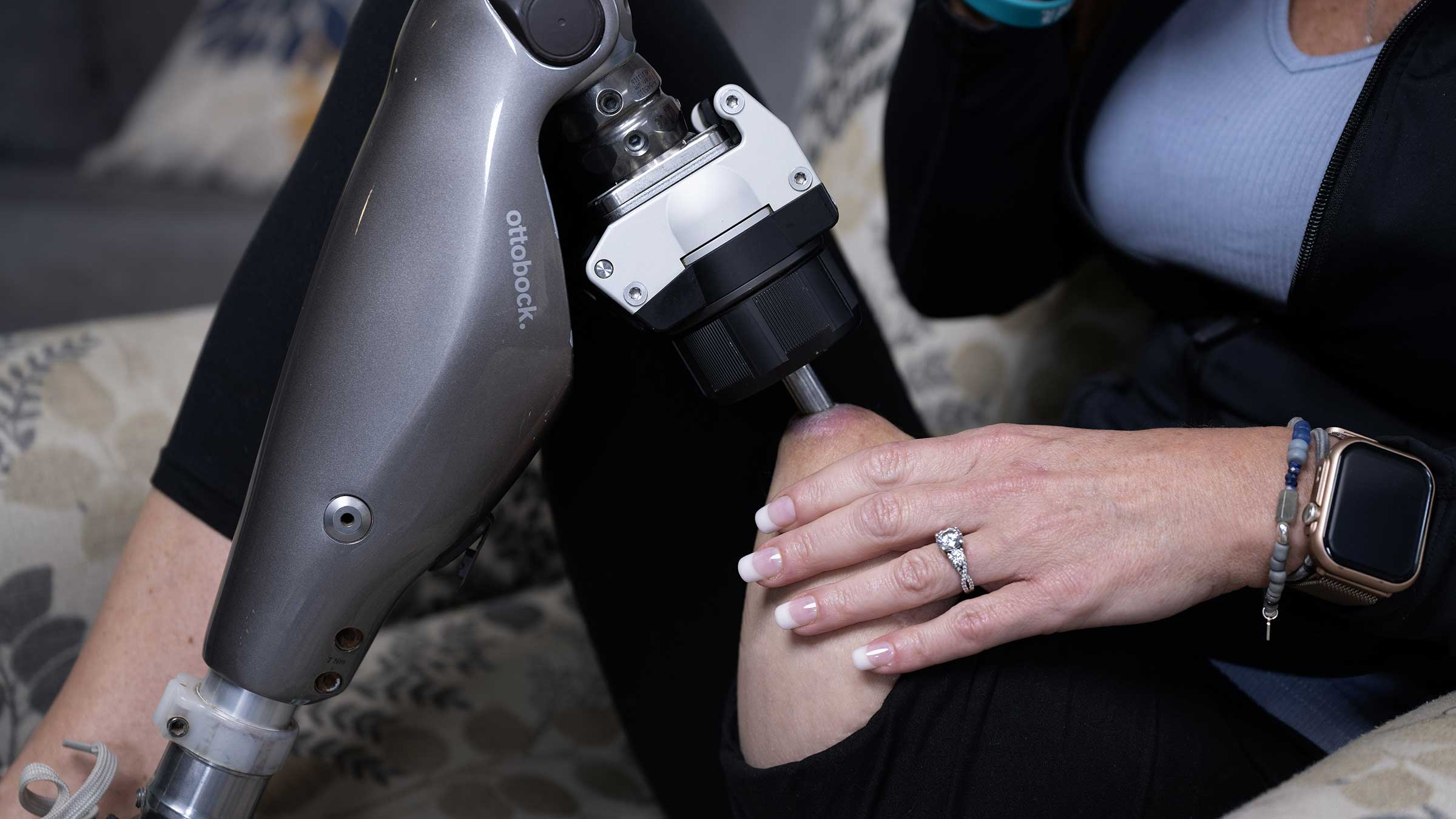
Dr. Souza is among the few plastic surgeons in the nation skilled in osseointegration, which involves placing a titanium-based implant into bone to allow for the direct attachment of a prosthetic arm or leg. A “snap-in” connection to the prosthetic limb offers an alternative for people who struggle with socket-based prosthetic connectors.
Dr. Souza, a U.S. Navy veteran, cared for amputees at Walter Reed National Military Medical Center in Maryland for six years before he was recruited to direct the Limb Restoration Program at the Ohio State Wexner Medical Center in 2021.
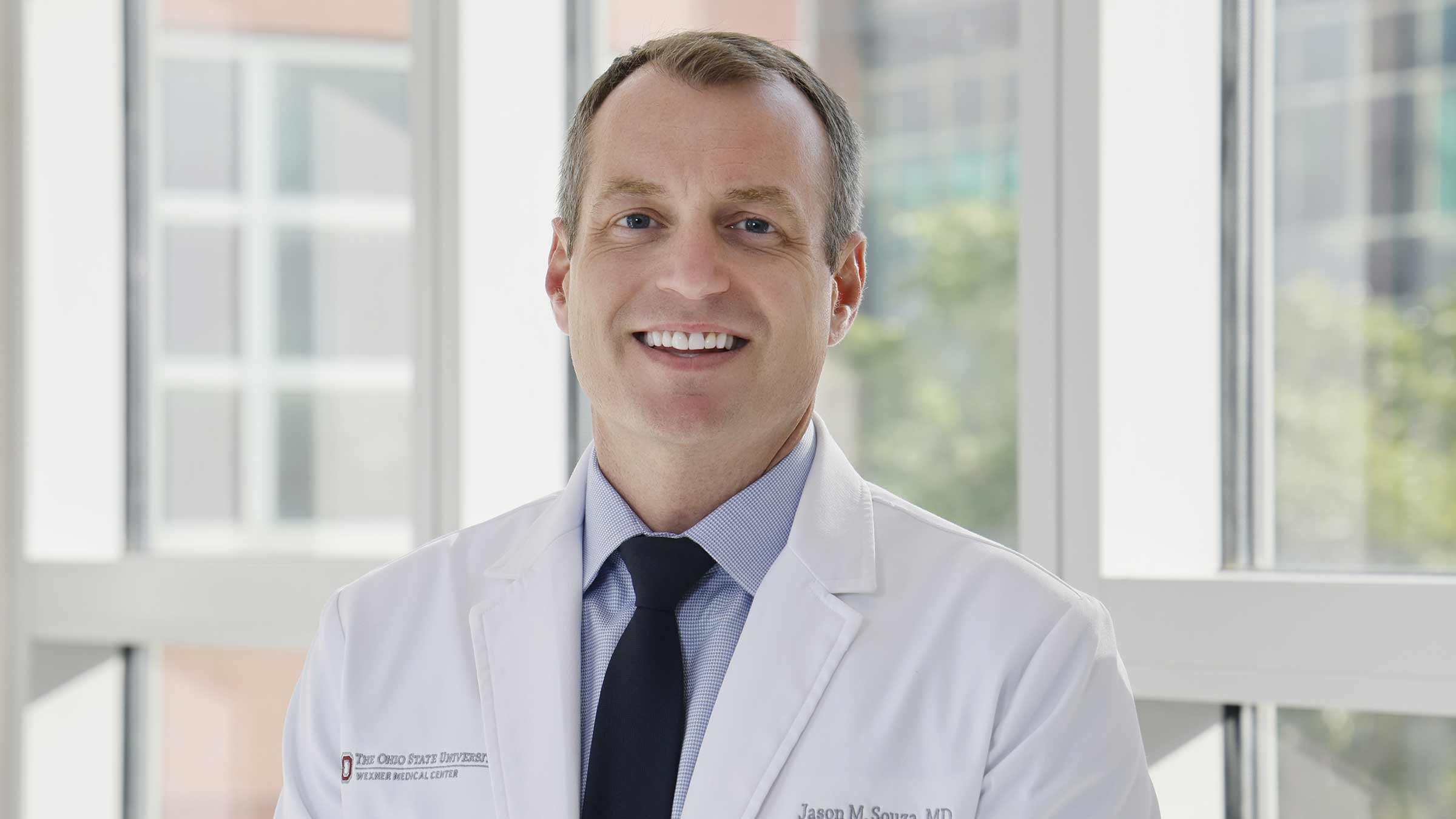
He says osseointegration is one of many tools that can be used to meet functional goals for amputees.
“We’re in the business of trying to make limbs that look, act and feel like what’s been missing,” Dr. Souza says.
“We’re continuing to try to do it better. And patients like Stacey are asking us to do it better and better and better,” he says.
Finley found Dr. Souza after speaking with one of his patients.
The U.S. military veteran whom Finley met at horse shows had twice told her about the possibility of getting an implant, but she was mired in a depression that prevented her from immediately acting on the tip.
But soon, her prosthetist also told her about osseointegration, as did her surgeon, who had recently heard Dr. Souza explain the procedure at a seminar.
She traveled to Ohio State from her home in southeastern Michigan in 2023 to undergo the first stage of the two-part surgery to install the implant.
Team-based orthoplastics approach key to success of limb restoration
Orthopedic surgeon John Alexander, MD, focused on fixating the implant into the bone. He describes it as preparing the canal of the bone, which is similar to a PVC pipe, to create threads so the implant can be inserted “like a light bulb into a light socket.”
Twelve weeks later, Dr. Souza performed a meticulous procedure that addressed the soft tissue coverage essential to preventing infection by creating a bond between the soft tissue and the end of the bone surrounding the implant.
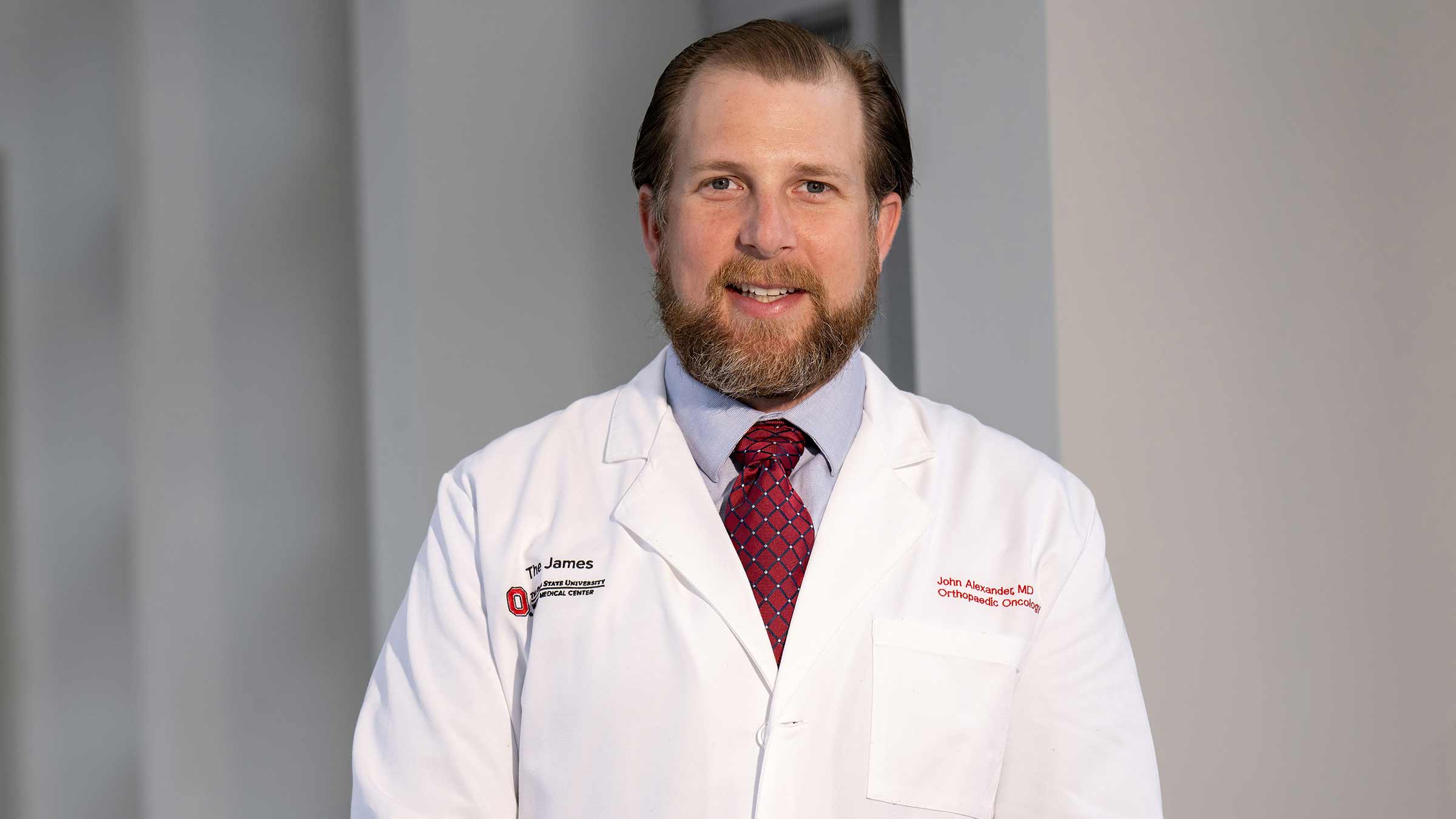
This orthoplastics approach – with orthopedic and plastic surgeons collaborating both inside and outside the OR – is essential to the procedure’s success.
“We are fortunate to have the multidisciplinary team to support patients through the process,” Dr. Alexander says.
“It makes it easier to take on these challenging cases and get people to where they want and need to be,” he says.
The Limb Restoration Program also offers patients access to physical therapists, prosthetists, rehab psychologists and other specialists.
Physical therapist Jennifer Swift, PT, who leads the amputee rehabilitation team, says osseointegration patients need specialized therapy that allows the bone to gradually adapt to bearing weight. This promotes bone growth and helps ensure the long-term stability of the implant.
It generally takes six months from the time of the first surgery for patients to start walking and another six months to do so without pain.
“It ends up giving them additional freedom and mobility that they weren’t able to achieve before,” Swift says. “It’s a super-cool thing to see someone go from being able to use a traditional prosthesis for one to two hours a day to using an osseointegration prosthesis all day.”
Use of socket-based prosthesis painful, challenging, exhausting
Finley was 6 years old when she started going to horse camps.
By age 21, she was a successful horse trainer.
Her medical troubles began in 2006, when she awoke one morning paralyzed on her right side. She was treated with steroids and a rare adverse reaction caused “bone-breaking pain” in her joints.
Over the next several years, Finley was diagnosed with multiple sclerosis, as well as a condition that reduces blood flow to the bones and another that causes excessive scar tissue in the joints.
She endured years of treatment, dozens of surgeries and countless rounds of IV antibiotics to address related infections in her left knee.

Ultimately, she opted to have an artificial knee joint removed and her left leg fused straight from the hip to the ankle. But it was no way to live and made riding impossible.
“I was very, very sick, and I lived all this time constantly healing from replacements and revisions and trying to clean out infection. I ran into a point where we didn’t have an option,” says Finley, now 46.
In 2021, she decided to amputate. It was her 42nd surgery.
Losing the leg had filled Finley with a devastating sense of defeat.
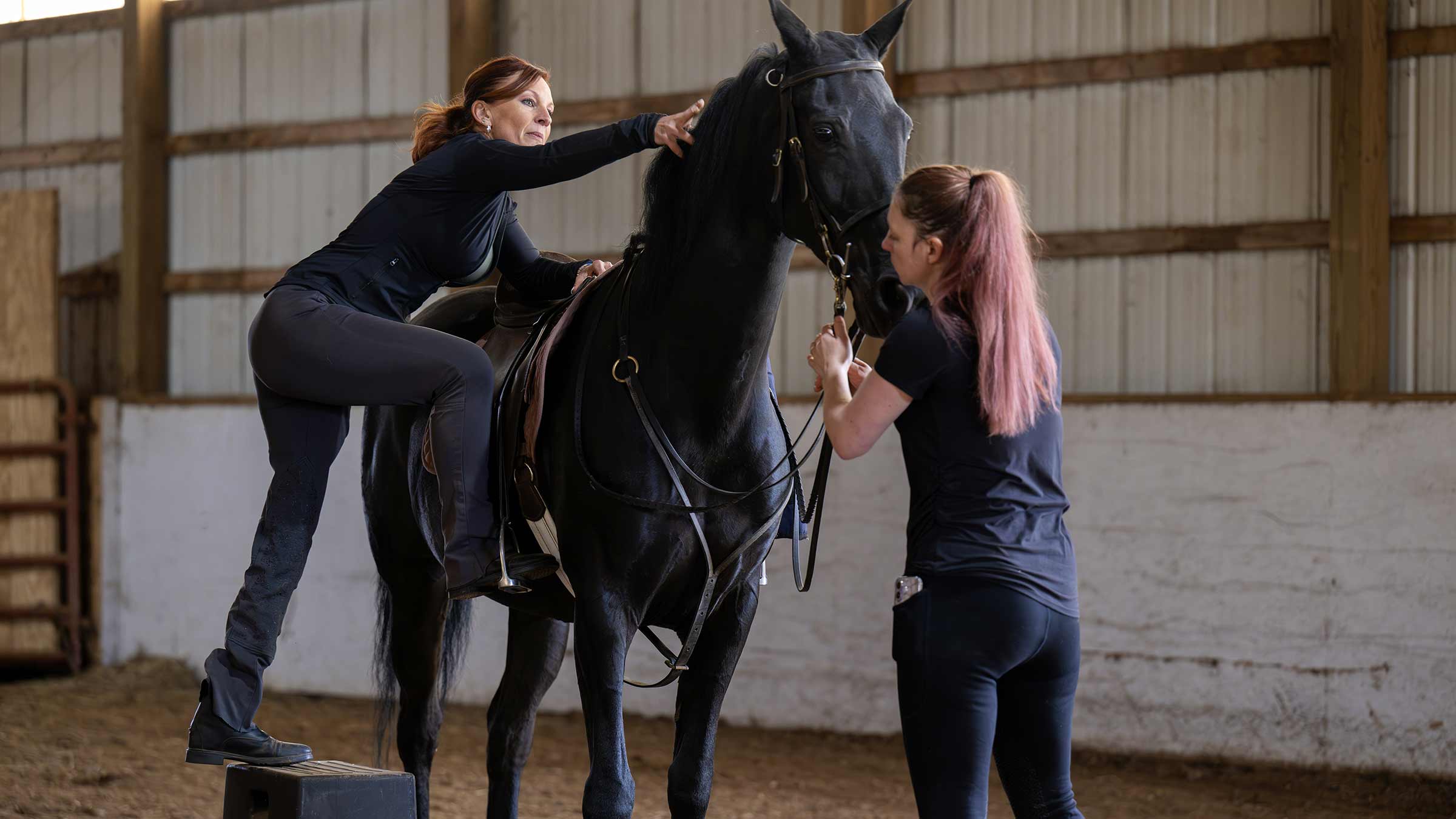
When she mounted horses with the socket-based prosthesis, she had no feeling in her leg and the device rolled around in the saddle. She was constantly looking down to ensure the foot was in the stirrup. It was dangerous and painful.
But it wasn’t only riding that brought frustration.

As a salon owner, Finley says she spent each day standing in constant pain, waiting for the next time she could sit. She often took breaks to readjust her leg or remove collected sweat from the socket.
She struggled with discomfort when driving or flying, and she sometimes fell while walking because she couldn’t sense the prosthetic foot touching the ground. It was even difficult to use the bathroom.
Each morning, Finley would wake up, look at the socket and dread the 20-minute process of putting on the prosthetic leg.
“Mentally, every step I took destroyed me,” Finley says. “I hated my life but pretended I didn’t. I was exhausted and angry all the time.”
Building relationships and defying expectations for amputees
Dr. Souza knew early in life that he wanted to be a doctor.
Growing up outside Worcester, Massachusetts, he initially wanted to be a country doctor, picturing himself as a real-life version of the character played by Michael J. Fox in the 1991 movie “Doc Hollywood.”
Those aspirations were set aside the first time he stepped into an operating room and realized his true calling was surgery.
But he still seeks to bring a country doctor energy to his work.
“It’s the sense that there’s more than just the medicine part, there’s the relationship part. That’s a big part of what we do,” Dr. Souza says.
His limb reconstruction and amputation skills were honed during his career in the U.S. Navy, where he cared for wounded warriors and retired with the rank of commander.
“There’s nothing more enjoyable for me than to fix a hard problem with a patient who is otherwise very motivated to push the envelope of what’s possible,” Dr. Souza says.
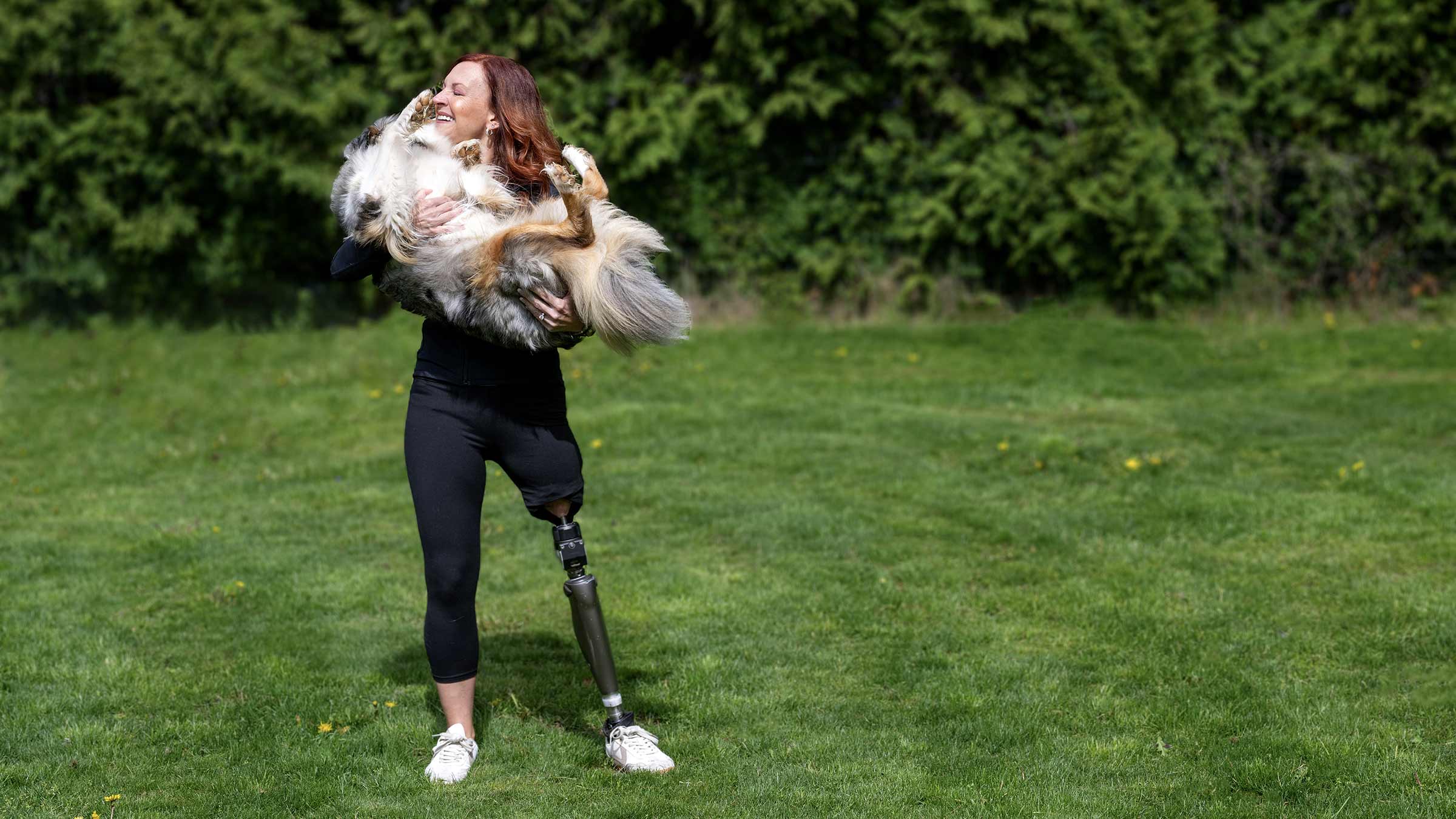
Finley has no qualms about pushing the envelope and was a perfect candidate for osseointegration.
“We need people like Stacey out there showing what’s possible, because they get to defy their own expectations and then defy other people’s expectations,” Dr. Souza says.
Limb restoration provides new sense of purpose
Healing quickly during rehab, Finley was walking long before it was expected.
Each morning, she says, she snaps on her leg in about 3 seconds and goes about her day.
Because the implant is anchored in the bone, she receives feedback when the prosthetic foot touches the ground or rests in the stirrup.
She stands comfortably all day – wearing any shoes she wants.
“One hundred percent, it feels like my leg,” Finley says.
“Dr. Souza totally, completely changed my life. He really, truly, actually cares,” Finley says.
She’s eager to pay it forward.
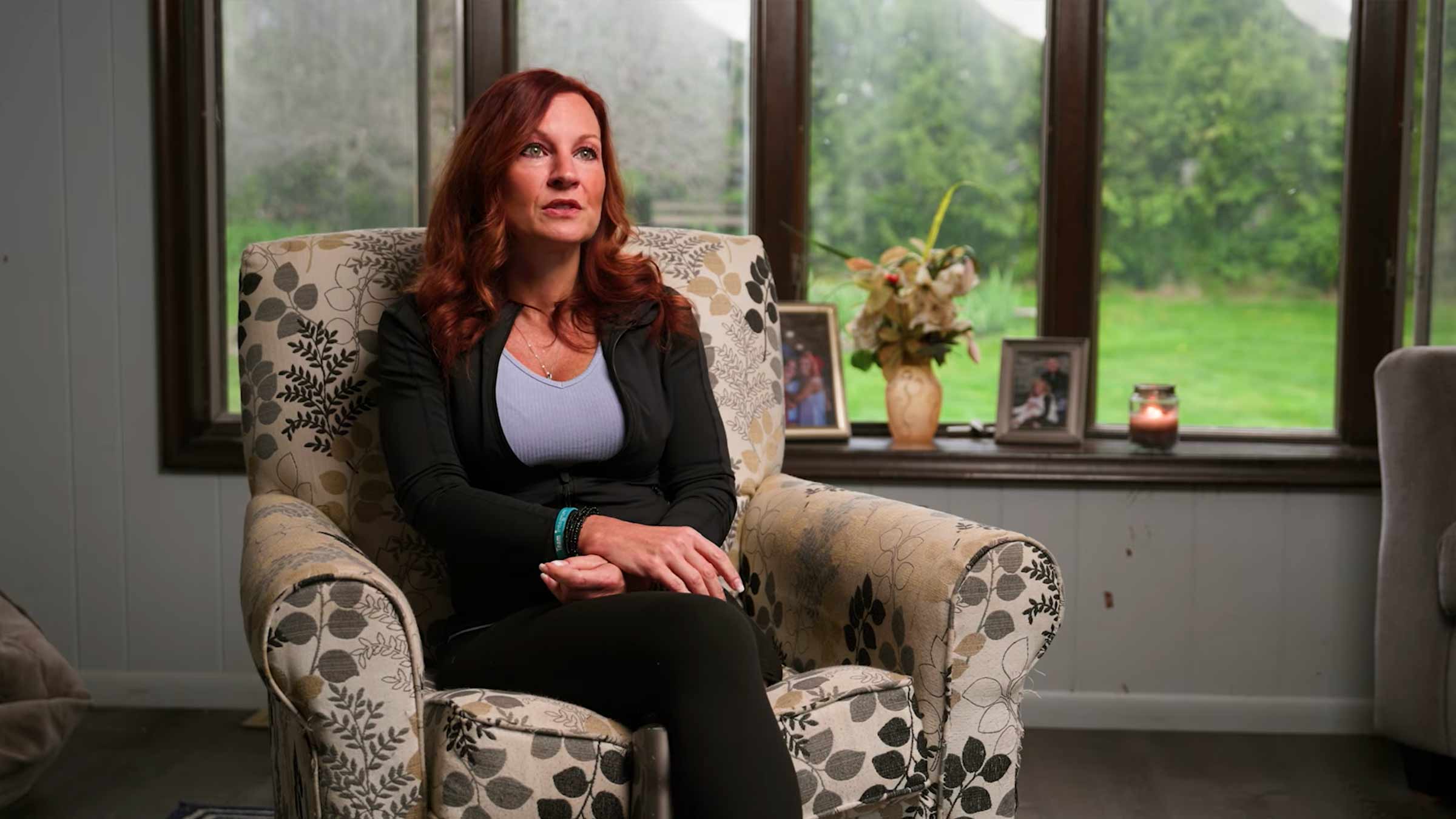
A little over a year after her first surgery, she did an interview with a Columbus television news crew, explaining how the surgery changed her life.
Not long after, as she sat in Dr. Souza’s waiting room, she was approached by an amputee in a wheelchair, and she saw that he had osseointegration connectors in both legs.

The man told Finley he hadn’t walked in 12 years. But he had seen her story on the news, and it led him to Dr. Souza.
“He said, ‘I want to thank you, because you’re the reason I’m going to walk again,’” Finley recalls. “That was the first time that I had changed somebody’s life – just by telling my story.”
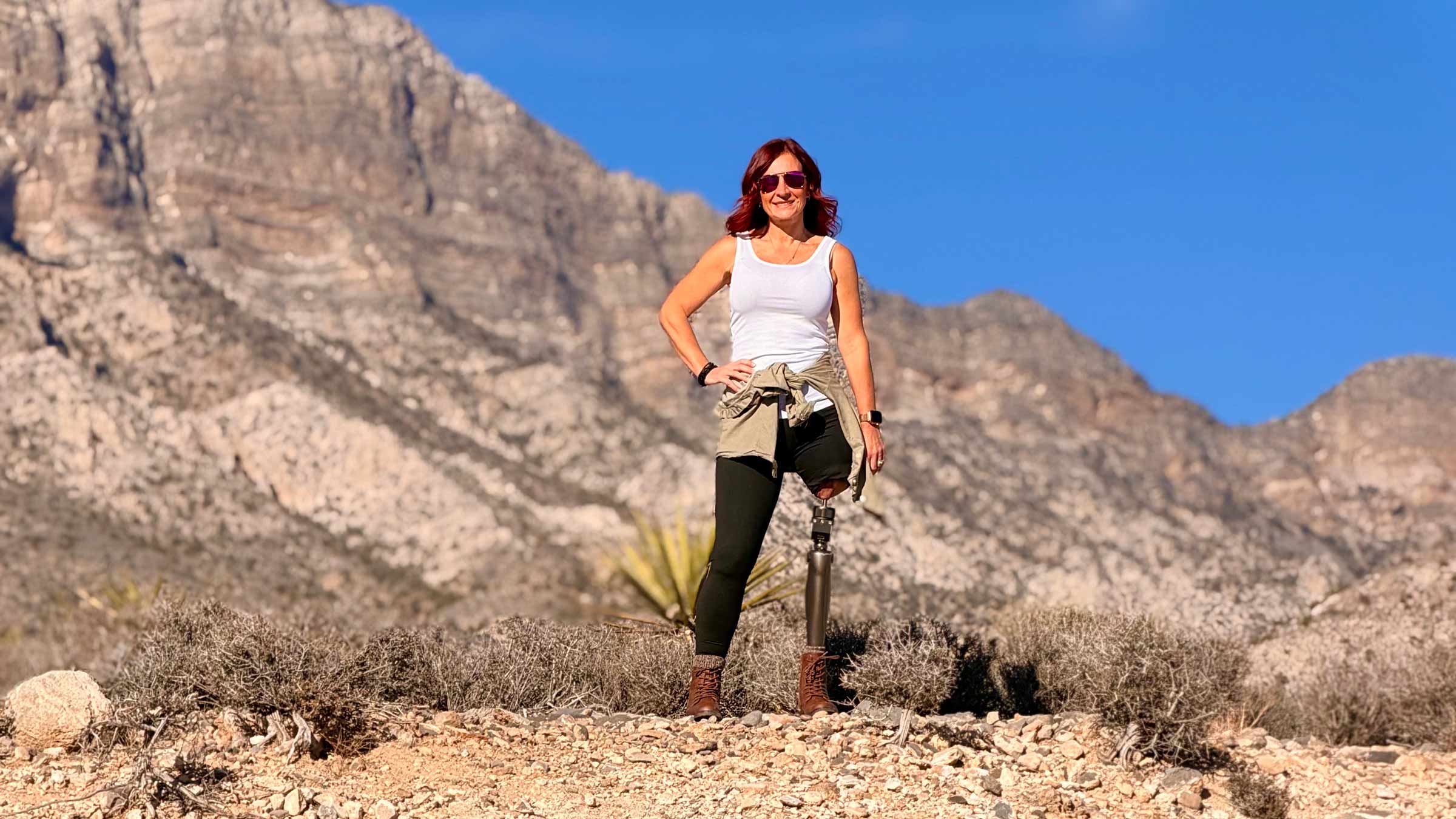
Finley has continued to tell her story. She has a vibrant presence on social media, where she posts information about the implant as well as images of her doing activities like rowing, bicycling, scuba diving, ziplining, dancing and, of course, riding horses.
“This is the reason. This is why I had to go through so much,” she says. “I really feel like my mission in life now is to help people. It absolutely fulfills me. I really, really, really feel a purpose now.”

Providing advanced limb restoration care
Dedicated, experienced surgeons and breakthrough technologies improve quality of life for amputees.
Learn more about the Limb Restoration Program