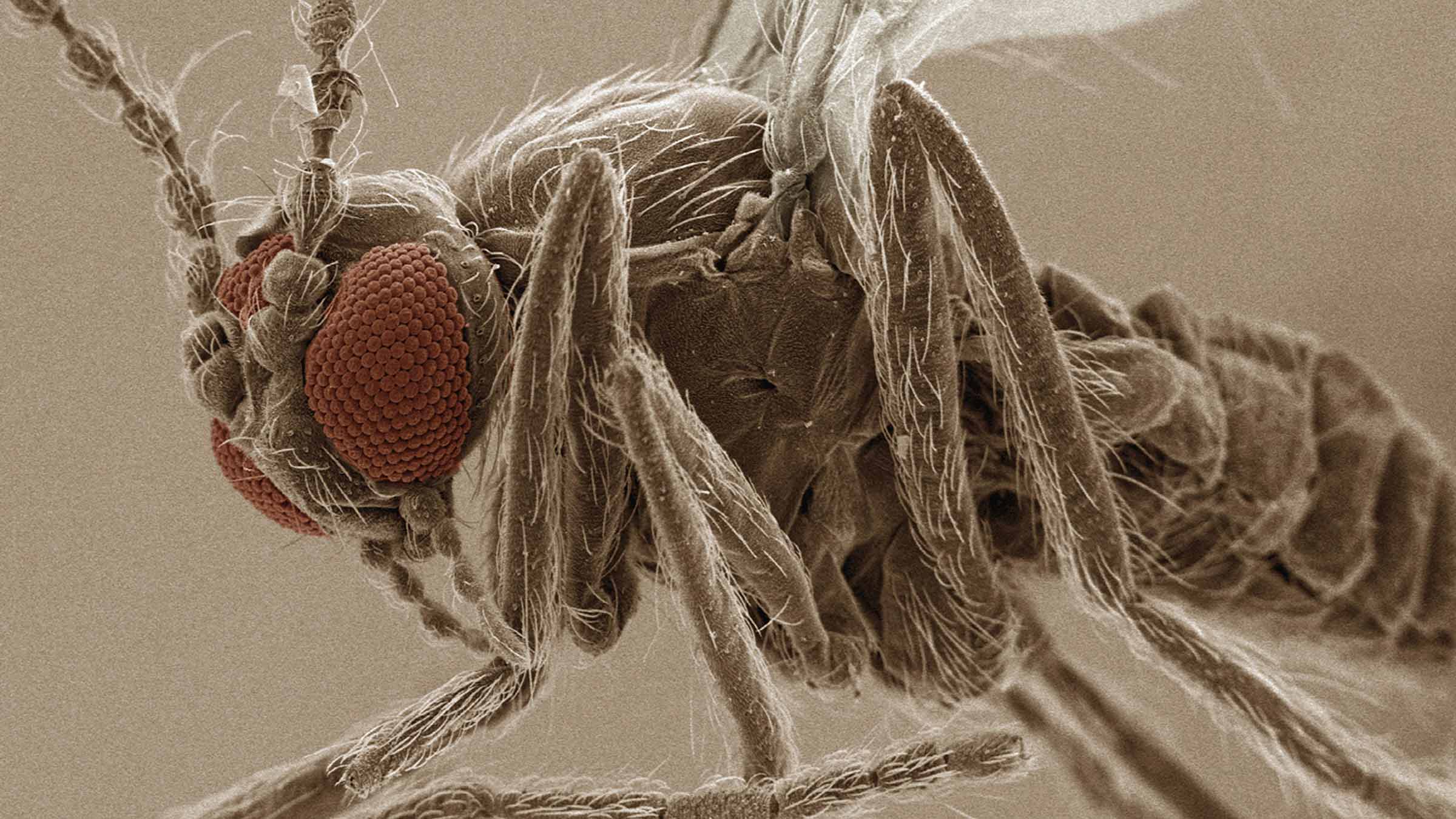
Leishmaniasis was once a disease found mostly in tropical regions, seen in the United States primarily when someone had traveled to Africa, the Middle East or Central or South America and returned to the U.S. But this potentially deadly infection has become endemic, or constantly present, in the U.S., too — and a new vaccine developed at The Ohio State University may be the key to preventing it.
What is leishmaniasis?
Leishmaniasis is an infection caused by leishmania, which are tiny, protozoan parasites. Humans can get this disease when they’re bitten by infected female sand flies – tiny insects, smaller than mosquitoes.
At least 1 in 10 people worldwide is at risk of contracting leishmaniasis, says Abhay Satoskar, MD, PhD, a pathologist specializing in parasitology at The Ohio State University Wexner Medical Center.
Typical leishmaniasis symptoms
Leishmaniasis often shows no symptoms, or symptoms can appear months or even more than a year after infection. There are three primary forms: cutaneous leishmaniasis, mucosal leishmaniasis and visceral leishmaniasis.
Cutaneous leishmaniasis is the most common and usually results in skin sores that take months to heal or bumps that slowly grow larger.
Mucosal leishmaniasis causes lesions on the mouth, nose, sinuses, palate and vocal cords as the leishmaniasis affects the cells lining those mucosal areas.
Visceral leishmaniasis is the form of the disease that can become serious, affecting internal organs including the spleen, liver and bone marrow. This can cause fever, weight loss and fatigue or weakness. Anemia can set in, and the liver and spleen can become enlarged. Visceral leishmaniasis can become fatal if it isn’t treated.
How a new vaccine could save lives from leishmaniasis
Dr. Satoskar, who’s also a professor of Pathology at The Ohio State University College of Medicine, has spent his career searching for the key to a safe leishmaniasis vaccine.
There have been earlier vaccines, but they used parasites that could spread. They also used genes that were resistant to antibiotics. They just weren’t safe enough for humans.
But Dr. Satoskar and his research team learned they could use CRISPR, a gene-editing technology, to remove a gene from the cutaneous leishmaniasis-causing leishmania parasite to create a vaccine that teaches the immune system to fight infection without actually causing leishmaniasis.
The new vaccine has been 100% effective in animal studies, and the U.S. Food and Drug Administration approved it as an investigational new drug in 2025.
It worked beyond my imagination, to be honest.Abhay Satoskar, MD, PhD, on effectiveness of the leishmaniasis vaccine he helped develop
What’s next for the leishmaniasis vaccine
Dr. Satoskar and his team are getting ready to begin human trials of their leishmaniasis vaccine in Kenya and Brazil. They plan to add a U.S. trial site.
Meanwhile, leishmaniasis awareness remains important; Dr. Satoskar says many U.S. physicians don’t recognize it because it’s a newer disease in this country.
“A mysterious skin disease they’re seeing may be leishmaniasis,” he says. “We’re hoping to get the word out to educate more people.”

Life can be unexpected
When you need care fast, know which Ohio State location to choose.
Find urgent care