Faced with amputation, cyclist finds hope in Ohio State limb restoration team
A rare collaborative team of medical and surgical experts restores cyclist’s life and function after limb trauma.
There was a moment, after a truck collision launched Mary Applegate, MD, into the air, when time was suspended. A street sign passed by her elbow. Her feet remained clipped to her bike. “I thought about how to land on one side of my bike to survive the landing because in those nanoseconds, I was trying to problem-solve,” she says.
That accident nearly led to an amputation, but instead, it marked the beginning of Dr. Applegate’s journey of problem-solving as she fought her way back to the activities she loves.
The accident that began her limb restoration journey
On that November 2024 day, Dr. Applegate was cycling on familiar back roads near Lake Erie when a truck traveling at 55 mph hit her from behind, catapulting her into the air. She slammed into the pavement, ending up 270 feet from the accident site. She landed face-down, hugging the front wheel of her bike. Her helmet was smashed, but it saved her life.
Still conscious, Dr. Applegate flagged down a driver, who called 911.
The next car on the scene was that of a wildlife officer, who miraculously had a tourniquet. “That guy is part of my miracle of how I survived because I was losing a lot of blood,” she says.
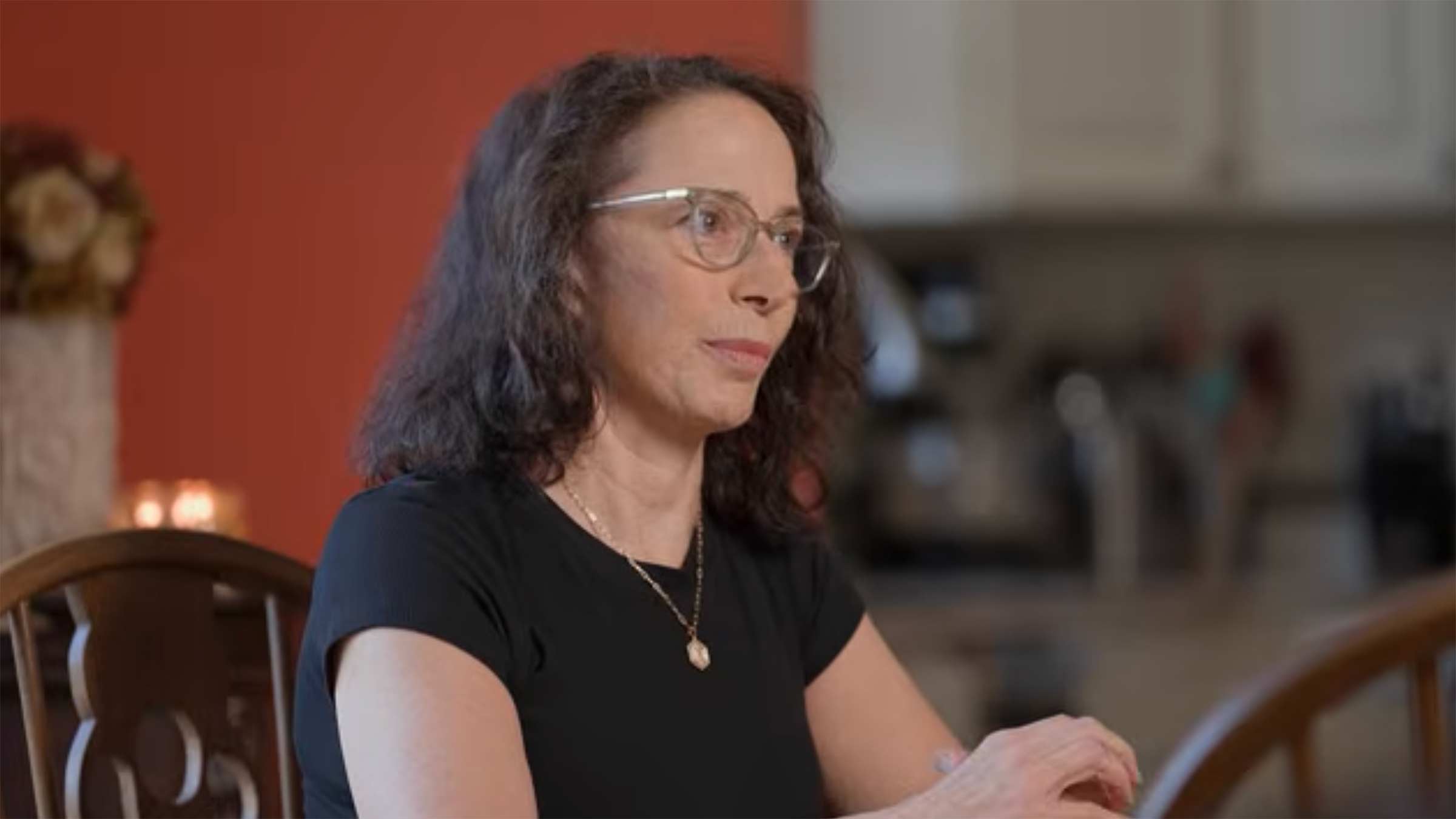
Dr. Applegate sustained a degloving injury, where her skin and underlying soft tissues were forcefully torn away from her leg’s muscles and bones. She was airlifted to Mercy Health – St. Vincent Medical Center in Toledo, where she received six units of blood and had her first surgery, to close her leg wound.
Dr. Applegate woke up the next morning to find the leg black and blistered. As a physician, she was concerned that they would need to amputate her leg. She then convinced her doctors to transfer her to The Ohio State University Wexner Medical Center, where she had trained for her medical degree and, she knew, was where she’d have the best chance to save her leg.
Waiting for her at Ohio State was Jason Souza, MD, director of the Limb Restoration Program.
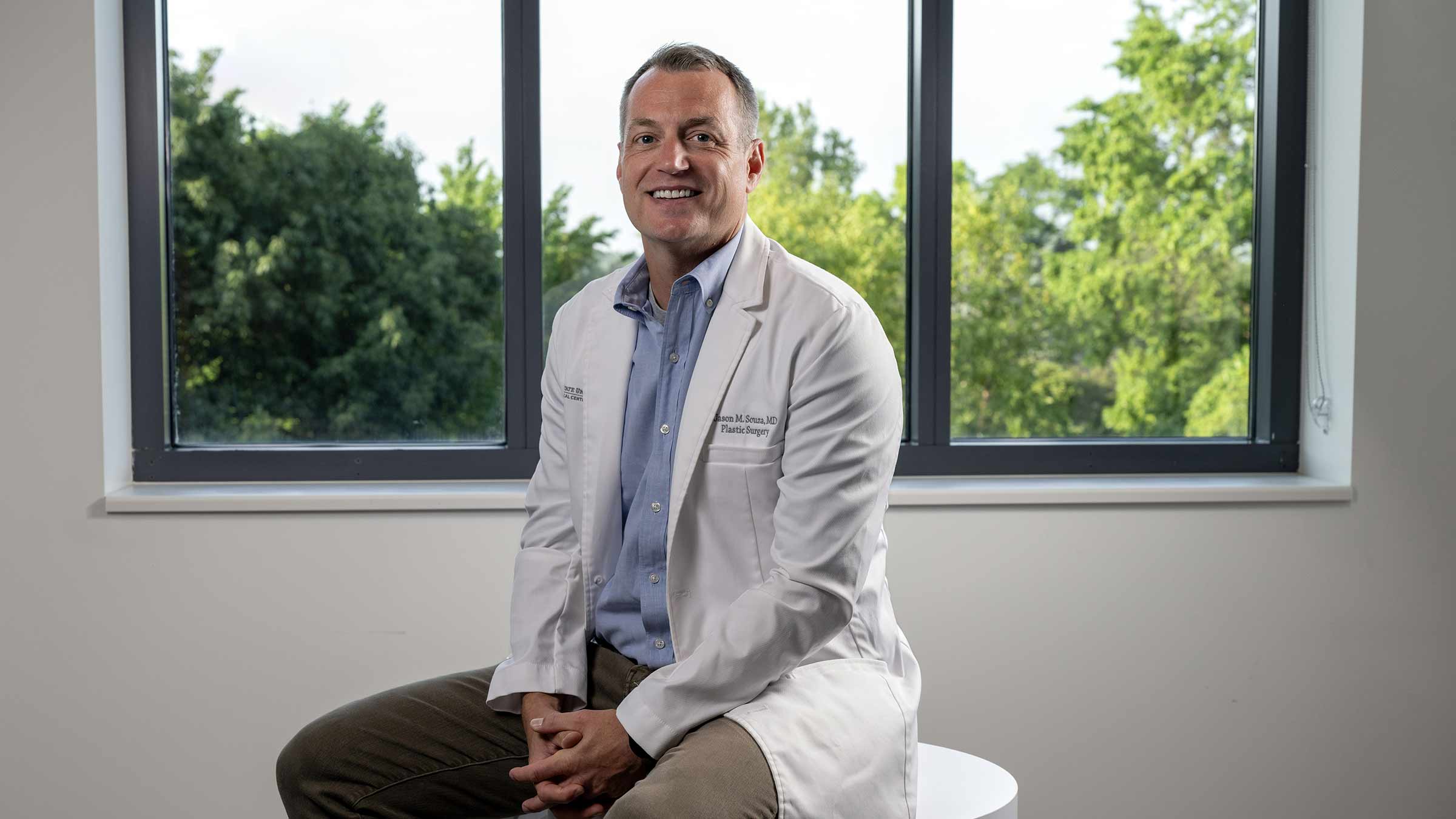
The program is one of only a few in the nation like it. Experts in orthopedic trauma surgery, orthopedic cancer surgery, plastic surgery, rehabilitation, infectious disease and mental healthcare collaborate to help people with limb disease or trauma minimize pain and optimize function. The team approach to care is one of the true hallmarks of this program.
“This is a team sport. Hard problems require collaborative solutions, ” Dr. Souza says.
“Very rarely does one surgeon or team member have the whole solution. That’s for simple problems. Hard problems require a team,” Dr. Souza says.
Developing a plan to restore her leg
At Ohio State, Dr. Souza examined Dr. Applegate’s leg and told her they could develop a plan to keep her leg and restore its function. He estimated the required surgeries and rehabilitation would take about 18 months, but Dr. Applegate was determined to return to cycling and be back at work within a year. “Over that time, he was my lifeline, guiding my care and staying directly connected over multiple holidays and care transitions,” Dr. Applegate says.
Dr. Applegate describes herself as a highly energetic, creative, yet somewhat impatient systems thinker. She would lean on those traits over the next months of surgery to actively participate in her care. She saw a kindred creative drive in Dr. Souza, whose goal is to maximize each patient’s limb utility.
“We try to achieve the goals the patient wants, especially for someone as motivated as Mary,” Dr. Souza says.
“Dr. Souza was unusual in his ability to listen and think creatively, constantly innovating his already specialized techniques,” Dr. Applegate says.
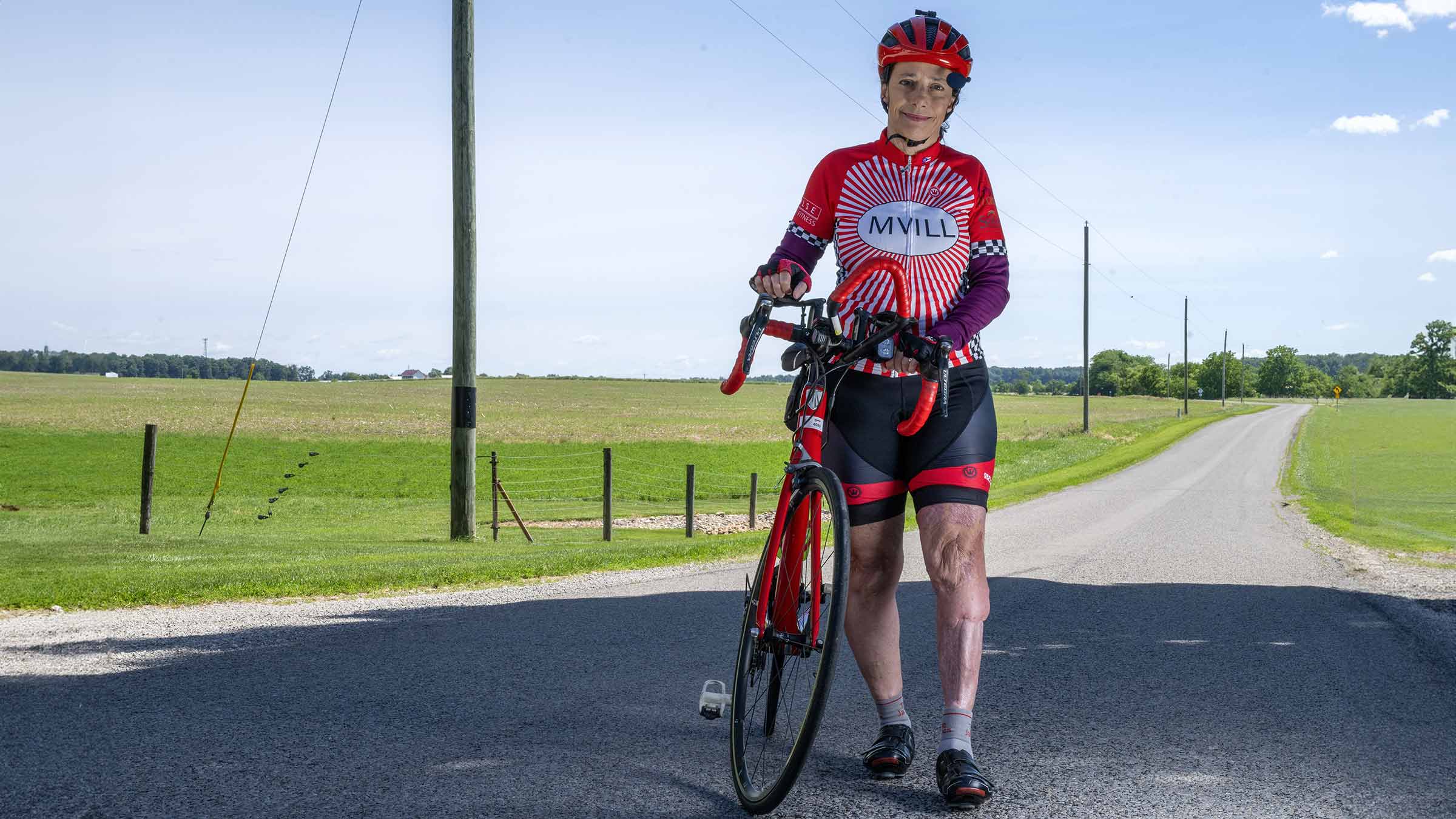
Dr. Souza got to work, temporarily grafting a skin substitute made of shark cartilage onto Dr. Applegate’s leg while it healed. He later grafted skin from the thigh all around the lower leg. As the skin graft alone would not suffice for the extent of the injury, he transplanted a 2-foot-long, Z-shaped flap of tissue and blood vessels from her back to resurface her knee and restore adequate blood flow.
Limb rehabilitation and a setback
Dr. Applegate was eager to return to work as the state of Ohio’s first full-time medical director of Medicaid. She was healing pretty well and committed to physical therapy. “I did about three hours of exercises and stretches every day, because I was anxious to go back to work. But as I got more active, my foot became even more swollen, like a little Pillsbury Doughboy,” she says.
She was diagnosed with lymphedema, a progressive condition that causes swelling due to blocked or disrupted lymphatic vessels.
Michael Sorkin, MD, a plastic surgeon and a part of the limb restoration team, surgically connected her lymphatic vessels to the venous system in her foot to drain the swelling. It’s a more common surgical approach in oncology at The Ohio State University Comprehensive Cancer Center – Arthur G. James Cancer Hospital and Richard J. Solove Research Institute (OSUCCC – James), where Dr. Sorkin spends most of his time.
“It’s a novel and innovative procedure that allows us to treat lymphedema and restore limb function,” Dr. Sorkin says.
Following that procedure and eight months after her accident, Dr. Applegate finally returned to work, well ahead of the original 18-month estimation. To Dr. Sorkin, what stood out was his patient’s outlook. “Mary was extremely motivated to return to the same level of activity she enjoyed before, and that allowed her to go through those many surgeries and recoveries,” he says.
Rethinking amputation care to advance limb restoration
In many cases, people with trauma to a limb physically suffer in two stages. The first is through the original incident and recovery. The second is the lifelong struggle to get prosthetic devices to function as well as possible.
What makes the Limb Restoration Program at Ohio State so powerful is its innovations that maximize people’s abilities. “A lot of times people use the term ‘limb salvage,’ but limb restoration is based on the idea that we want to make limbs work, feel and look better, regardless of whether they’re intact limbs or partial limbs resulting from amputations,” Dr. Souza says.
Depending on a patient’s injury and preferences, Dr. Souza’s team determines the best means to reduce pain and maximize mobility – either through limb restoration or amputation.
“I was so lucky to have the chance to get to Dr. Souza and his Limb Restoration Program. I wanted to fight for my leg, so I had to find someone who also thought it was worth a try,” Dr. Applegate says.
Restored function and renewed chance at life
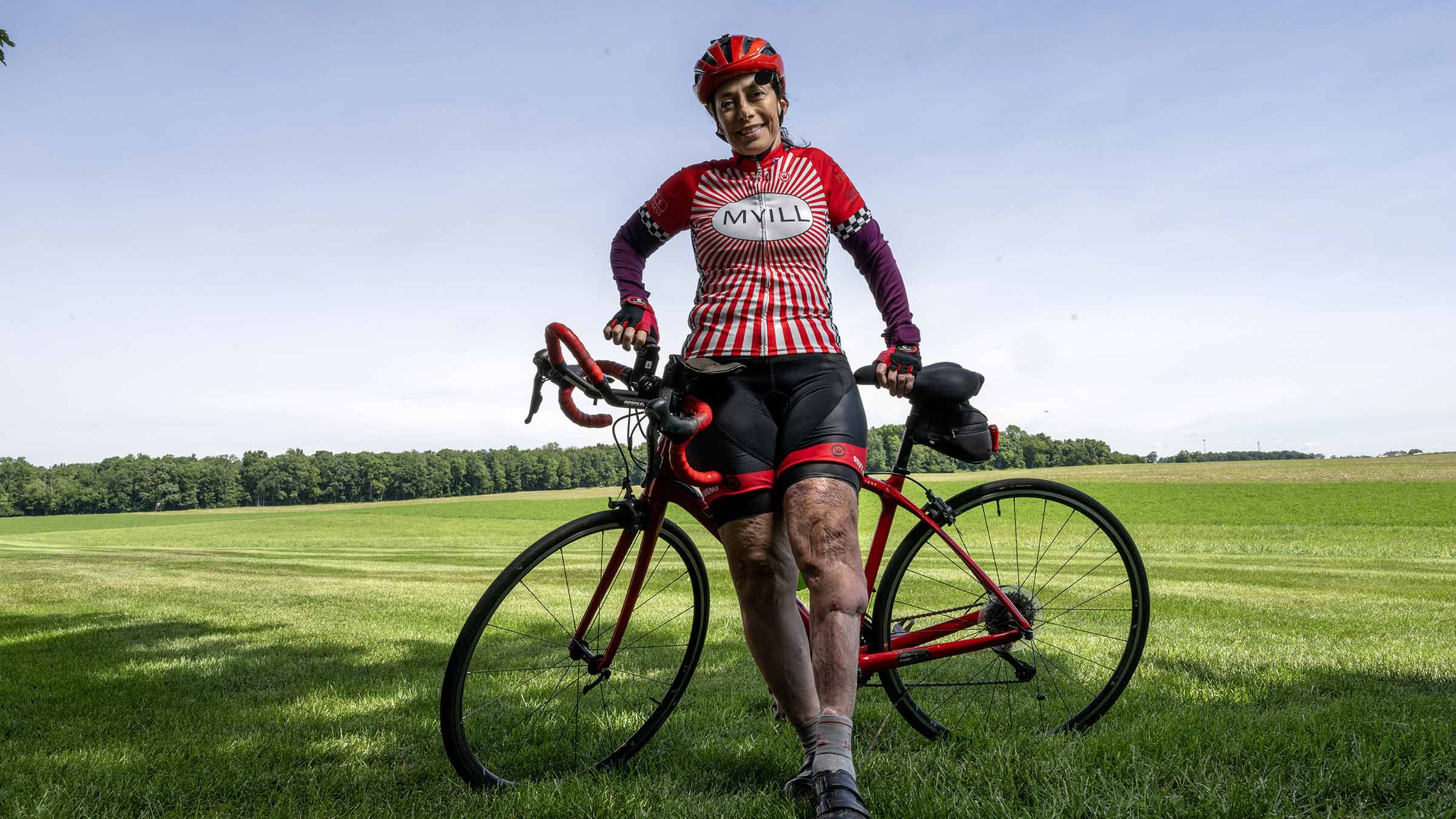
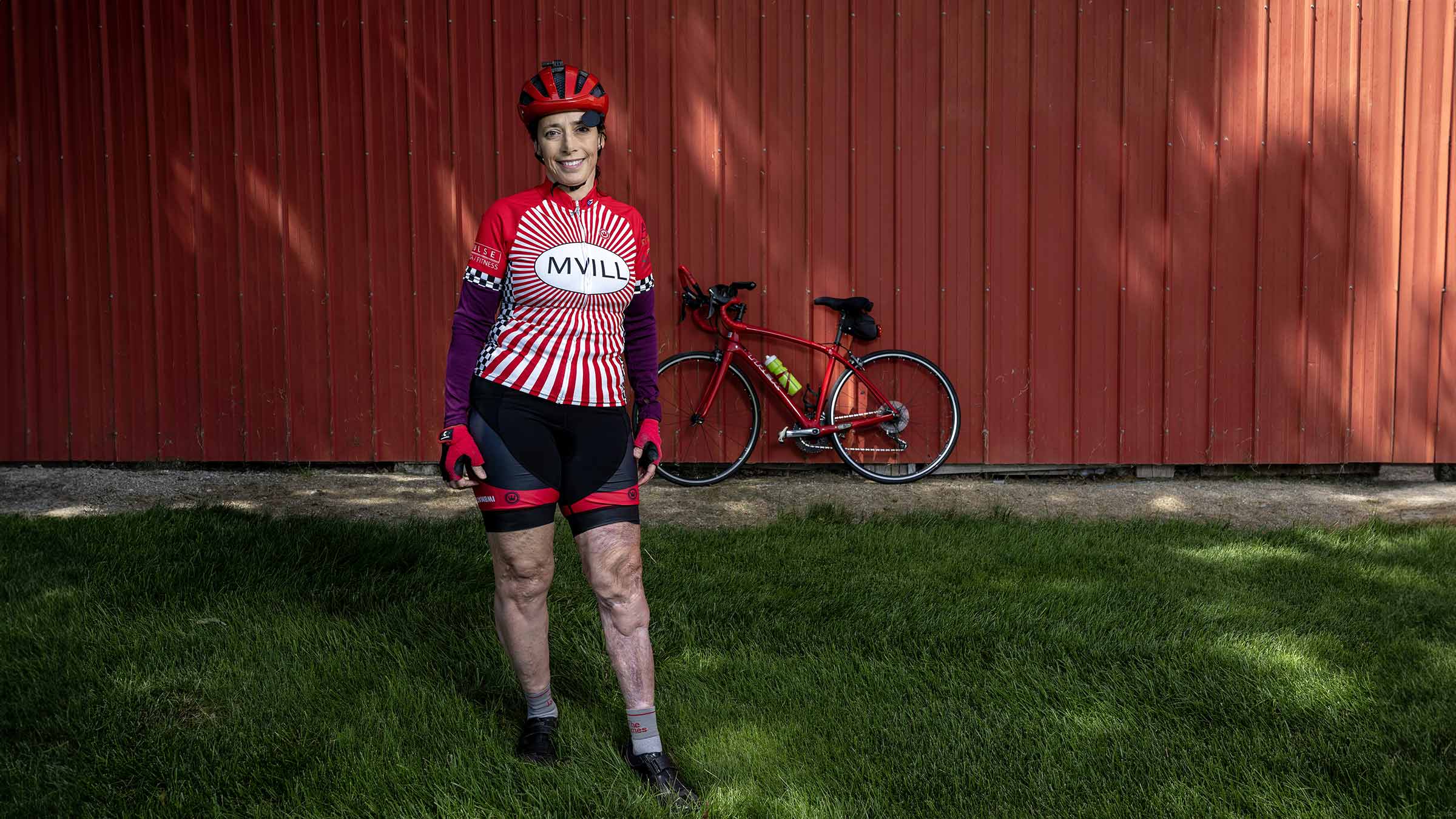
These days, Dr. Applegate is back on her bicycle and remains both optimistic and realistic. “I know I’ll have future complications, but I am so happy I have a somewhat gnarly but totally beautiful leg, which I love,” she says.
During those months of forced immobility, Dr. Applegate learned to quilt and gifted her first one to Dr. Souza. She showed her gratitude for repairing her leg, saying, “Dr. Jason Souza and his team are the true quilters of people, who also find remnants and stitch lives back together. This is the Buckeye Spirit that drives progress and renders The Ohio State University a national leader in clinical innovation.”

Seeing Dr. Applegate thrive is why Dr. Souza and his team are so dedicated to complex surgeries that require significant team collaboration. “When you partner with a patient, you have an incredible opportunity to exceed everyone’s expectations, most importantly the patient’s. It’s really rewarding to be part of a process of post-traumatic growth where people can often end up in a much better place than they ever thought possible at the time of the injury or diagnosis,” he says.

Providing advanced limb restoration care
Dedicated, experienced surgeons and breakthrough technologies improve quality of life for amputees.
Learn more about the Limb Restoration Program