Ohio State trauma surgery team saves soccer player’s life, college career
A tragic event changed Nathan Demian’s life, but a Level 1 trauma center team helped him get it back.
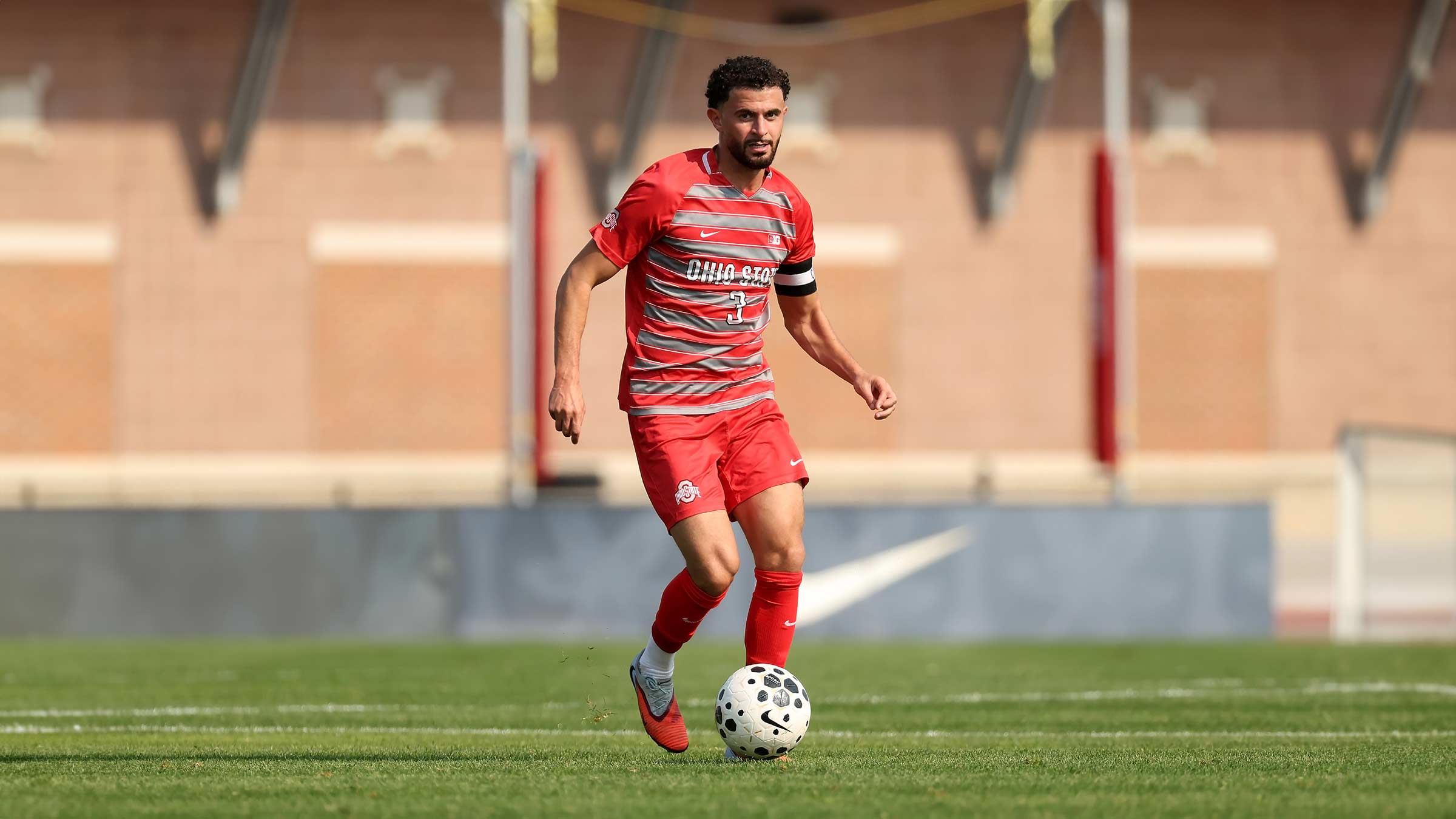
When Ohio State Buckeye soccer fans filled Jesse Owens Memorial Stadium to watch their team play Wisconsin, few knew they were witnessing a miracle. For teammates, coaches and physicians of senior captain Nathan Demian, watching him dribble the ball and intercept passes was a feat they’d never imagined a few months prior.
In December 2024, Demian was a victim of gun violence that threatened his athletic career and his life. The Buckeyes had just knocked out favored Wake Forest to reach the College Cup – college soccer’s equivalent to the Final Four. Demian was still celebrating that night when a random act of violence changed his life.
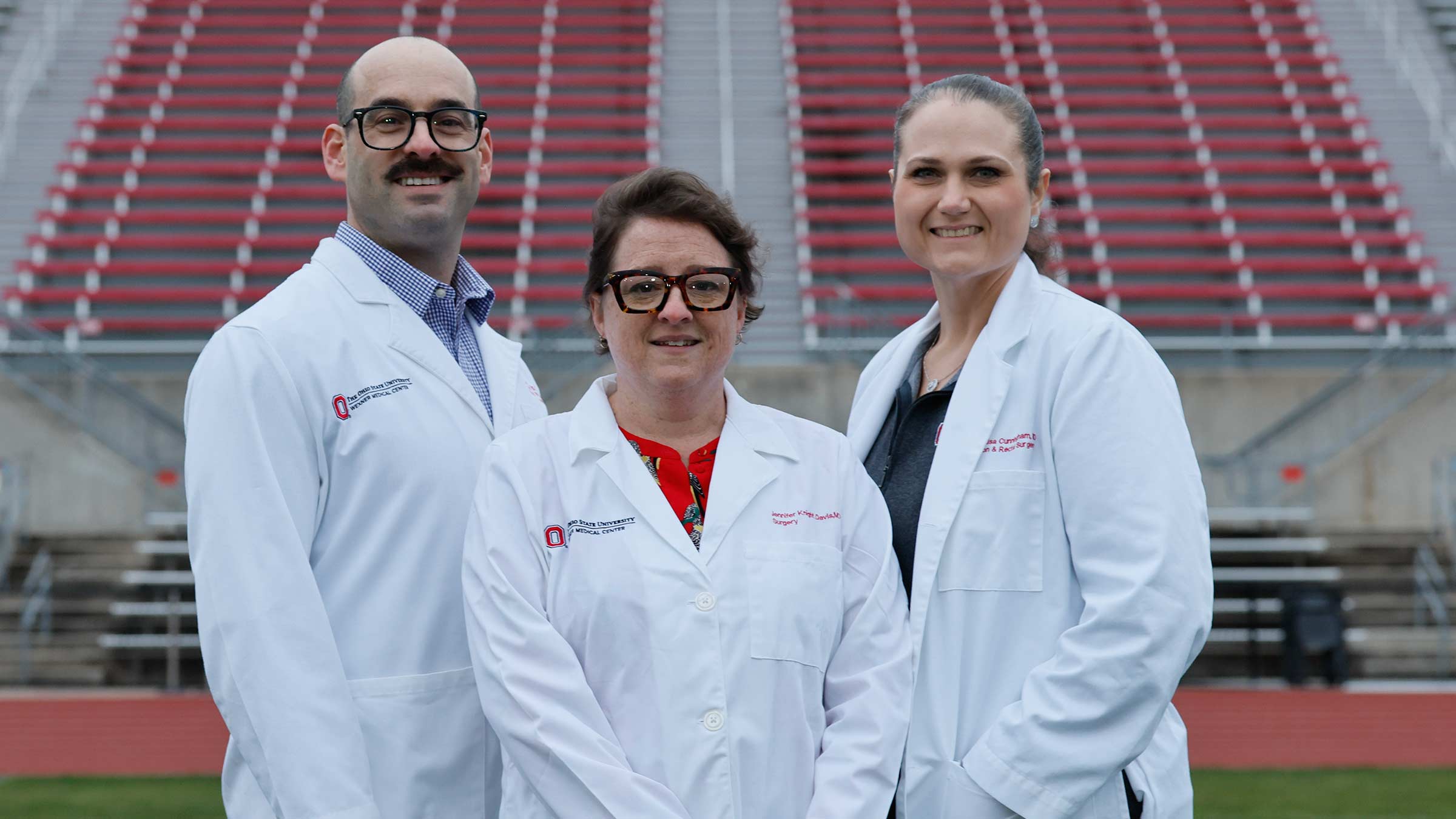
A mere eight months later, Demian returned this fall to play soccer with his same level of intensity. “As a trauma surgeon, the most rewarding thing I can see is my patient returning to the exact life they had before they were injured,” says Jennifer Knight Davis, MD, a critical care surgeon who treated Demian at The Ohio State University Wexner Medical Center Emergency Department.
Wrong place, wrong time results in shooting
Demian and his brother were headed back to an off-campus apartment on Fourth Street and Chittenden Avenue with pizza in the early hours of the morning on December 8. The two stood only a few feet from the door when a stray bullet from a car chase struck Demian in the stomach.
Demian remained conscious, remembering every moment from the shooting until surgery. With adrenaline still coursing through his body from the big win and then from gunfire, he wasn’t aware just how seriously he was injured.
“I felt burning in my back, so I knew the bullet was still there, but I remember thinking they’d just take it out. It never crossed my mind I was going to miss the Friday game,” Demian says.
Andrew Young, MD, the trauma surgeon on call when Demian arrived at the emergency department, knew otherwise. His quick assessment showed Demian’s blood pressure was fluctuating, and fluid was in his abdomen. Dr. Young was focused on keeping the young man alive, while Demian was lamenting that he didn’t have time for this injury. The 22-year-old from Vancouver, Canada, couldn’t believe his life had changed instantly just by being in the wrong place at the wrong time.
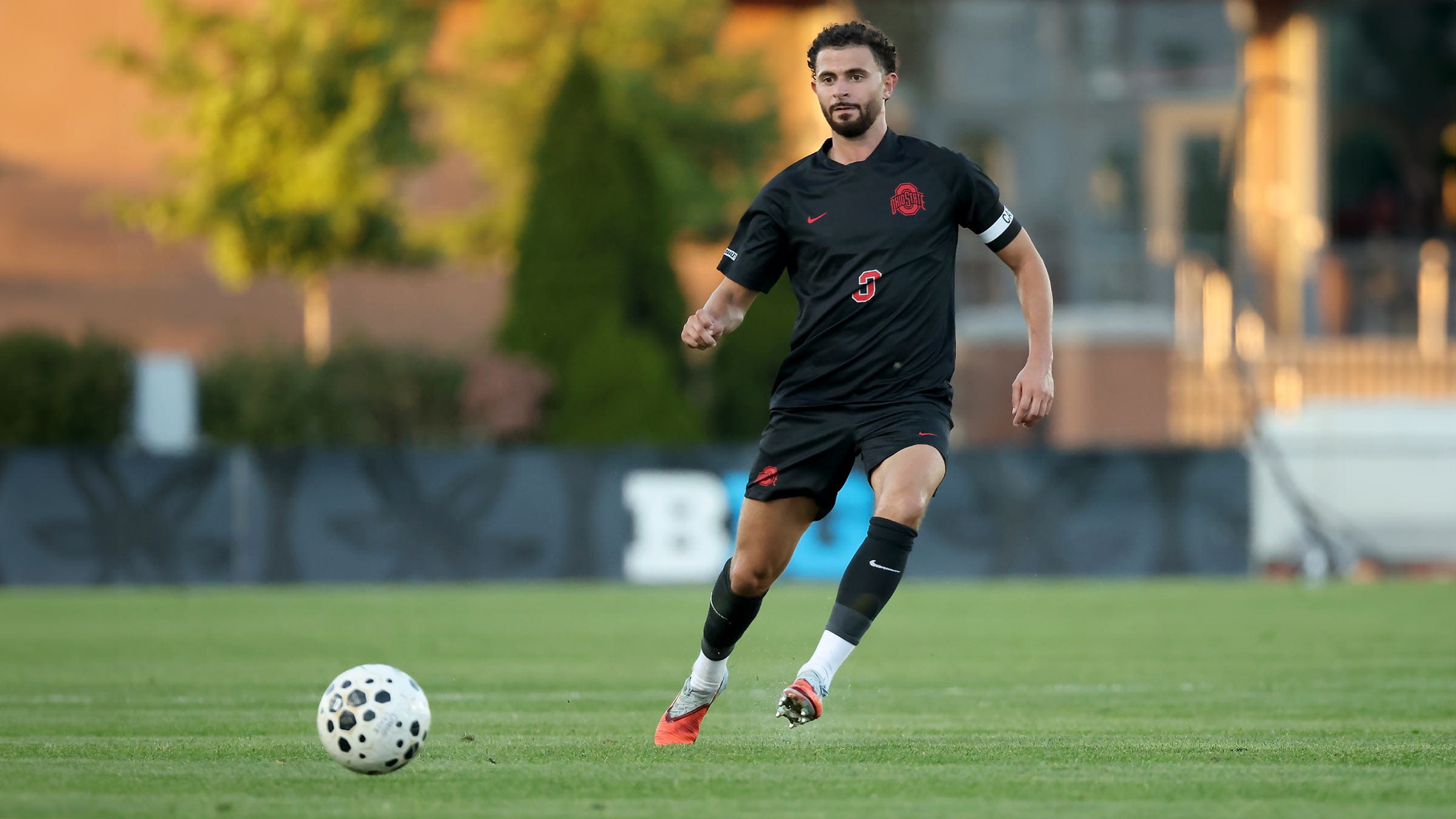
“This was my first season back after 17 months out with multiple knee surgeries, and it was a dream season. We won the Big Ten regular season and tournament and were headed to the Final Four as the No. 1 seed in the country, on pace for one of the greatest seasons in college soccer history,” he says.
Trauma surgery preparedness for when minutes matter
Once he entered the emergency department, Dr. Young led the trauma team to assess Demian and prep him for surgery. “When the injury is in the chest or the belly, you have very little time to wait for surgery,” he says.
Within minutes, Demian was in the operating room, where Dr. Young’s team worked to stop the active bleeding. The bullet had ripped through several loops of Demian’s small and large bowel, embedding in the back of his pelvis. The trauma surgery team closed multiple large blood vessels and parts of the bowel to stop the bleeding and stabilize his blood pressure.
Hours later, Dr. Knight Davis seamlessly took over from Dr. Young.
“Transitioning care between our colleagues requires a great deal of training, practice and trust in each other to operate as if you had one person taking care of you,” Dr. Knight Davis says.
Her team’s task was to put the multiple injuries back together. At the time, she wasn’t thinking about Demian’s soccer career. Instead, she was focused on what he’d need to live a normal life. That meant figuring out how to save as much of his bowel as possible to absorb normal oral nutrition, while also preventing infection and too much stress on his body under anesthesia.
“Unfortunately, Nathan had to have a colostomy, which is not ideal for a young person, but because of where his injuries were, we needed to minimize infection,” she says.
At the same time, Laura Phieffer, MD, an orthopedic trauma surgeon, joined the surgical team to remove the bullet and repair Demian’s pelvis.
The trauma surgery team at the Ohio State Wexner Medical Center trains year-round to operate in carefully choreographed synchrony. Dr. Knight Davis once counted all the healthcare providers who support trauma patients in the first 48 hours after a severe injury and came up with over 70 different types.
Proximity to a Level I Trauma Center saves lives
Once the initial surgeries ended, Demian began his long rehabilitation journey. “I remember waking up and being told, ‘You don't realize how lucky you are to even be here anymore,’” Demian says.
Part of what saved Demian’s life was that the incident occurred so close to the Ohio State Wexner Medical Center. “There’s a stop clock that starts when you sustain an injury, are bleeding and are at risk for infection. Being so close to a Level I Trauma Center was really important,” Dr. Knight Davis says.
Level I Trauma Centers meet strict requirements set by the American College of Surgeons, manage a high volume of cases, have surgeons with additional training and conduct simulations to be prepared for anything. “We practice year-round to ensure our whole team is ready at any moment to take care of patients just like Nathan,” says Dr. Knight Davis.
Road to recovery after trauma surgery
Demian was grateful to be alive, but mostly those early days were filled with disbelief over how dramatically his life had changed. “I was mad I wasn’t playing, and my whole life changed without me having any control over it,” he says.
Demian’s road to recovery was full of potholes. The inability to walk or go to the bathroom was a brutal reality for a 22-year-old athlete in his prime. Demian expected to have his colostomy reversed once his body healed over the next three to six months. It took five months until he was ready for the procedure, and he experienced three obstructions with hospital stays, which felt like major setbacks along the way.
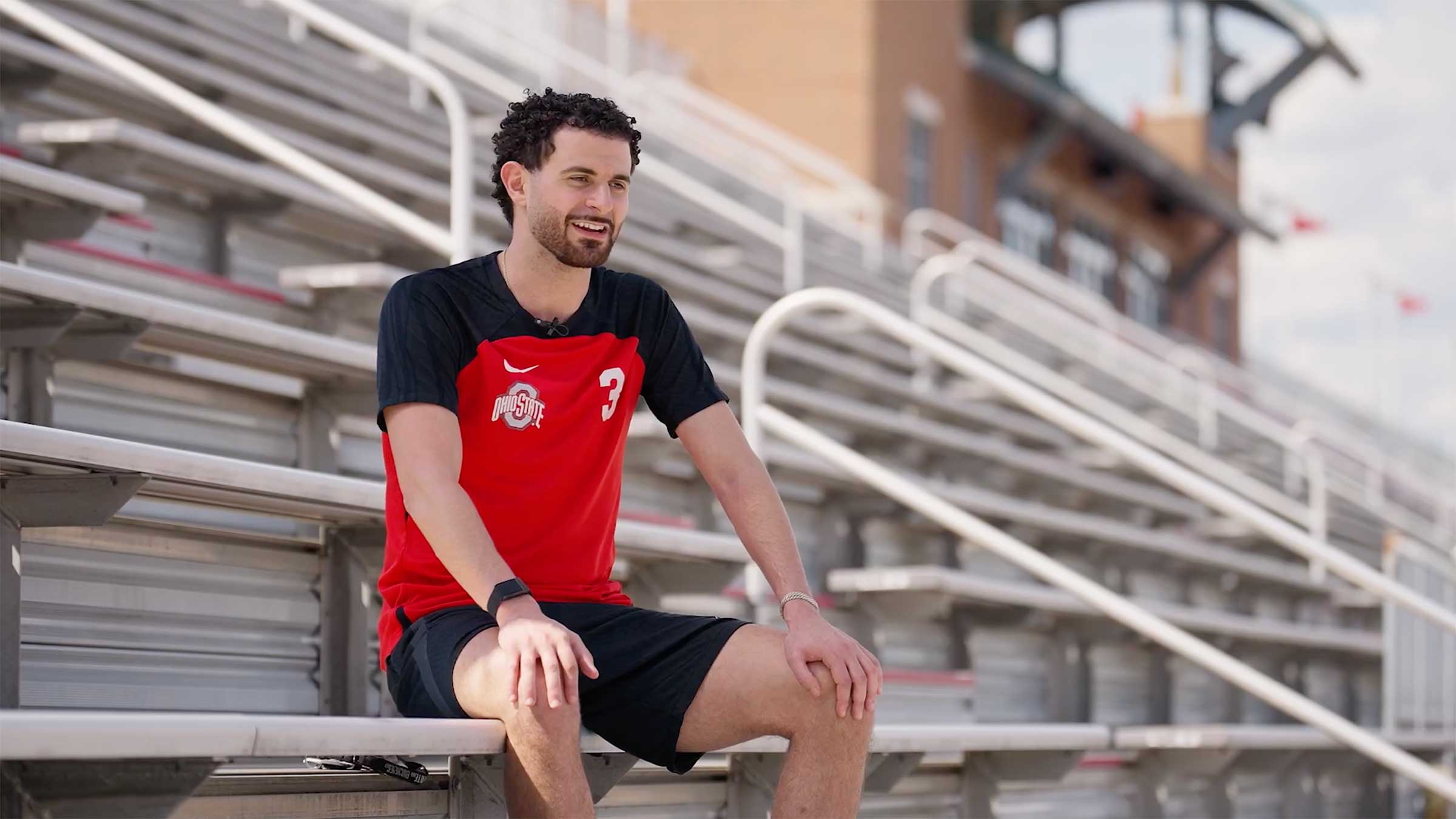
Demian fought through anger at his situation and fear for his future, but no one close to him let him give up. Even in his earliest days after the injury, Demian’s occupational therapist at Ohio State pushed him to get out of bed and get moving. “She was the last person I wanted to see walking into my room, but she told me if I wanted to get better and have a normal life again, I was going to have to start pushing. Feeling sorry for myself wasn’t going to make my life any better,” he says.
His family, teammates, coaches and athletic trainers supported him throughout the whole journey. “When I rounded on him after surgery, his entire team was crowded into his room, visiting and providing support,” says Lisa Cunningham, MD, the colon and rectal surgeon who reversed Demian’s colostomy.
Getting stronger, one day at a time
As Demian fought his way back to health, his goal was to return to elite athleticism. That meant following a detailed daily plan set by his doctors, physical therapists, athletic therapists, dietitians and coaches.
“One of the great things that happened at Ohio State was the number of specialists I had caring for me at one time,” Demian says.
Demian needed to gain back 30 pounds, plus retrain for strength, speed and agility. “Knowing these professionals knew a lot more about what I needed really helped me stick to the plan and kept me from getting discouraged,” Demian says.
He also needed multiple colon procedures, not just to play soccer, but to live a normal life. “The most impressive thing was his desire and his strong goals,” Dr. Cunningham says. “He was willing to do anything to get back on the field.”
Returning to the game he loves
As Dr. Knight Davis watched Demian’s return to the field this fall against the Wisconsin Badgers, she couldn’t help but reflect on the night she helped save his life. The Buckeyes on the pitch, in many ways, operated similarly to the trauma surgery team. “On the field, there’s a lot of communication between the players, anticipating what’s coming, collaboration, role delineation and rapid pace of change. That’s very similar to what it’s like to take care of injured patients,” she says.
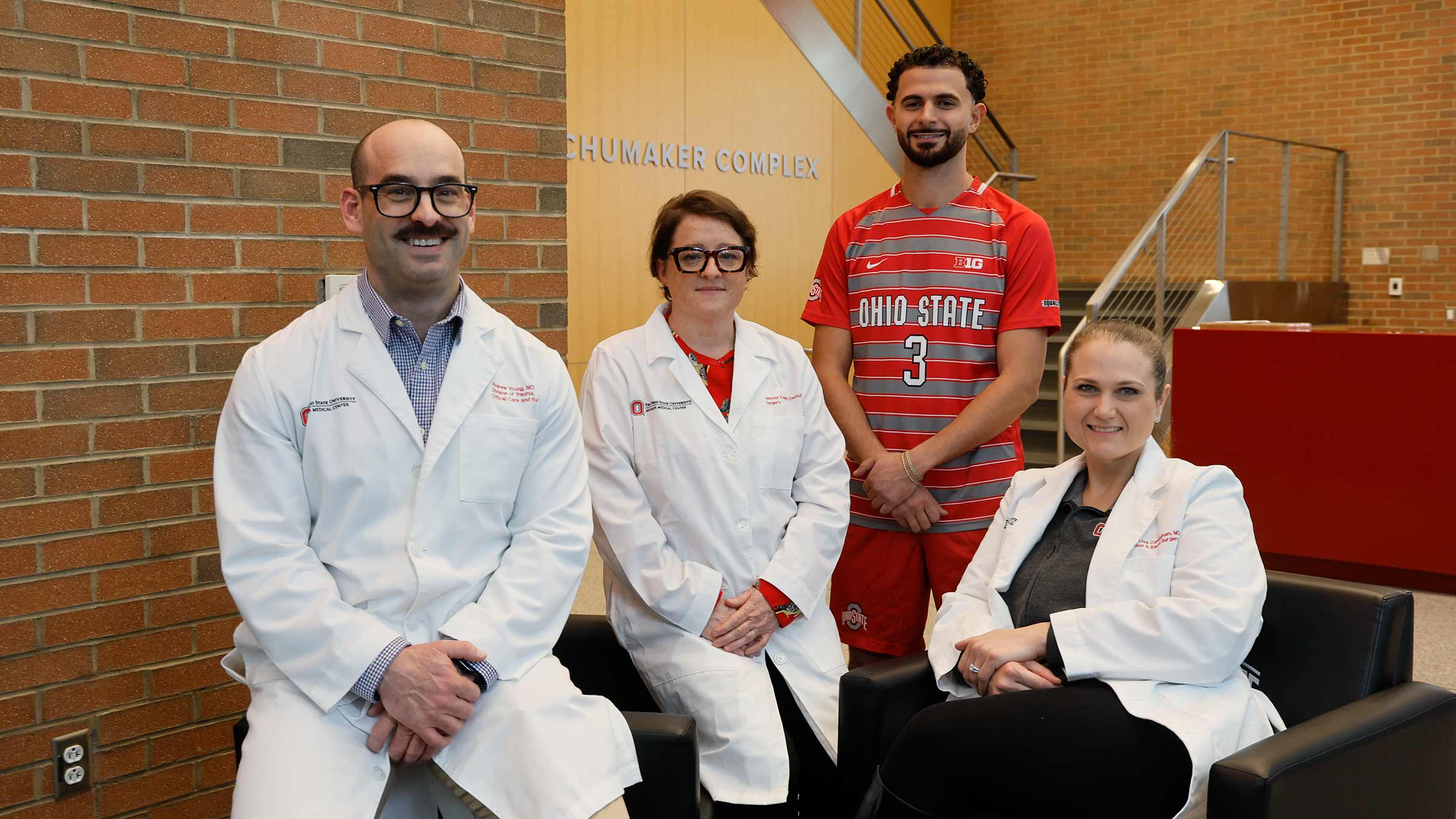
Once word got out about Demian’s return to soccer, the media highlighted his heroic recovery. No one knew just how far he had come more than his trauma surgeons.
“We take care of patients on the worst days of their lives, so it was a real highlight to be able to see the full recovery because Nathan’s got a lot more life ahead of him,” says Dr. Knight Davis.
Demian considers his physicians and entire care team at Ohio State the real heroes of his story. “From the doctors who checked on me daily, to the nurses and therapists, my coaches and team, I had every single resource to be successful. It was just up to me to actually go and do that,” Demian says.
Seeing his life nearly end so young has made Demian focus on his future. He hopes to one day become a physician, giving others a chance at life just as Drs. Young, Knight Davis and Cunningham did for him. “Without them, I wouldn’t be here. They gave me the greatest gift of a second chance at life,” Demian says.
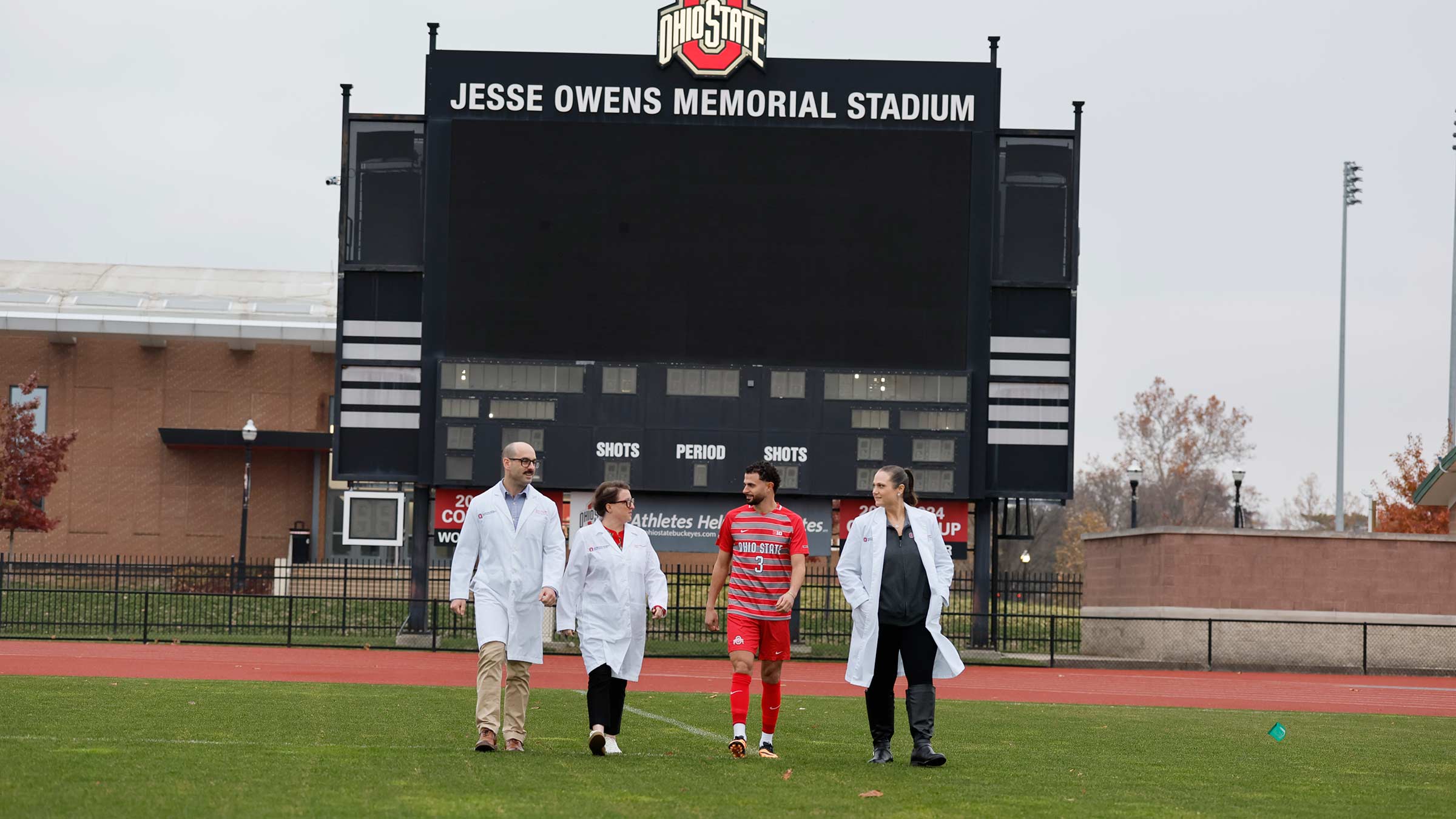

When an emergency strikes, turn to The Ohio State University Wexner Medical Center’s full-service, state-of-the-art emergency departments
Our facilities are equipped to handle any medical emergency.
Find a location near you